Why Some Parts of the San Andreas Fault Creep Quietly

A fault can move in steady, tiny increments. The interesting question is not whether that sounds dramatic, but what the motion reveals about rock, depth, and measurement.
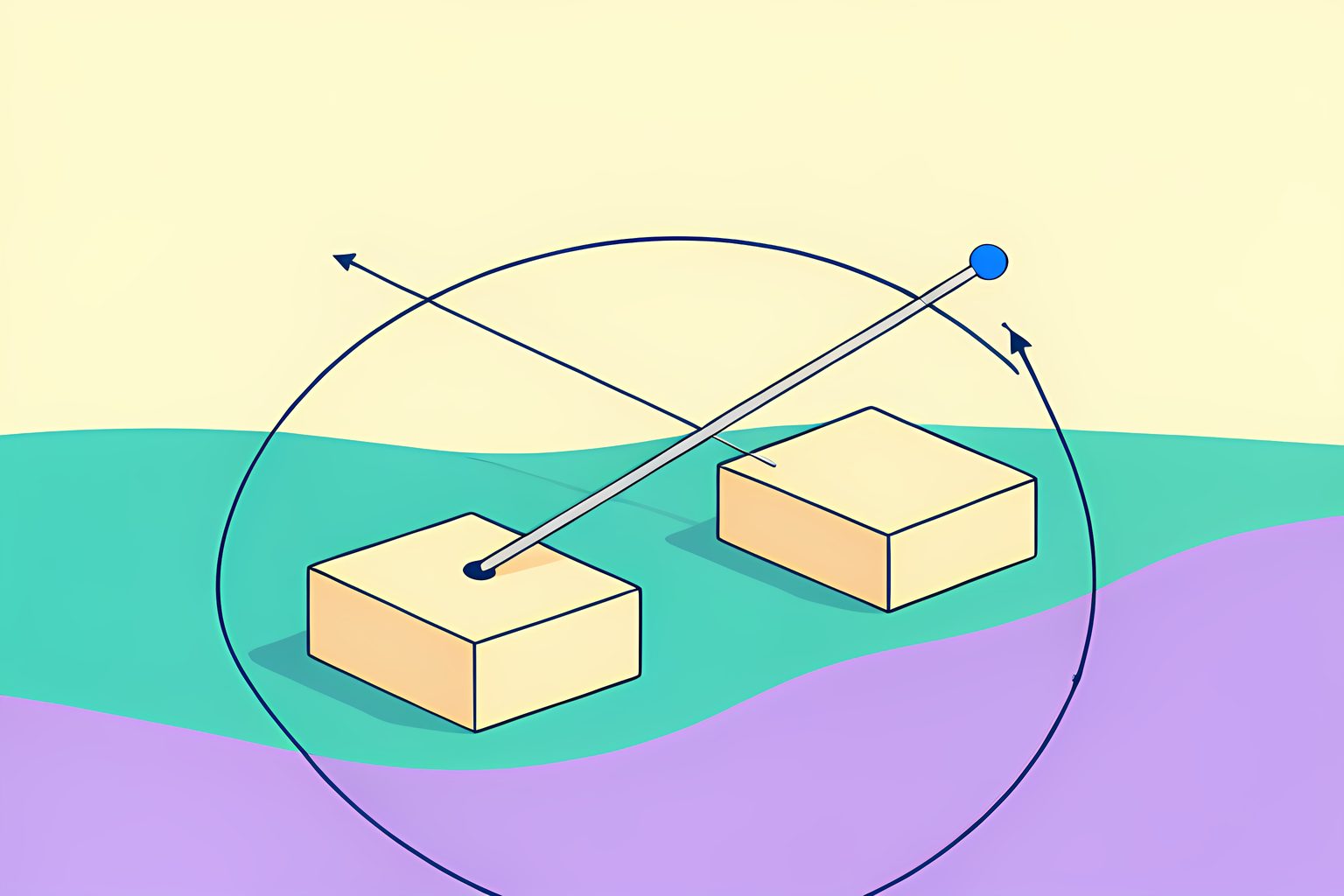
Two concrete piers stand about 30 meters apart. A wire stretches from one to the other, crosses a fault trace at an angle, and reports back whenever the distance changes. It is a wonderfully modest bit of equipment for a question this large. The USGS calls it a creepmeter, and it is one reason the word creep means something much more exact to geologists than it does in ordinary conversation. Here is the instrument in the agency's own words.
Fault creep is slow movement along a fault. Some of it can be steady enough to appear as a gradual change in position, while some comes in short slow-slip episodes. The important part is the word some. A fault system is not one uniform seam, and a creeping patch is not a verdict on everything connected to it. USGS describes portions of the San Andreas, Hayward, and Calaveras faults as creeping while other parts can be locked.
Creep, without the spooky fog machine
- Continuous creep
- Stable, gradual motion on an unlocked part of a fault.
- Creep event
- A brief spell of slow movement that can be separated by longer quiet intervals.
- Creepmeter
- A local measurement between two anchors, not a portrait of an entire fault system.
- Best mental model
- Creep is a behavior to study, not a green light or a red light.
The rock recipe can matter
Below the surface, rock does not behave like a single clean slab. Temperature, pressure, water, mineral makeup, and the roughness of a fault zone can all affect how it deforms. The USGS describes cores from the San Andreas Fault Observatory at Depth near Parkfield that contain narrow zones of fault gouge made from serpentinite, sedimentary rock, and magnesium-rich clays. The agency says the mineralogy supports a long-standing association between serpentinite and creep. Association is the careful word here. It is evidence of a relationship, not a magic ingredient list. Read the rock-physics summary.
There is a small California flourish in that sentence: serpentinite is the state rock. In an otherwise stern bit of geology, the state rock turns up in the scraped-up filling of a creeping fault zone. It is the kind of fact that makes the science feel less like a distant diagram and more like a place with its own materials.
Creep has more than one rhythm
A 2013 Woods Hole Oceanographic Institution account separates continuous stable sliding from creep events that happen over hours. It describes the events as shallow and says they may be separated by long intervals of ordinary gradual creep. That is a useful corrective to the idea of an on-off switch. Motion can be steady, episodic, shallow, or inferred at depth, and scientists are still working out why those patterns vary from place to place. WHOI's explanation is a good plain-language starting point.
A wire is local. A fault is not.
The appeal of the creepmeter is its honesty. It measures a distance between two particular points. The USGS says the wire's angle lets that change be converted to fault slip, and it also notes that rainfall and seasonal wetting can affect shallow measurements. In other words, even the cleanest little instrument needs context. The agency posts data from creepmeters on the San Andreas system, including sites with 10-minute sampling, but says recent observations are not always reviewed immediately. The public data page spells out that caveat.
What careful readers should keep
Creep is fascinating because it shows that fault motion has texture. It also resists a neat moral. A 2008 USGS-linked study of the central creeping section used GPS and other measurements to distinguish a deep long-term rate from a shallower creep rate, which is a reminder that depth changes the story. The publication record is here.
The modest apparatus deserves the final word. A wire, two anchors, and enough patience can reveal a slow change that human senses would miss. That is not flashy. It is better than flashy. It is a way of letting the ground speak at its own tempo. For the other half of the story, see how geologists read displaced landforms.
Sources
Every factual claim above traces to one of these. Links open in a new tab.