When a School Moves, What Keeps the Day Together?

A temporary address is the easy part. The hard and hopeful work is preserving familiar adults, transportation, food, information and the rhythm children recognize as school.
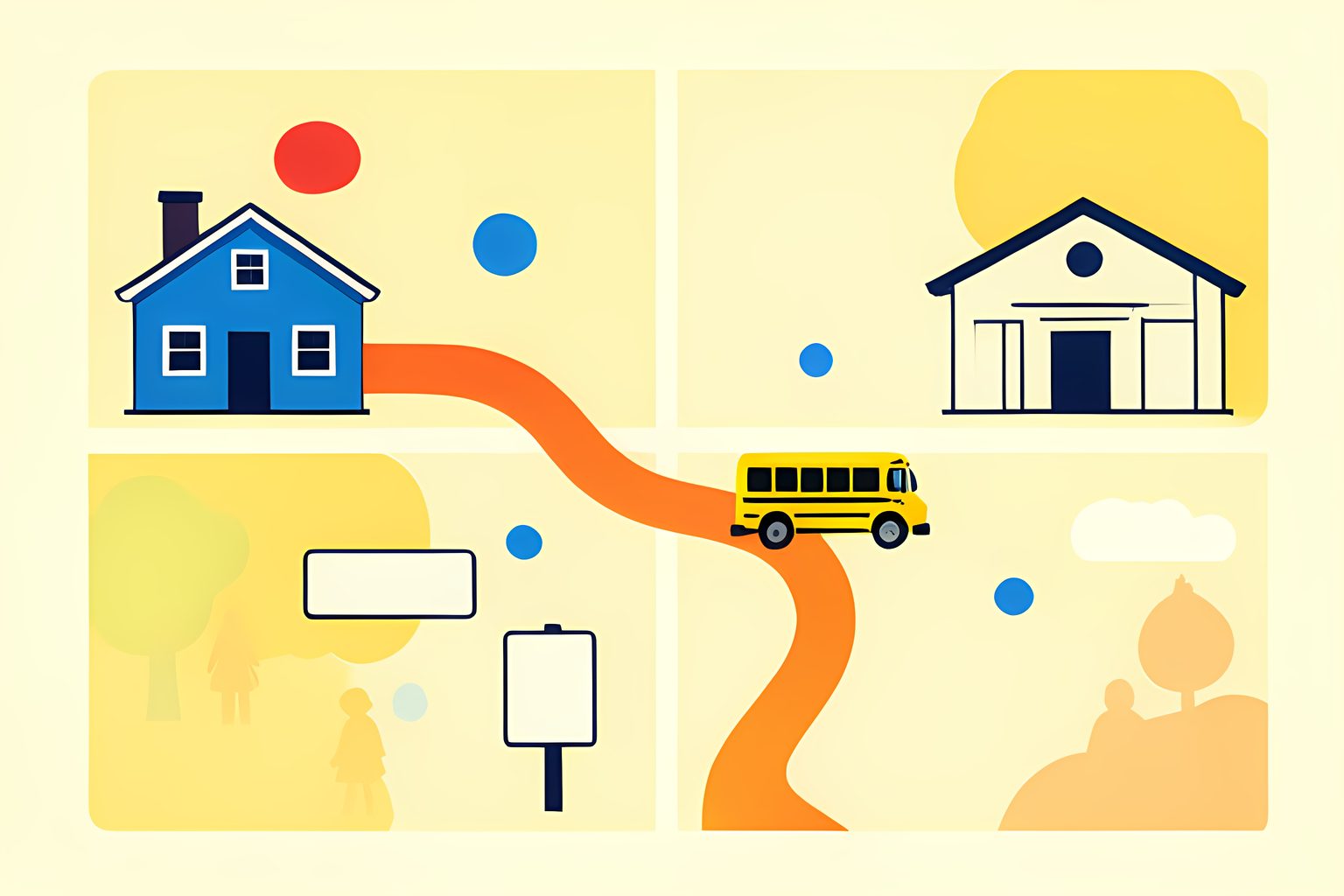
A school day is held together by more than a building and a bell. It is held together by the adult who knows a child's name, the bus that arrives where it said it would, breakfast, a place for a medication, and a grown-up who can explain the new pickup plan without making a family decode a maze. When a school has to use a temporary site, those quiet logistics become the whole story.
Richmond has supplied a very current example. In its August 25 update, Barack Obama Elementary said programming would begin at Pine Camp Arts & Community Center on August 27 while the original building remained closed for remediation. The plan did more than name an alternate address. It named the educators, the transportation, the meals, the hours and the after-school handoff. RPS's full update is a useful template for the information families actually need.
The parts of a real temporary school day
- Familiar adults:
- RPS said Obama educators would lead academic and enrichment activities at Pine Camp.
- A usable route:
- The August 25 plan kept RPS transportation in service and used a stop in front of Obama Elementary for walkers.
- Food and care:
- Breakfast and lunch were planned at Pine Camp, with after-school supervision through 5:00 p.m.
- One clear source of updates:
- Families need exact dates, arrival times, pickup rules and a contact path that will still make sense after the first notice.
The alternate address matters less than the continuity
It is tempting to think a temporary site succeeds if it has enough rooms. Rooms matter, obviously. But the name for a planned move in school-facility work is a swing move: a school program temporarily relocates while its normal building cannot host it. Prince George's County Public Schools says its capital-program staff coordinate those moves with transportation, food and nutrition, safety and academics. Its swing-planning page offers an unusually plain-spoken definition and an even better lesson: the program moves, not merely the desks.
That distinction is worth keeping. Children are not helped much by a technically available room if the person meeting the bus, the meal plan, the class materials and the route home remain mysteries. In Richmond, RPS's own transportation department manages bus routing and specialized transportation for more than 12,000 students. Its transportation page makes the point without drama: a new destination only works when the route is treated as part of the school day, not an afterthought.
Why Pine Camp is a promising kind of temporary address
The cheerful wrinkle here is the phrase Arts & Community Center. It is not an excuse to pretend that displacement is delightful. Still, it describes a place already accustomed to children learning together. The City of Richmond lists Pine Camp's Summer Spotlight program as a weekday mix of music theater, art and dance for children, held at the same Old Brook Road location. The city's program listing gives the address and the small, lovely detail: collaborative work leads to a culminating performance.
RPS did not promise that the temporary Obama program would become a summer-camp show. It promised academic and enrichment activities led by the school's own educators. That boundary matters. The useful bit of optimism is simpler: a temporary day can still contain adults who know the school community and a setting designed for young people to make things together. On the school's homepage, Obama students are called the Stars. A temporary location should preserve that identity, not ask children to leave it at the curb. The school page keeps the word in view.
The family checklist is really a communication checklist
The U.S. Department of Education advises schools to prepare for recovery as well as immediate response, including academic and physical recovery. Its planning guidance does not prescribe one temporary-site format, nor should it. Local school systems know their routes, staff, facilities and family needs. It does support a practical standard: a plan should identify responsibilities before people are asked to improvise.
- Where is the program, and when does it begin? A full street address and an explicit start date prevent hopeful guesswork.
- Who will be there? Naming the teaching team and support staff gives the day a familiar center.
- How do arrival and departure work? Spell out buses, walker arrangements, pickup times and after-school limits.
- What practical supports remain in place? Food, medical arrangements, accessibility and a contact route belong in the same notice, not a scavenger hunt across five updates.
RPS's August 25 notice covered much of that ground, and WTVR's follow-up reported the same planned hours, transportation and meal support on August 26. The exact arrangement can change as a building's status changes, which is why a temporary-site article should not masquerade as a permanent schedule. The durable lesson is the checklist itself: a good alternate location gives families more than a pin on a map. It gives them a day they can picture.
A community center may be a stopgap, but it can also be a small act of civic hospitality. The bus pulls up. Breakfast is there. The teacher is still the teacher. For children, that continuity can be the difference between a baffling interruption and a school day with a different front door. For the building work that makes a return possible, read what must be fixed before Obama Elementary reopens.
Sources
Every factual claim above traces to one of these. Links open in a new tab.