A Good Strands Hint Leaves You One Small Job
The useful kind of help does not turn a word puzzle into a color key. It gives you a foothold, then lets the little burst of recognition remain yours.
On a stubborn Strands board, the most dangerous button is the answer button. It feels like an emergency exit. One small spark is enough. One tap can turn a bright, knotted little mystery into a completed color pattern, and the satisfying part is gone before your tea has cooled. A useful clue does something more delicate: it gives your eyes one place to return to, then leaves a real piece of work in your hands.
That distinction is why the best help does not have one fixed size. A theme nudge can change the meaning of the whole board. A first letter can make one word suddenly visible. A direction can turn a promising edge tile into a route. The full answer has a place too, especially if you have decided the puzzle has had its turn with you. The trick is choosing the smallest intervention that restores curiosity instead of replacing it.
Help should narrow the search, not finish it
The New York Times' own Strands Sidekick makes that idea wonderfully plain. Its individual reveals offer either the first letter or the direction of travel for up to three theme words. Neither one tells you the word. One tells you where to begin thinking; the other tells you how a likely path behaves. That is a hint with a job description.
The in-board system works from a different angle. TechRadar's rules guide explains that three non-theme words earn a hint, which shows where a theme word is. It is a larger reveal, but it still asks for recognition and tracing. You have been shown a patch of ground, not handed a completed sentence.
| Kind of help | What it changes | What remains yours |
|---|---|---|
| Theme nudge | It gives the clue a more useful frame. | The words, paths and theme connection. |
| First letter | It gives one word a starting handle. | The rest of that word and the route through the board. |
| Direction | It makes an edge or turn less ambiguous. | Which word fits and where it ends. |
| Grid hint | It marks the location of one theme word. | Seeing the word, tracing it and using what it teaches you. |
| Answer reveal | It closes a question immediately. | Your choice to stop wrestling with that question. |
That is the whole craft of it. A clue can answer the question you are actually asking without answering the one you still want to solve. If your problem is vocabulary, geometry will not help much. If your problem is geometry, a broad theme explanation may only add more possibilities. The best nudge is diagnostic before it is generous: it identifies the stuck place, then touches only that place.
This also explains why a hint sometimes feels too large even when it avoids printing the answer. A marked cluster can be perfect for someone who has scanned the board ten times, but excessive for someone who only needed to reinterpret a pun. There is nothing fussy about choosing a smaller reveal. You are protecting the part of the puzzle you came for, the moment when an ordinary-looking row of letters suddenly develops a pulse.
A ladder beats a trapdoor
Good daily-help pages tend to arrange information in stages. On August 27, 2026, Tom's Guide put the theme, useful clue words, and spangram information ahead of its answers. A July 2026 TechRadar example likewise separated clue words, spangram length and position from the solution section. Those pages are not official design documents, but their ordering makes practical sense: a reader can stop at the first rung that gets the board moving again.
- If the clue itself makes no sense, ask for a theme nudge before looking at any board detail.
- If you can name the theme but cannot begin a word, use a first letter.
- If you see a likely word but cannot make it travel, ask for a direction or take the earned grid hint.
- If the puzzle has stopped being pleasant, ask for the answer cleanly and enjoy the explanation afterward.
There is no medal ceremony for suffering through a word search. The official puzzle itself includes a route back into play, and that matters. In The Atlantic's early review, Ian Bogost noticed that exploratory words can advance the hint progress and that each discovery makes the remaining board feel more legible. Strands is built to reward a solver for staying in the room. Using a modest clue can be part of that design, not a failure of nerve.
Nor is this an argument for pretending every solve should feel equally hard. The Sidekick labels difficulty using an average of ratings from paid testers, with easy, moderate and challenging as its public levels. That useful little fact from the Times' page does not settle how a board will meet you on a busy Tuesday. It does make room for the obvious truth: some puzzles deserve another five minutes, and some deserve one gracious clue.
The sound a puzzle should make
A 2023 profile of the Times Games team described editors debating whether a clue would create an Oh, I guess moment or an Aha! moment. The story predates Strands, so it is not evidence of a Strands meeting room. Still, it names the right standard. A clue earns its keep when it makes the answer feel newly visible, not when it makes the answer feel administratively delivered. The profile's small, easy-to-miss detail is even better: a cat occasionally meowed from a video-call tile while those conversations happened. Word puzzles are made by people who work around ordinary living rooms too.
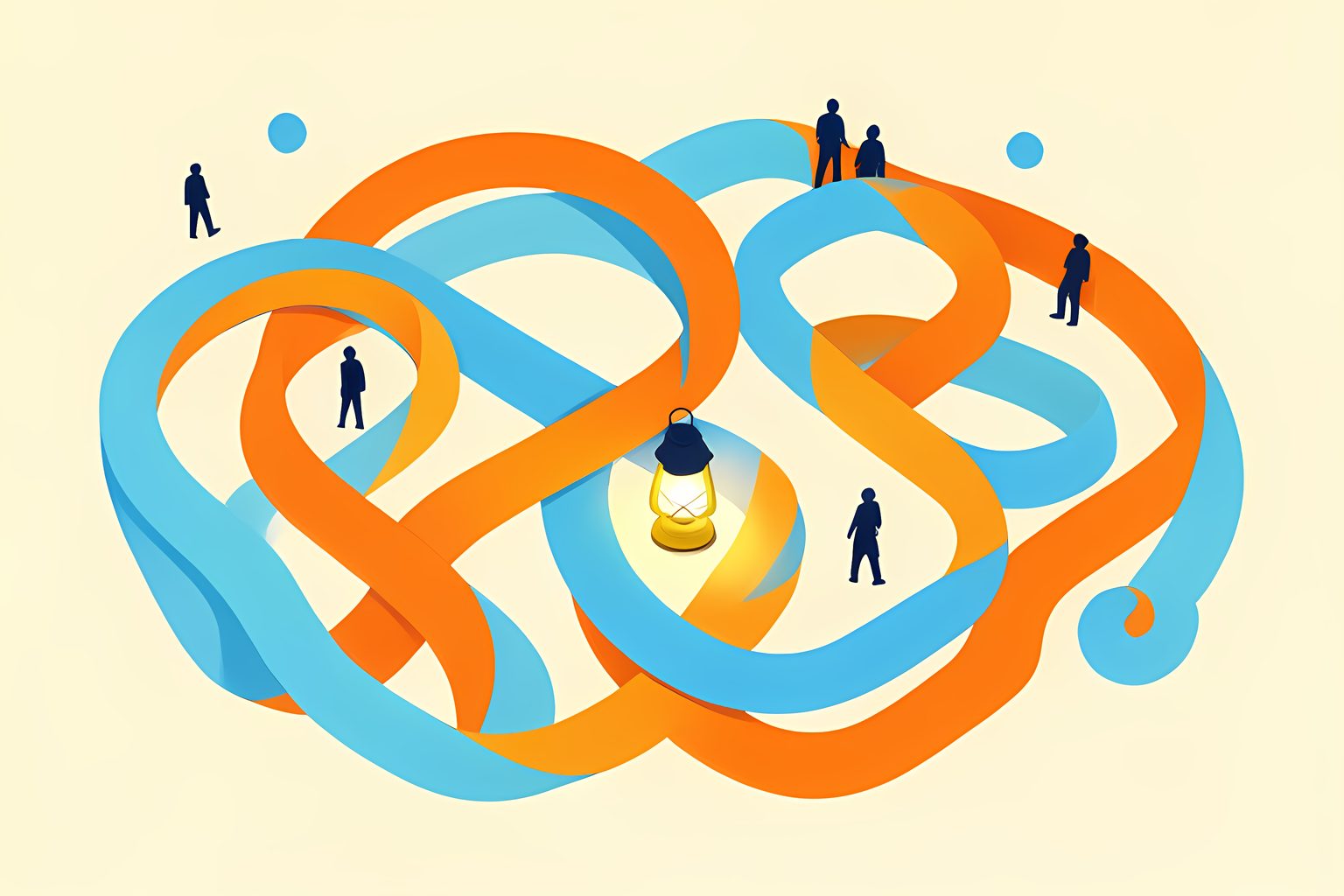
So use help with intention. Leave the lightbulb alone when you are enjoying the hunt. Ask for one letter when the hunt has become a wall. Take the answer when the wall is all you want to see of that puzzle. The lovely thing about a well-judged Strands hint is that it does not steal the finish. It hands you a tiny lantern and lets you discover the next turn.
Sources
Every factual claim above traces to one of these. Links open in a new tab.
- Strands Sidekick No. 736
- NYT Strands - what is it, spangrams, strategy, rules and how to play
- Today's NYT Strands hints and answer: solutions to game #907, August 27
- NYT Strands hints and answers for Tuesday, July 21 (game #870)
- The Times' New Word-Search Game Is Genius
- Inside The New York Times' Big Bet on Games
- Man, These New York Times Games Are Hard! A Computational Perspective