A Field Guide to Starting Business Networking Conversations

The first line does not need to sparkle. It needs to give another person an easy, specific thing to answer.
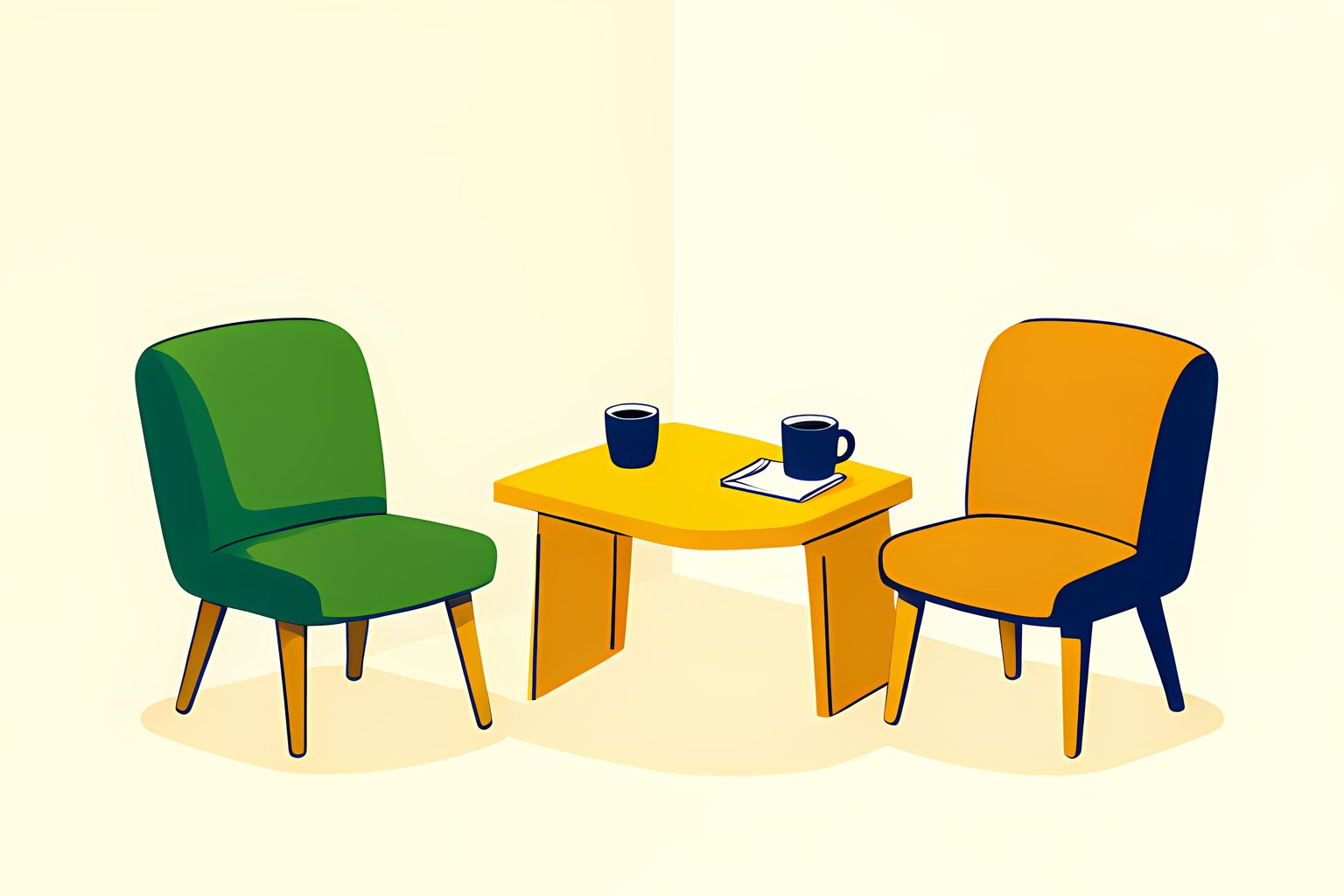
At a crowded professional event, the buffet table has one tactical advantage: it gives the room a harmless subject before anyone has to invent a dazzling opener. I like that modest logic. A conversation can begin with where to find the coffee, then move to why each person came. The goal is not to perform confidence on command. It is to make the next sentence easy.
We can make the moment much less mysterious by shrinking its job. You are not trying to earn a job, win a client, or become unforgettable in five minutes. You are trying to learn one real thing and leave enough context for a later hello. The University of Louisville explicitly separates networking from asking for a job or collecting the most cards. That distinction clears a surprising amount of pressure out of the room.
Build a question that belongs to the event
Generic compliments have nowhere to land. Event-specific curiosity does. If someone has just spoken on a panel, ask which part of the topic drew the most disagreement. If a company has a table, ask what a newcomer usually misunderstands about its work. If you share an association, ask what brought them into it. UW-Madison recommends researching attending organizations before an event and preparing an open-ended question. That preparation is not a script. It is a way of showing that you noticed where you are.
Open questions are generous because they let the other person choose the useful part of their answer. They also save you from the exhausting task of pretending you already know everything. A good opening can be as plain as I saw your organization works on this issue - what has been most interesting lately? Then listen for the noun that deserves a follow-up.
Use a short introduction with room to breathe
- Say your name and the work, study, or problem that currently occupies you.
- Name the reason you chose this person, table, panel, or event.
- Offer one concrete question instead of reciting a life story.
- Pause long enough for an actual answer, even if the pause feels slightly enormous.
The University of Michigan suggests practicing an elevator pitch and preparing questions before reaching out. That can sound like a command to become a tiny commercial. I read it differently: a short introduction is a courtesy. It gives the other person enough information to know what kind of conversation they are entering, then lets the exchange become human rather than rehearsed.
Ask about work, not access
The most useful questions tend to be about the other person's actual experience. Cornell's informational-interview guide recommends preparing questions, being attentive, respecting the time, and following up. A question such as What surprised you in your first year in this field invites experience. What does a strong day in this role look like? invites useful detail. What would you tell someone who is still exploring? gives the person a chance to offer advice without being cornered into a promise.
There is a quiet ethical bonus here. The conversation can be worthwhile even if no opening, contract, referral, or introduction appears at the end. That makes it easier to hear a no without treating it as a verdict on your worth. The exchange was for information and connection. If it leads farther later, that is a separate gift.
Let the room help you reset
UW-Madison also suggests taking a moment to get a feel for the room before plunging in, and taking a break if the event becomes overwhelming. That is sensible advice, not a failure of nerve. Walk one lap. Read the program. Refill the water. Notice which conversation looks open rather than interrupting a closed circle. The room rarely becomes friendlier by being treated as an obstacle course.
Leave with a real, small next step
A graceful ending can be a thank-you, a request to connect online, or a promise to send the article you mentioned. LinkedIn's guidance notes that connection requests can be useful after a meeting or event, while its best-practices page asks members to explain how they know someone or why they want to connect. A note that recalls one topic does far more work than a blank invitation. It tells the recipient that the conversation did not vanish the moment you turned away.
I would rather leave an event having learned one vivid thing than having handed out twenty cards. A first conversation does not need fireworks. It needs a useful question, an attentive ear, and a closing line that leaves the door unlatched.
Sources
Every factual claim above traces to one of these. Links open in a new tab.