Silo Season 3 Gives a Duck Pez Its Second Life

The little duck-shaped dispenser is not merely an Easter egg. It is a prop that shows how an ordinary object becomes evidence when a story spans centuries.

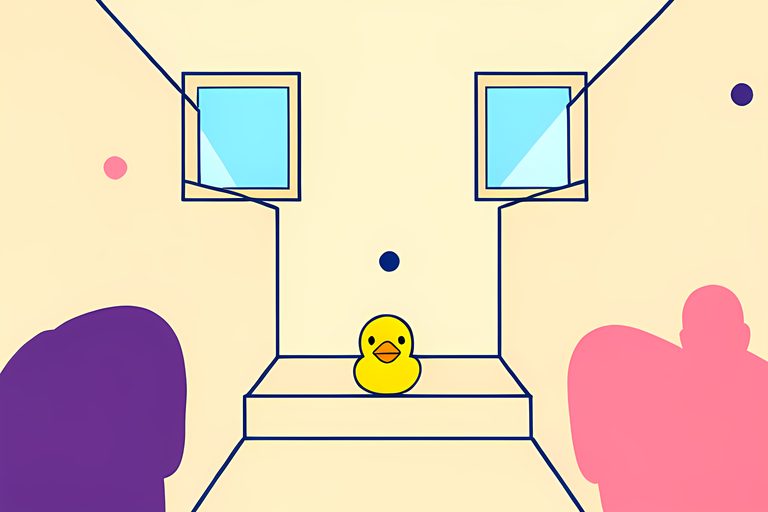
A yellow duck-shaped Pez dispenser is a wonderfully odd thing for a grand science-fiction mystery to cherish. I like it precisely because it is not grand. It is pocket-sized, familiar and a little silly, which makes it a sharp contrast to the enormous questions around it. In Silo, that smallness is the point.
The short answer is that the dispenser works as a timeline bridge. TIME identified the same duck-topped object in the season 2 coda and as a relic in the later silo world. Season 3's origin material gives that connection more room to breathe. We do not need to turn every appearance into a prediction to understand its sturdy job: it lets a viewer hold two eras in mind at once.
A relic is evidence, not just decoration
An Easter egg usually rewards recognition. You spot a familiar object, smile, and carry on. A relic does more. It makes an absence visible. When an everyday item shows up in a world where its original use has been forgotten, the object becomes a question in physical form. Who kept it? What did it once mean? How did it survive long enough to become strange?
That is why the duck has more narrative force than a carefully labeled document would. Documents announce themselves. A Pez dispenser arrives with no credentials at all. Its plastic cheerfulness refuses to behave like sacred evidence, and that gives the mystery a bit of lift. I think the show is smarter for trusting a playful object with serious structural work.
What season 3 adds
| What the object does | Why it matters to a viewer |
|---|---|
| Connects time periods | Apple's season 3 description confirms an earlier origin thread alongside the present-day silo story. The duck gives those threads a tactile common point. |
| Makes memory visible | A small household object can carry more feeling than a history lecture because it suggests ordinary life rather than explaining it. |
| Keeps the mystery human-scale | The audience can notice the link without needing a diagram, a technical term or a character to pause and explain it. |
The value of something slightly ridiculous
Silo's source novels are full of large systems and carefully rationed information. Hugh Howey's own series page describes Wool as the introduction to the silo and its inhabitants, Shift as the account of its making, and Dust as the final movement. The show translates that widening architecture into images. The duck dispenser is one of its friendliest images, a thumb-sized reminder that history is often preserved by accident.
We have all seen fiction use an heirloom, a photograph or a key as a shortcut to importance. The Pez is more charming because it begins as the sort of object that might sit at the bottom of a kitchen drawer beside loose batteries and a bent paper clip. It does not look like a monument. That lets the show make a broader point without announcing one: ordinary objects can outlast the stories people once told about them.
What not to assume from the duck
A prop can link timelines without settling every detail between them. The official Apple materials establish season 3's two-strand premise, and TIME establishes the object's earlier and later appearances. Beyond that, fan theories can be delightful, but they are theories. I checked for an official scene-by-scene explanation of the dispenser's full path and did not find one in the Apple season material reviewed for this guide.
That uncertainty is not a flaw. It is the whole trick. A tiny duck-shaped sweet holder gives Silo an unusually warm way to ask a giant question about continuity: what remains when the labels fall off? For now, the answer is happily modest. Sometimes it is a small yellow object, waiting to be noticed.
Sources
Every factual claim above traces to one of these. Links open in a new tab.