Inside The New York Times, Where News Meets a Daily Habit

The name on a breaking-news alert, a crossword streak and a saved recipe is also the name of a modern subscription company. Here is the useful map behind that surprisingly crowded front door.
A crossword square, a soup recipe and a hard piece of reporting do not look like neighbors. Yet they can all arrive under the same blackletter name, which is why I think a search for The New York Times deserves a map instead of a one-word answer. The useful surprise is not that a newspaper has an app. The newspaper now sits inside a deliberately wider collection of things people return to when the kettle is boiling, the train is late or a clue has been staring back for ten minutes.
The cleanest starting point is to separate the paper from the company. The New York Times is the news organization and publication readers know. The New York Times Company is the publicly traded company behind that news product and a group of related digital products. Its 2025 Form 10-K lists bundled and standalone subscriptions to news, The Athletic, Audio, Cooking, Games and Wirecutter. That provides a much fuller answer than calling it simply a newspaper, though the newsroom remains the center of the arrangement.
The short version
- The publication
- The New York Times produces reporting, analysis, criticism, visual journalism and audio.
- The parent organization
- The New York Times Company is the listed parent organization that sells the news product and related subscriptions.
- The practical reason for the sprawl
- Different products give people different reasons to return, while sharing a subscription and account ecosystem.
The newspaper is the center, not the whole shape
The company describes its reporting as work presented through articles, graphics, photographs, video and audio. On its own page about the newsroom and Opinion, it also says that Times Opinion operates independently from the newsroom. That distinction matters whenever a reader is deciding what kind of work sits in front of them. Reporting, criticism, an argument and a product recommendation can share a masthead without being the same editorial form. I would treat the label on the page as part of the information, not as tiny furniture around the information.
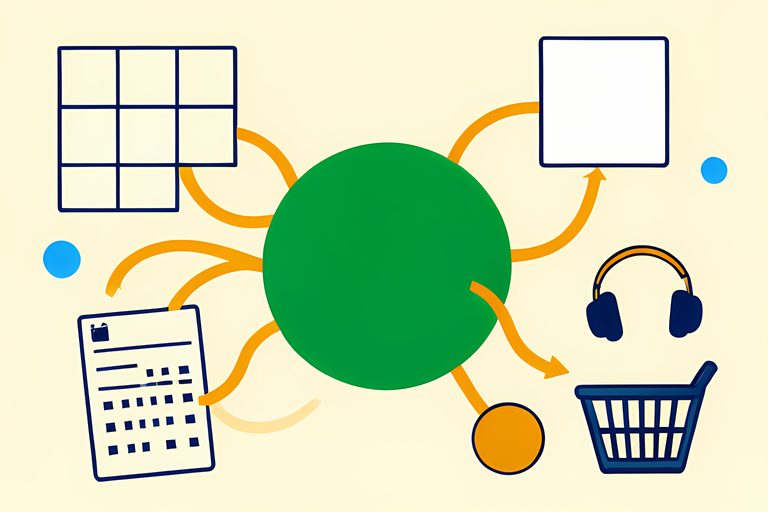
This is one reason the modern Times can feel larger than the familiar folded paper. A reader may encounter a reported article in the News app, a voiced explanation through Audio, a restaurant suggestion through Cooking, sports coverage through The Athletic, buying guidance through Wirecutter or a game in the Games app. Those are not random tabs added because the menu had empty space. In its filings, NYT Co. reports them as distinct products with their own subscription paths, while also selling bundles that bring several of them together.
Why puzzles and recipes belong in the picture
News is often urgent. A puzzle is almost the opposite: it asks for a small appointment with yourself. Cooking sits somewhere between the two, useful but pleasantly unhurried. That range helps explain the business design. At the end of 2025, NYT Co. reported about 12.78 million print and digital subscribers, including about 12.21 million digital-only subscribers. The same annual filing says digital-only subscription revenue rose 14.3 percent from 2024 to 2025. Those figures do not prove that any one crossword or recipe caused a subscription, but they show that the company is built around recurring digital relationships rather than a once-a-day print transaction.
Games make the recurring part easy to see. The Games help center says a Games subscription includes the Daily Crossword, a substantial crossword archive and a group of other puzzles, while some daily games remain available without a subscription. An account can also carry saved progress, statistics and streaks across devices. A streak is a tiny thing, but it is a very human piece of product design: nobody wants an old phone to swallow a run of solved puzzles.
The scale is no longer a side note. Associated Press reported in January 2026 that the Times' puzzle lineup was played more than 11.2 billion times during 2025, when a newly launched two-player game became the site's 11th game. The number is huge, but the charming part is smaller. The app can keep an ordinary personal record of a Mini Crossword time or a Wordle streak. Big media strategy, meet the very private satisfaction of finishing before the coffee cools.
A better way to read the name on the screen
When you see The New York Times name, first ask which doorway you are entering. Are you reading a news report, an Opinion argument, a review, a recipe, a shopping recommendation, an Athletic story or a game? The question is not a test of loyalty or suspicion. Basic orientation works like checking whether a book is a novel or a cookbook before bringing it to bed.
That orientation also keeps the company story honest. The 2025 10-K identifies a real subscription business with several products, while the newsroom page identifies independent journalism as its mission. Neither fact cancels the other. We can recognize the commercial architecture without pretending that a crossword clue and a reported investigation do the same job. In fact, the contrast is the point. One name holds both the pressing matter and the pleasant ritual.
The delightful detail is the old grid
The crossword is not a recent decoration on this strategy. Time noted during the 2022 Wordle acquisition that the Times had brought its crossword to readers in 1942. Decades later, the dedicated app was renamed from NYT Crosswords to NYT Games to make room for a growing family of puzzles, as TechCrunch reported in 2024. The continuity is lovely: a paper-era grid did not disappear into a phone. It became the front porch for other games.
I find that more interesting than the shallow line that the Times is now somehow only a game company or only a newspaper. Its business is trying to make a serious news institution sustainable by offering several kinds of useful attention. You may come for a headline, stay for a recipe and return tomorrow because a blank square is waiting. No accident there. The map is visible.
Sources
Every factual claim above traces to one of these. Links open in a new tab.
- The New York Times Company 2025 Form 10-K
- The Newsroom and Times Opinion
- New York Times Games Subscription
- The New York Times Games app
- NYT Games: Wordle & Crossword
- New York Times debuts first 2-player game as business model evolves
- NYT Games debuts redesigned app to boost discovery and simplify navigation
- Wordle Creator Josh Wardle Talks NYT Sale, Game's Success