Follow the 36-Club Europa League Table and Eight-Match Slate

UEFA replaced the old four-team groups with one giant 36-club league table, eight distinct opponents per team, and no second chances for the bottom twelve.
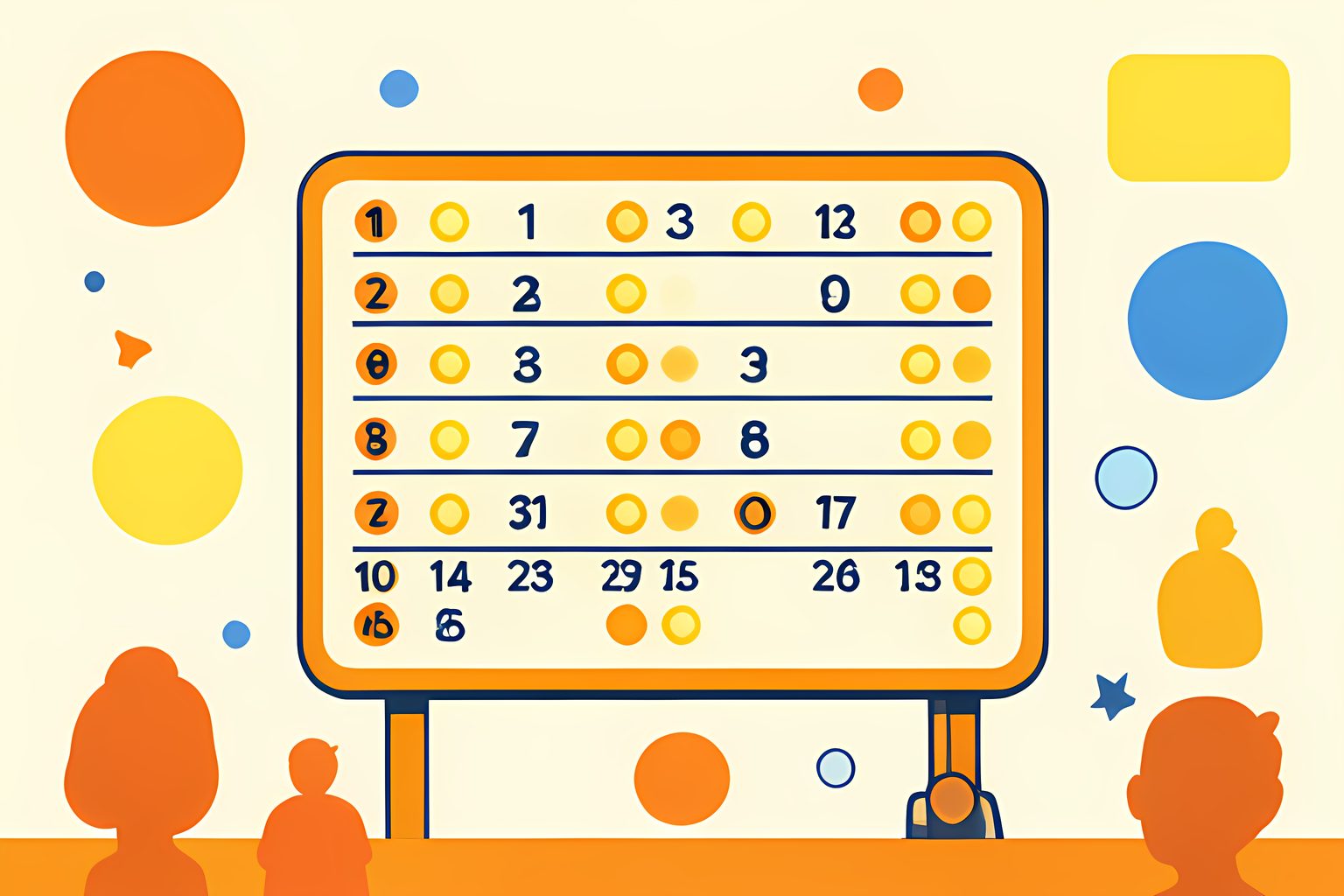
When you look at the continental soccer standings on a crisp Thursday night in autumn, the screen looks delightfully startling. Instead of eight cozy groups of four teams tucked into separate private corners, every single club on the continent now shares one colossal 36-team table. I spent the afternoon analyzing UEFA competition regulations and match schedules to understand how this single-table structure works. What looks at first glance like a dizzying spreadsheet turns out to be a wonderfully lively machine for autumn football.
The transition represents the most sweeping structural overhaul in European club competition in more than three decades. For years, the Europa League relied on a traditional group stage where four clubs played home and away in round-robin fashion. We now see an eight-match regular season where no club meets the same opponent twice before winter. The result is a continuous European marathon where a 90th-minute header in Istanbul can instantly reorder the fate of clubs in Glasgow, Bilbao, and Frankfurt.
The Eight-Match Slate and Seeding Pots
Under the current format, every club in the Europa League plays eight matches during the league phase, which runs from late September through late January. Four matches take place at home in front of noisy home supporters, and four take place on the road across Europe. Crucially, each match is played against a completely different opponent.
To keep the schedule balanced and fair across 36 clubs, UEFA separates the qualified teams into four seeding pots of nine clubs based on their five-year club coefficient rankings. Many supporters naturally assume that top-seeded clubs in Pot 1 receive an easier schedule. The actual reality is far more interesting and equitable. Every single team, whether sitting in Pot 1 or Pot 4, is drawn to face exactly two opponents from Pot 1, two from Pot 2, two from Pot 3, and two from Pot 4. One fixture against each pot is played at home, and the other is played away.
As sports correspondent Paul MacInnes explained for The Guardian, this pot distribution eliminates the old phenomenon of dead rubbers and unbalanced groups of death. Because heavyweights must face two fellow top-tier clubs in autumn, high-stakes matches occur right from matchday one rather than waiting for spring knockout rounds.
Furthermore, the draw applies strict geographic safeguards. A club cannot be drawn against an opponent from its own national association during the league phase. A team can also face a maximum of two opponents from any single foreign country. This prevents repetitive domestic matchups while maximizing the international variety that gives European nights their special magic.
Three Distinct Finish Lines on One Giant Table
Because all 36 clubs are ranked together in one unified league table, every single point ripples across the entire continent. Three points are awarded for a victory, one point for a draw, and zero for a defeat. When the eighth and final matchday concludes in late January, the table splits the field into three distinct competitive tiers.
| Final Table Rank | Stage Reached | Knockout Path | European Safety Net |
|---|---|---|---|
| 1st to 8th Place | Round of 16 | Direct qualification as seeded seeds | Maintained in Europa League |
| 9th to 24th Place | Knockout Play-Offs | Two-legged playoff in February | Winner reaches Round of 16 |
| 25th to 36th Place | Eliminated | Out of European competition | No Conference League drop-down |
Clubs that finish between 1st and 8th claim the ultimate autumn prize: direct qualification into the Round of 16. That top-eight finish allows squads to bypass the grueling two-legged knockout play-off round in February, providing two weeks of critical rest during the busiest stretch of domestic league schedules. Meanwhile, teams finishing between 9th and 24th enter a two-legged playoff to earn the remaining eight spots in the last 16. For the bottom twelve clubs ranked 25th through 36th, the European journey ends completely with zero consolation parachute.
Tiebreakers and the Power of Goal Difference
With 36 clubs competing across just eight matchdays, points totals cluster tightly together. Multiple clubs frequently finish level on twelve, thirteen, or fourteen points. In the old four-team groups, head-to-head records served as the primary tiebreaker. In a 36-team league where tied clubs rarely play each other, head-to-head comparisons are mathematically impossible.
As outlined by Sky Sports, UEFA relies on a precise hierarchy of tiebreakers to determine final table positions:
- Superior goal difference across all eight league phase matches.
- Total goals scored across the league phase schedule.
- Away goals scored across the four road fixtures.
- Most total victories earned during the league phase.
- Most away victories recorded on the road.
- Collective points amassed by the club's eight league phase opponents.
This tiebreaker structure fundamentally changes how managers approach the final fifteen minutes of every match. In previous eras, a team holding a comfortable 2-0 lead in the 80th minute might ease off the gas pedal to conserve energy for the weekend. Today, scoring a third goal or conceding a late consolation goal can alter a club's final ranking by three or four places, shifting them from a seeded knockout spot into an unseeded road tie.
The final criterion on the tiebreaker list is particularly elegant: the strength of schedule. If two clubs remain tied across goals, wins, and away statistics, UEFA calculates the collective points earned by all eight opponents each team faced. A club that navigated a slightly harder schedule receives the higher ranking.
Financial Rewards Across the League Table
The single-table format also links performance directly to substantial financial rewards. UEFA allocated approximately €565 million in total prize money to the Europa League for the 2024 to 2027 cycle, as detailed in official UEFA financial circulars. Every club reaching the league phase receives a guaranteed starting fee of €4.31 million.
Beyond the starting fee, clubs earn €450,000 for each match win and €150,000 for a draw. UEFA also introduced a league ranking bonus system. The total ranking pot is divided into 666 equal shares of €75,000. The 36th-place team receives one single share of €75,000, while the 1st-place finisher collects 36 shares worth €2.7 million. Additional cash bonuses reward teams finishing inside the top eight and top sixteen, ensuring that every match remains financially meaningful until the final whistle.
Europa League format at a glance
- Total clubs
- 36 teams ranked in one table
- Matches per club
- 8 matches (4 home, 4 away)
- Opponent variety
- 8 distinct opponents (2 from each pot)
- Round of 16 spots
- Top 8 advance directly; 9th-24th play off
- Elimination zone
- 25th to 36th exit Europe entirely
I checked the historical data from previous tournaments, and the difference in excitement is striking. We find genuine joy in how this format reclaims the competitive spirit of European nights. Instead of calculating whether a dead rubber in matchday six helps a rival, supporters can sit back and watch all 36 clubs sprint across a shared continental leaderboard.
Sources
Every factual claim above traces to one of these. Links open in a new tab.
- New UEFA Europa League format explained
- UEFA Europa League standings and league phase rules
- Champions League and Europa League new format explained: how 36-team league phase works
- UEFA Champions League, Europa and Conference new format explained
- European club competitions new format and prize distribution
- How European qualification works in the 36-team era
- UEFA national association rankings and club coefficients
- Scottish clubs face tougher Europa League route under revised UEFA format