The Roman Temple Restored Beneath Bloomberg's London Base

Seven meters under a premier financial newsroom sits an ancient Roman sanctuary and the oldest handwritten document in British history.
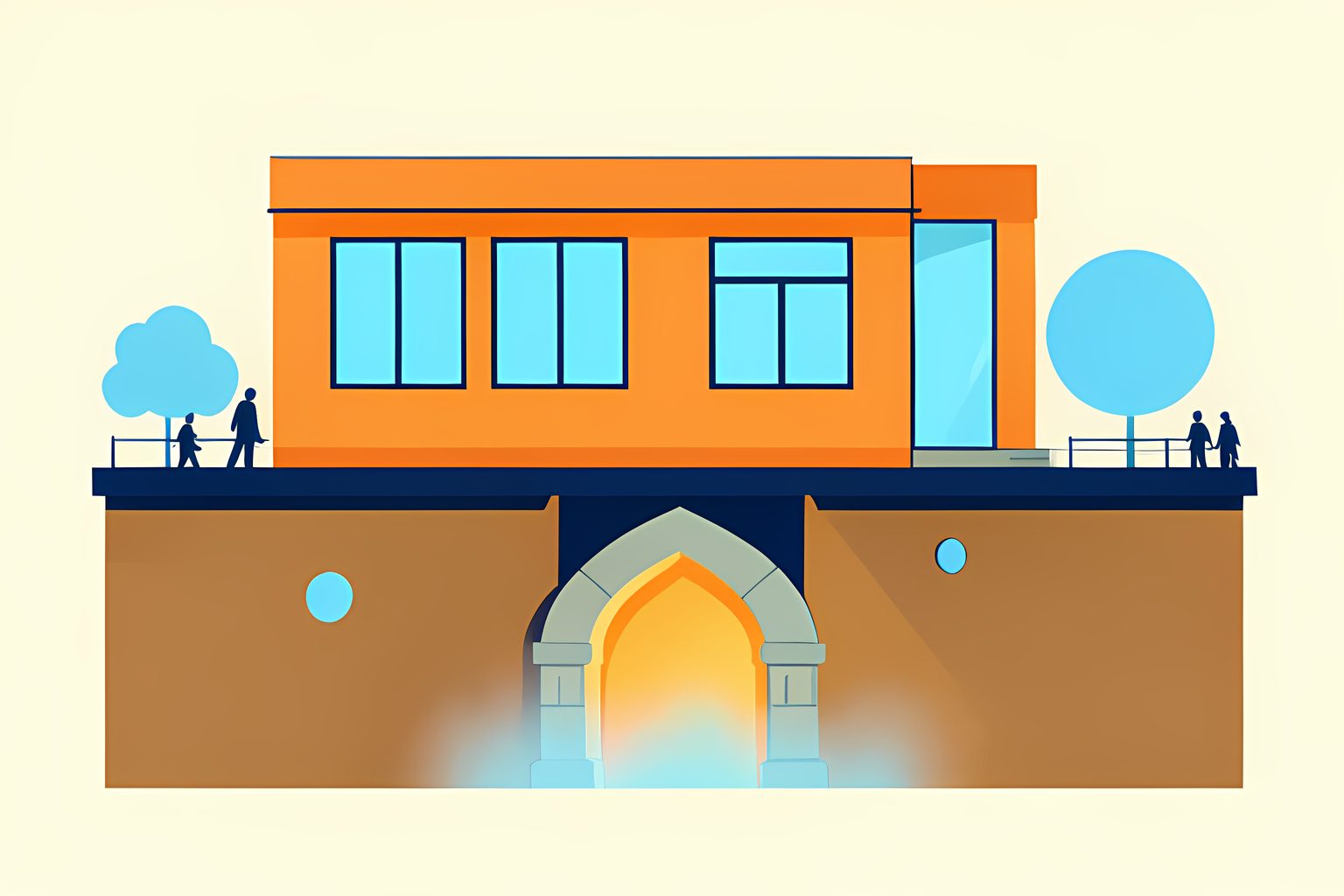
Seven meters below the newsrooms and television studios of Bloomberg's European headquarters in London lies an ancient sanctuary that was built long before modern financial markets existed. When I investigated the history of the 3.2-acre development site on Queen Victoria Street, I was captivated by what the earth preserved. Beneath the sandstone floors designed by Foster + Partners rests the reconstructed 3rd-century Temple of Mithras, returned to the exact location where Roman Londoners worshipped nearly 1,800 years ago.
The story of how this ancient temple ended up preserved beneath a 21st-century financial headquarters is one of the most delightful intersections of archaeology, urban design, and public space in modern London.
A lost river and an underground mystery cult
In 240 AD, Roman Londinium was a busy trading settlement on the north bank of the Thames. Worshippers of Mithras - a secretive, Roman mystery cult popular among merchants, imperial administrators, and soldiers - built a stone basilica on the marshy banks of the River Walbrook. The subterranean sanctuary was deliberately dark, windowless, and private, intended to evoke the cave where Mithras was believed to have slain the sacred bull.
As the Roman Empire faded and London expanded above it, the temple collapsed into the soft, waterlogged mud along the Walbrook riverbank. For centuries it remained hidden beneath layers of medieval and Victorian construction. In 1954, on the final day of an archaeological excavation clearing post-Blitz bomb rubble, archaeologist W.F. Grimes uncovered a carved marble head of Mithras. The discovery sparked a national sensation, drawing roughly 400,000 visitors in just two weeks. Unfortunately, post-war developers quickly dismantled the stone foundations and reconstructed them haphazardly atop an open-air concrete carpark podium nearby.
The waterlogged mud that saved 400 Roman voices
When Bloomberg LP acquired the site in 2010 to construct its new European headquarters, the company committed to restoring the temple properly. Before construction began, archaeologists from the Museum of London Archaeology (MOLA) spent four years conducting one of the most thorough urban digs in European history.
The oxygen-poor, waterlogged mud of the ancient Walbrook riverbed had preserved organic materials that would normally rot within decades. Archaeologists recovered over 14,000 Roman artifacts, including intact leather sandals, wooden barrels, and more than 400 waxed wooden writing tablets. Roman scribes wrote into black beeswax spread across hollowed cedar and boxwood panels using iron styluses. The pointed metal tips pressed through the wax, leaving delicate scratches in the underlying wood grain.
Cursive Latin scholar Dr. Roger Tomlin deciphered these faint stylus scratches, publishing the research in Roman London's First Voices. Among the tablets was Britain's oldest dated handwritten document - a legal IOU dated January 8, 57 AD, acknowledging a commercial debt of 105 denarii - and the earliest surviving written reference to the name London (Londinio).
Stepping from a newsroom into the third century
Instead of donating the temple stones to a distant museum, Bloomberg and Foster + Partners chose to rebuild the Temple of Mithras inside the headquarters itself. Reconstructed seven meters below ground in its original Roman footprint, the site opened to the public in 2017 as the London Mithraeum Bloomberg SPACE. Above the temple, the pedestrian walkway named Bloomberg Arcade reinstates the historic route of ancient Watling Street.
Admission is completely free to the public. Visitors enter a bright street-level gallery showcasing over 600 excavated Roman artifacts on a dramatic display wall, then descend into a dimly lit subterranean vault. In the darkened chamber, theatrical lighting, gentle haze, and an ambient soundscape of whispered Latin chants and footsteps bring the Roman temple ruins to life. I love the quiet poetry of this arrangement: upstairs, reporters and analysts monitor 21st-century global capital, while downstairs, Londoners can touch the city's very first recorded financial contract.
Sources
Every factual claim above traces to one of these. Links open in a new tab.