Inside the Green Chile Pipeline Detour That Delayed Project Jupiter

A 17-mile natural gas lateral named after New Mexico's signature crop became the bottleneck for an AI data center when state land officials twice rejected its route.
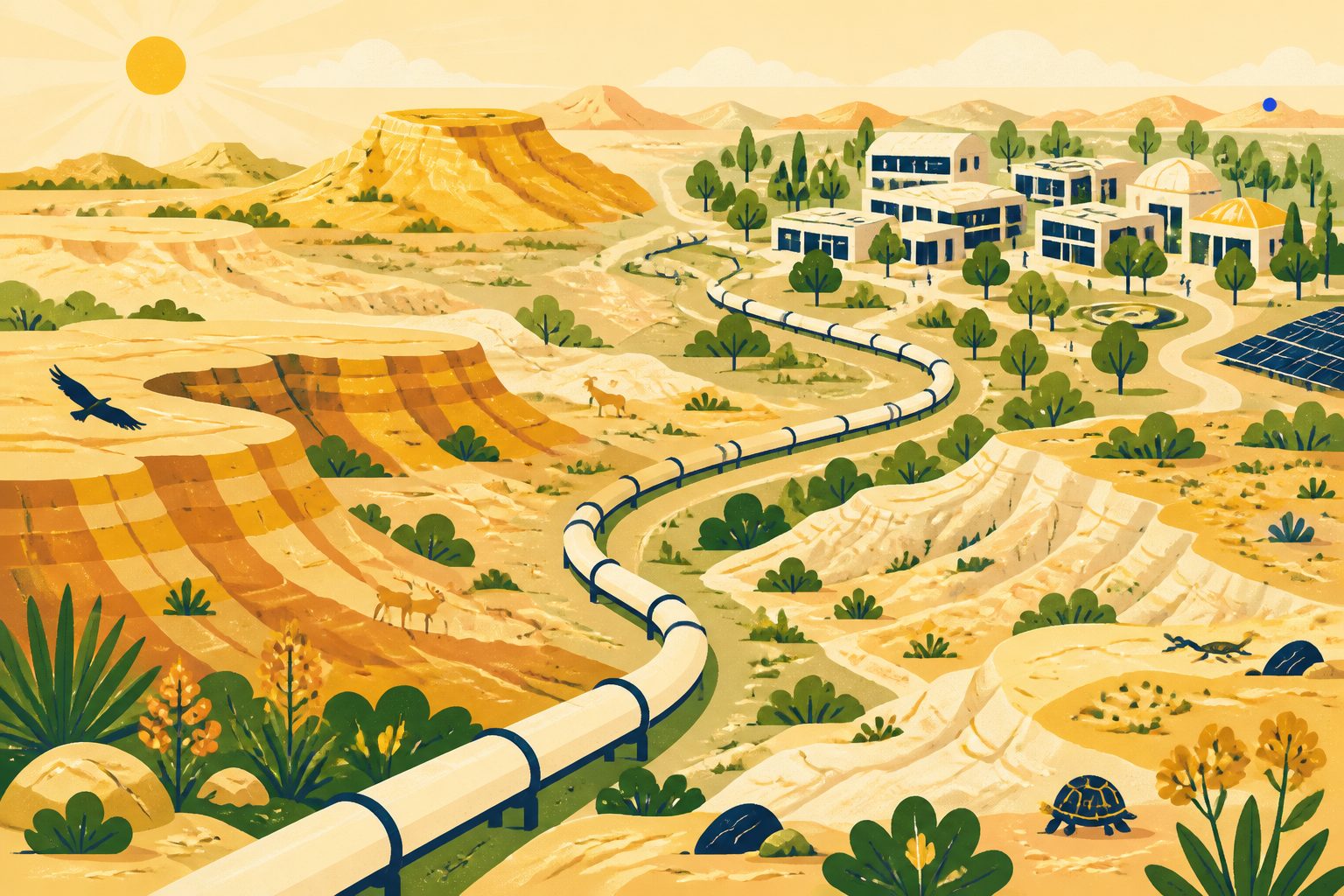
Inside the dusty sagebrush corridors of Doña Ana County, a 17-mile stretch of buried steel pipe has become the most intensely watched energy route in artificial intelligence. When I went through the official records of the New Mexico State Land Office, the first thing that brought a smile was the project's official regulatory title: the Green Chile Project. It is a wonderfully local tribute to the state's agricultural pride, attached to an infrastructure artery intended to feed 400 million cubic feet of natural gas per day to Oracle's Project Jupiter computing hub.
Yet behind that charming regional name sits a compelling story of state land stewardship, environmental scrutiny, and a multi-month engineering detour that ultimately prompted Oracle's recent force majeure disclosure.
The state trust land bottleneck in southern New Mexico
To connect the Project Jupiter campus to the regional Transwestern pipeline network, developer Energy Transfer proposed a direct pipeline corridor running north from the Texas border. The original path traversed a 0.6-mile segment of state trust land, which required an easement lease approved by New Mexico Commissioner of Public Lands Stephanie Garcia Richard.
In March 2026, the State Land Office issued a formal denial. Following a request for reconsideration, Commissioner Garcia Richard upheld that decision on July 14, 2026, determining that the pipeline presented substantial environmental risks regarding emissions and water protection while offering minimal economic return to the public school beneficiaries supported by the trust.
My obligation as land commissioner is to ensure that activities on state trust land deliver genuine benefits to our state rather than unchecked environmental burdens.
The rejection highlighted a fundamental friction between local public resources and national tech infrastructure. When our publication looked into the state trust land system, we found that Commissioner Garcia Richard manages nine million surface acres specifically to fund public schools and universities. Granting access to heavy industrial infrastructure requires proving a direct, tangible dividend for the state's students.
Rerouting across federal Bureau of Land Management territory
With state trust land firmly off-limits, pipeline planners had to engineer an alternative route. Fortunately for the project, adjacent federal acreage managed by the Bureau of Land Management (BLM) provided a viable detour. In May 2026, the BLM completed an environmental assessment and approved a right-of-way crossing public lands.
However, shifting a major industrial gas lateral is not as simple as drawing a new pencil line on a blueprint. Crews had to conduct fresh geotechnical surveys, navigate dense underground caliche deposits, and negotiate new construction corridors. Trenching through caliche rock requires heavy rock-trenching machinery and careful environmental mitigation to preserve local desert scrub.
As I calculated from project filings, this detour extended the construction schedule, pushing the pipeline's completion date from August 2026 to February 1, 2027. That five-month adjustment was the exact catalyst for Oracle's contractual force majeure notice.
Green Chile Pipeline Route Facts
- Project Name
- Green Chile Pipeline Lateral
- Developer
- Transwestern Pipeline Company (Energy Transfer)
- Total Length
- 17 to 18 miles
- Delivery Capacity
- Up to 400 million cubic feet per day (MMcf/d)
- Destination
- Project Jupiter fuel cell microgrid in Doña Ana County
- State Trust Parcel Dispute
- 0.6-mile segment denied by NM State Land Office
- Revised Route
- Rerouted onto federal Bureau of Land Management (BLM) land
- Revised In-Service Date
- February 1, 2027
Where cloud ambitions meet desert reality
The saga of the Green Chile pipeline serves as a healthy reminder of the physical realities underpinning digital progress. Tech giants can design neural network architectures in silicon valley offices, but bringing those algorithms to life in a desert data center requires working respectfully with state regulators, federal land managers, and local communities.
The detour may have caused a temporary tremor in financial markets, but construction on the federal route is moving forward steadily. In the end, the Green Chile pipeline will take its place in the desert landscape: a quietly essential steel link between New Mexico earth and the future of computation.
Sources
Every factual claim above traces to one of these. Links open in a new tab.
- Commissioner Garcia Richard Rejects Right-of-Way Application for Green Chile Pipeline
- State Land Office Denies Green Chile Pipeline Crossing in Doña Ana County
- New Mexico Land Commissioner Stands Firm on Protecting State Trust Lands from Pipeline
- Green Chile Pipeline Reroutes onto BLM Federal Land Following State Denials
- Energy Transfer Targets February 2027 In-Service Date for Green Chile Natural Gas Lateral