The 2001 Earthquake Landmark Behind 25 Years of Salvadoran TPS

Born in the aftermath of two catastrophic 2001 earthquakes, Temporary Protected Status anchored a quarter-century of vibrant Salvadoran community life across America.
When I first examined the yellowing pages of the March 9, 2001 Federal Register, one specific calendar cutoff jumped out from the government text: February 13, 2001. That single date established the continuous residence baseline for what would become the longest-running humanitarian protection program in modern American history. For more than two decades, approximately two hundred thousand Salvadorans have lived, worked, bought homes, and raised families under Temporary Protected Status. What began as an emergency response to two catastrophic earthquakes in early 2001 evolved into an extraordinary twenty-five-year anchor of civic life. We often hear immigration discussed through bureaucratic acronyms, but Salvadoran TPS is fundamentally a story of deep community roots, multi-generational enterprise, and remarkable cultural joy.
The 2001 Earthquakes and the Statutory Birth of Section 244
To understand how Salvadoran TPS began, we have to look back to early 2001, when nature struck El Salvador twice in rapid succession. On January 13, 2001, a magnitude 7.7 earthquake shattered the country, triggering lethal landslides in Las Colinas and destroying over one hundred thousand homes. Exactly one month later, on February 13, a second major magnitude 6.6 earthquake hit the central departments of San Vicente and Cuscatlán. The combined devastation obliterated basic infrastructure, drinking water networks, and hospitals. El Salvador could not safely absorb thousands of returning citizens while struggling to house hundreds of thousands of displaced survivors.
President George W. Bush designated El Salvador for Temporary Protected Status on March 9, 2001, utilizing authority established by Congress in the Immigration Act of 1990. That landmark legislation, signed a decade earlier by President George H.W. Bush, created Section 244 of the Immigration and Nationality Act. Under Section 244, the federal government gained a formal statutory mechanism to grant temporary deportation relief and employment authorization to foreign nationals already present in the United States when disaster struck their homeland.
The Department of Justice estimates that there are approximately 150,000 Salvadoran nationals in the United States who may be eligible for TPS under this designation.
From Emergency Relief to the Vermont Avenue Community Corridor
What makes Salvadoran TPS unique is its sheer longevity. Because conditions in El Salvador faced ongoing economic fragility and public safety challenges, successive presidential administrations extended the designation every eighteen months. Over twenty-five years, temporary status fostered permanent communities. In Los Angeles, where the largest concentration of Salvadorans settled, neighborhoods like Pico-Union and Westlake transformed into cultural landmarks.
In August 2012, the City of Los Angeles officially designated the El Salvador Community Corridor along Vermont Avenue between 11th Street and Adams Boulevard. Strolling along that corridor today reveals a vibrant commercial ecosystem: Salvadoran bakeries smelling of warm pan dulce, legal clinics, accounting firms, and community bank branches. Salvadoran Americans did not remain on the economic periphery. They founded construction companies, managed logistics hubs, staffed major healthcare networks, and purchased family homes. On July 18, 2006, the United States House of Representatives passed House Resolution 721, officially recognizing August 6 as Salvadoran-American Day in honor of their contributions to American society.
The Sizzle of Pupusas and Culinary Craft as Cultural Anchor
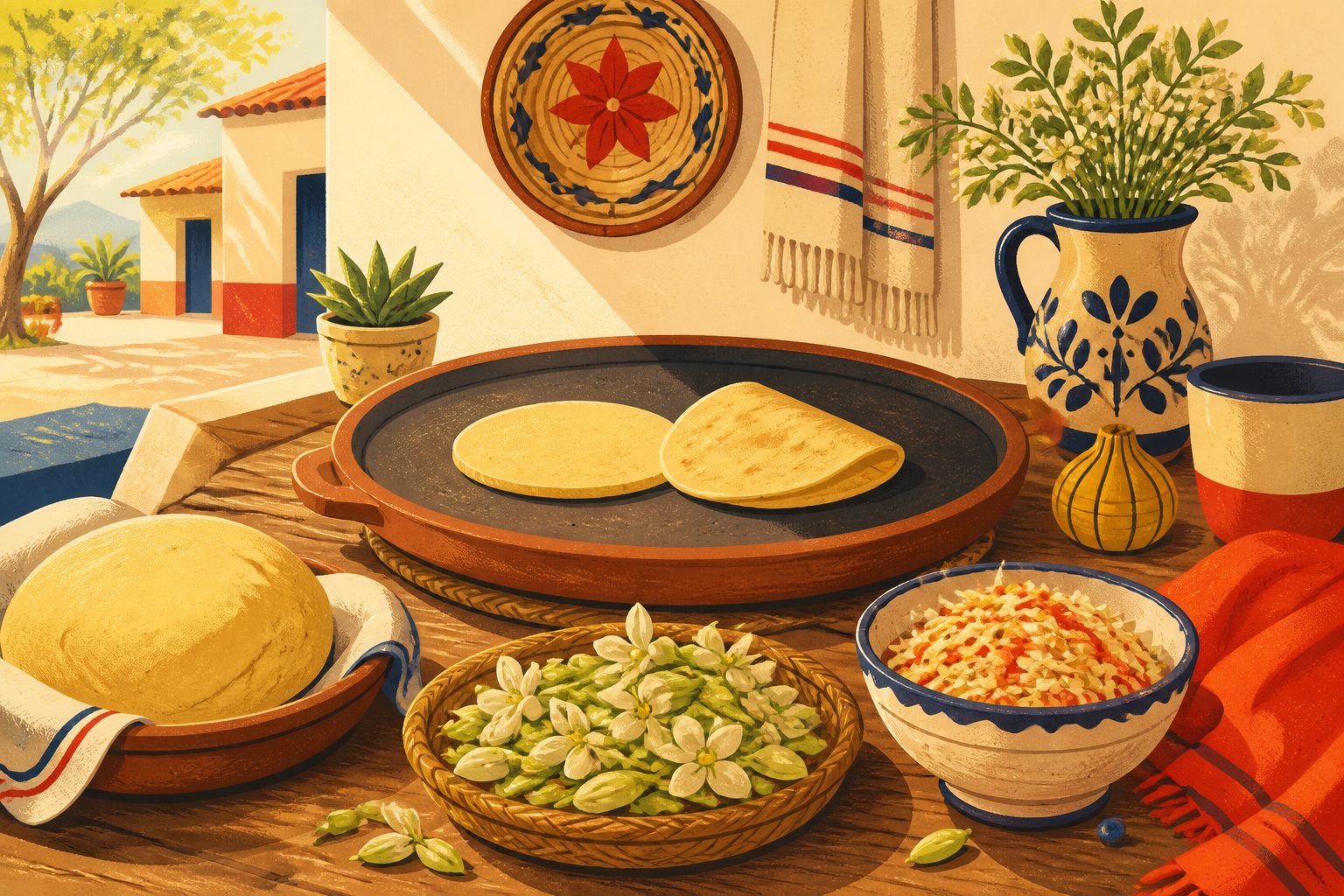
You cannot talk about the Salvadoran diaspora without celebrating the pupusa. That thick, handmade corn tortilla stuffed with spiced pork chicharrón, melted cheese, and loroco flowers became a cherished culinary gift to American city culture. In Washington D.C.'s Mount Pleasant neighborhood, in Houston's Gulfton district, and across Long Island, small pupuserías grew from modest weekend kitchens into beloved civic institutions.
I love the uncompromising precision of traditional pupusa making. The cook takes a ball of moist nixtamalized corn masa, hollows it with a thumb, packs in savory fillings, and pats it flat with a rhythmic, clapping sound. Placed onto a smoking flat griddle called a comal, the corn crisps to golden perfection while the cheese melts inside. It is always served with curtido, a crunchy fermented cabbage slaw pickled with Mexican oregano, carrots, and jalapeños, alongside a mild spiced tomato salsa. Beyond pupusas, Salvadoran bakeries popularized quesadilla salvadoreña, a rich, sweet breakfast pound cake baked with cotija cheese and dusted with toasted white sesame seeds. These culinary rituals preserve family heritage while drawing neighbors together.
The Realities of Continuous Residence and Generational Impact
Because the continuous residence requirement has remained fixed at February 13, 2001, the population of Salvadoran TPS holders is entirely mature. You cannot apply for Salvadoran TPS today if you arrived after February 2001. Every current beneficiary has lived in the United States for more than a quarter of a century. According to data from the Center for Migration Studies and the American Immigration Council, the average Salvadoran TPS holder is now in their late forties or fifties, having spent half their life in American towns.
Their children are overwhelmingly American citizens by birth. Hundreds of thousands of young adults raised by TPS parents have graduated from American universities, entered professions in medicine, engineering, and education, and started their own businesses. Salvadoran TPS recipients contribute billions of dollars annually in federal, state, and local taxes, while funding Social Security and Medicare systems with every regular paycheck. When we review the census and economic data, the picture that emerges is one of profound civic integration.
Why Understanding TPS History Matters Today
Headlines often treat Temporary Protected Status as a fragile administrative football, focusing solely on expiration calendars and courtroom litigation. But when you look past the political noise, the human reality is inspiring. A quarter-century ago, a bipartisan Congress and White House established a legal bridge so that human beings facing natural disaster would not be cast into chaos. The people who crossed that bridge built churches, founded sports leagues, opened small businesses, and enriched the cultural fabric of American cities.
Whether through the cheerful bustle of the August Salvadoran Day festivals or the warm aroma of fresh loroco pupusas on a weekend morning, this community turned emergency relief into a lasting legacy of resilience and shared prosperity. That enduring triumph of daily life is something worth celebrating.
Sources
Every factual claim above traces to one of these. Links open in a new tab.
- Temporary Protected Status Designated Country: El Salvador
- Designation of El Salvador Under Temporary Protected Status Program
- Temporary Protected Status: Overview and Current Issues
- Temporary Protected Status in the United States: A Grant of Protection for Humanitarian Emergencies
- Temporary Protected Status: An Overview
- H.Res.721 - Supporting the Goals and Ideals of a Salvadoran-American Day
- Key Facts About U.S. Hispanics and Their Origins: El Salvador