Inside the left-handed slice geometry that frustrates Chwalinska opponents

By pairing low backhand slice skids with sharp left-handed angles, Maja Chwalińska exploits court physics to pull aggressive power hitters completely out of their comfort zone.
Inside the biomechanics of modern tennis, professional players spend thousands of training hours developing muscle memory for incoming balls that bounce between waist and chest height. When we analyze the match charts of Polish left-hander Maja Chwalińska, we see a deliberate strategy designed to dismantle that exact comfort zone. Standing 1.65 meters tall, she uses ball physics, court geometry, and underspin to force power hitters into awkward, error-prone striking positions.
I consider her tactical framework a masterclass in exploiting rotational friction. Rather than feeding opponents high, rhythmic balls that can be attacked with flat power, Chwalińska consistently delivers low-skidding slices and acute angles that turn an opponent's height into an active disadvantage on court.
The Physics of the Skidding Underspin
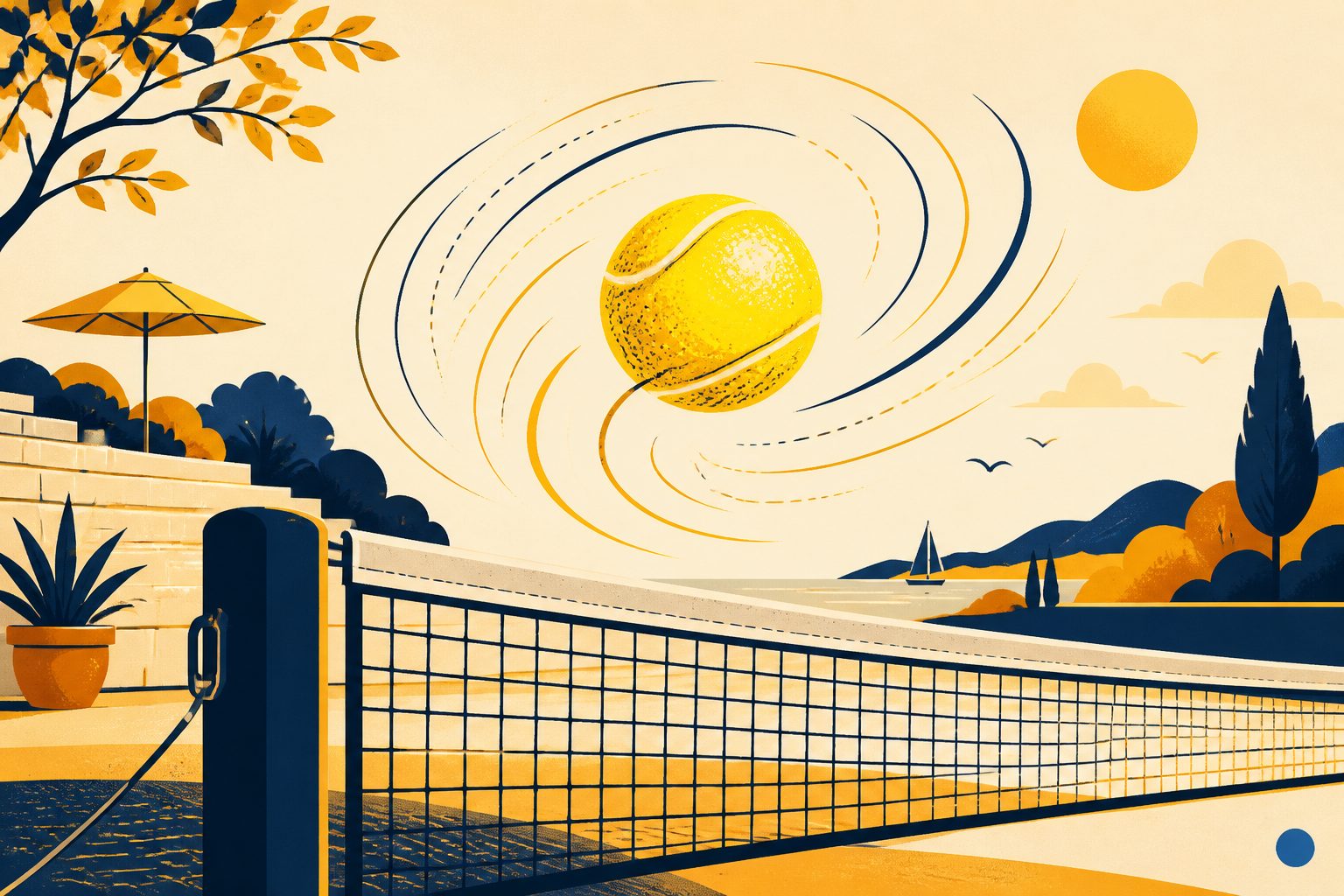
When a standard topspin ball impacts the court surface, forward rotational friction causes it to kick upward and accelerate into the hitter's strike zone. Chwalińska's backhand slice achieves the exact opposite effect. By cutting under the ball with a steep high-to-low racket path, she imparts rapid backward rotation (backspin).
Upon contact with the clay or hard court, this backspin grabs the surface, causing the ball to stay exceptionally low and skid forward rather than bouncing upward. A six-foot baseline opponent must bend deeply at the waist and knees, dropping their racket head below the level of the net to scoop the ball upward. This awkward posture robs aggressive hitters of forward momentum, neutralizing their baseline power.
Over long rallies, the cumulative physical toll of lifting balls from below ankle height induces fatigue in the legs and lower back. What begins as a minor inconvenience in the opening games often turns into widespread mistimed groundstrokes by the deciding set.
Left-Handed Ad-Court Displacement
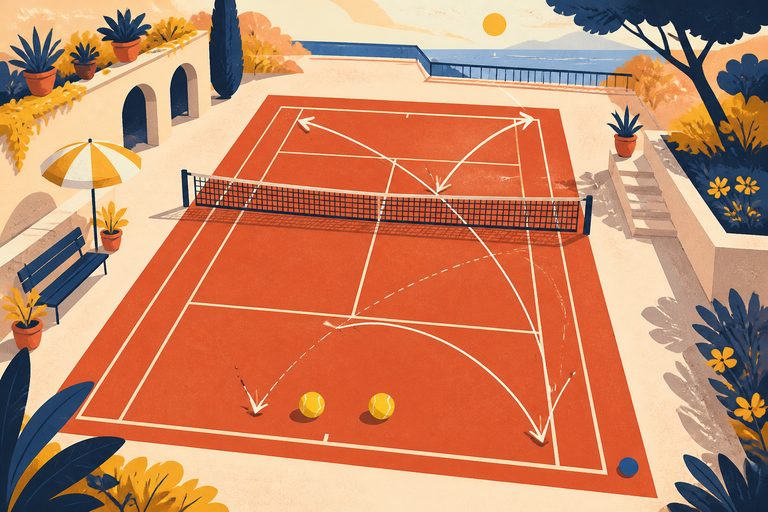
The effectiveness of Chwalińska's slice is amplified by her left-handed orientation. When engaging in crosscourt exchanges from the ad court, her slicing racket face carves the outside edge of the ball, imparting sidespin that curves away from a right-handed player's backhand side.
This sideways drift forces the opponent to hit on the run while stretching beyond the doubles tramlines. Because the ball is moving away from their body at a low height, generating a sharp offensive angle down the line becomes mechanically difficult. Chwalińska systematically controls the center of the court while her opponent covers extra yardage on every exchange.
Furthermore, returning a low slicing ball while sliding sideways demands exceptional wrist stability. Most baseline hitters rely on the kinetic energy of an incoming shot to power their returns; Chwalińska's dead-weight slice offers almost no rebound energy, forcing rivals to supply all their own power.
Vertical Court Manipulation and Depth Variety
What truly frustrates power baseliners is how Chwalińska blends her low slice with unexpected depth variation. As opponents retreat behind the baseline in anticipation of deep balls, she feathers delicate drop shots just beyond the net tape. When they sprint forward in recovery, she lofts defensive topspin lobs over their reach.
This constant vertical stretching forces opponents to sprint north-to-south in addition to side-to-side. Over multiple sets, the mental fatigue of guessing shot depth and the physical strain of retrieving low balls breaks down even the most disciplined power baselines.
Across the tour where heavy topspin dominates practice sessions, this vintage geometry feels startlingly fresh. It forces modern athletes to think on their feet rather than relying on automatic mechanical repetition.
Chwalińska's craft demonstrates that tennis remains a game of spatial problem-solving. Her clever geometry brings wit, variety, and refreshing joy to the modern sporting landscape.
By proving that touch can neutralize velocity, she offers a masterclass in tactical intelligence that delights purists and casual fans alike across every tournament surface.
Sources
Every factual claim above traces to one of these. Links open in a new tab.