A Field Guide to the Glass Bowl, Toledo's Hand-Dug Stadium

Picks, shovels and a ravine in 1936, glass blocks in 1946, a real Army rocket in 1961. Here is what to look for at Toledo's stadium and why it looks like no other.
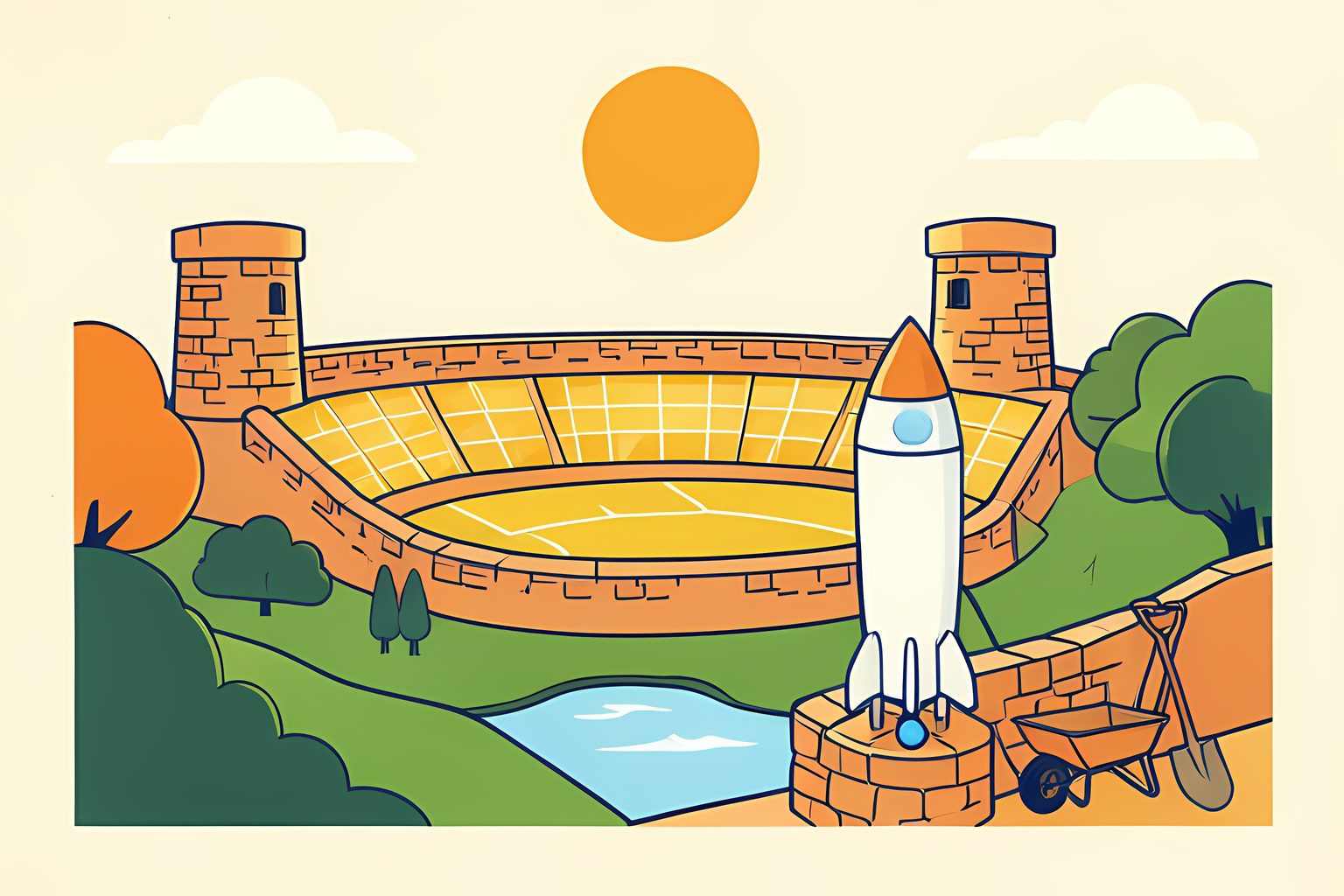
Three hundred workers and no bulldozers. That is how Toledo's football stadium began in 1936, when a Works Progress Administration crew used picks, shovels and wheelbarrows to cut more than 13,000 square yards of earth out of a natural ravine south of campus. I keep coming back to that number because it explains the whole building: the Glass Bowl sits down in the ground, not up on stilts, because people carved it there by hand.
Most stadium pages give you capacity and a parking map. This one is for the reader who wants to know what they are actually looking at, and which parts are older than their grandparents.
The Glass Bowl in numbers
- Opened
- September 27, 1937, as University Stadium
- Original cost
- $313,558 ($272,000 federal, $41,558 city and university)
- Original seats
- 8,000
- Official capacity
- 26,038 since 2001
- Record crowd
- 36,852 vs. Navy, 2001
- Renamed
- The Glass Bowl, 1946
Start at the north end: the two stone towers
The towers at the north end came with the original build. According to the athletics department's stadium history, they first served as locker rooms, and at one point a dozen players lived in them. A stadium with dorm rooms in its turrets is a very 1930s idea. Both towers survived the 1990 renovation on purpose, along with the stone wall that rings the field.
Then look at the wall
That low stone wall is more than decoration. In the early 1980s demand outran the seats so badly that fans ended up sitting on it. Toledo led the nation in percentage of capacity from 1982 to 1984, and in 1982 the figure was 135.1 percent. The best-known overflow day came on October 23, 1982, when 31,369 people packed in to watch the Rockets beat Bowling Green 24-10.
Why glass, of all things
Toledo did not play football from 1942 to 1945, and the empty stadium fell apart. In 1946 an engineer named Wayne Kohn, who worked for the glassmaker Libbey-Owens-Ford, suggested rebuilding it with glass. Glass blocks went in throughout the stadium. A glass electric scoreboard went up in the south end zone, and a two-tier press box of blue Vitrolite and glass block went on top. Lights arrived too, which is where Toledo's night football began. The new name honored the city's main industry.
I could not confirm how much of that 1946 glass survives today. The university's history describes the rebuild but not a surviving inventory, and later projects replaced the press box and scoreboards. If you go looking for original glass block, treat it as a hunt, not a promise.
The rocket by the gate
Outside the stadium stands an actual rocket. In 1961 the university obtained a one-ton rocket from the U.S. Army's missile program, partly because of the school's ties to the Army Ordnance Corps, according to the athletics department. For a team that got its nickname from a student's word "Skyrockets" in 1923, it is the most literal mascot imaginable, and I love it for that.
The bowl game that shared the stadium's name
The 1946 rebuild was dedicated with a postseason game, and for four Decembers the stadium hosted its own bowl. Toledo won the first three.
| Date | Result | Crowd |
|---|---|---|
| Dec. 7, 1946 | Toledo 21, Bates 12 | 12,000 |
| Dec. 6, 1947 | Toledo 20, New Hampshire 14 | 13,500 |
| Dec. 4, 1948 | Toledo 27, Oklahoma City 14 | 8,500 |
| Dec. 3, 1949 | Cincinnati 33, Toledo 13 | 8,000 |
The modern layer
Ground broke on May 25, 1989, for an $18.5 million renovation. It replaced a wooden press box that held 53 people with a three-level press tower that seats 1,070 and houses 45 private suites. More than 90 percent of the cost came from private donations and suite and club leases, according to the athletics department. A video board followed in 1999 and FieldTurf in 2008.
The home team has kept up its side of the deal. Toledo won its first three home games of 2026, making nine straight wins at the Glass Bowl. The remaining home dates this season are October 10, October 24, and the Wednesday nights of November 11 and November 18.
Stand by the towers before a night game, with the lights on the stone, and you are looking at a bowl built by people who needed the work in 1936. The glass came ten years later. Carrying the Rockets was always the ravine's job.
Sources
Every factual claim above traces to one of these. Links open in a new tab.