Toe the line: a primer on BKFC's round Squared Circle

BKFC fights in a round ring with two lines on the canvas. Here is where the lines come from, how they shape a round, and why nobody can prove boxing gave English the phrase.
The ring has no corners, so the rulebook needed a new phrase for one. In the Association of Boxing Commissions' unified bare-knuckle rules, a referee who calls a knockdown sends the standing fighter to "the farthest neutral ring designation," not a neutral corner (ABC rules). I found that phrase more charming than anything in the promotional copy. It is what happens when a very old sport moves into a circle.
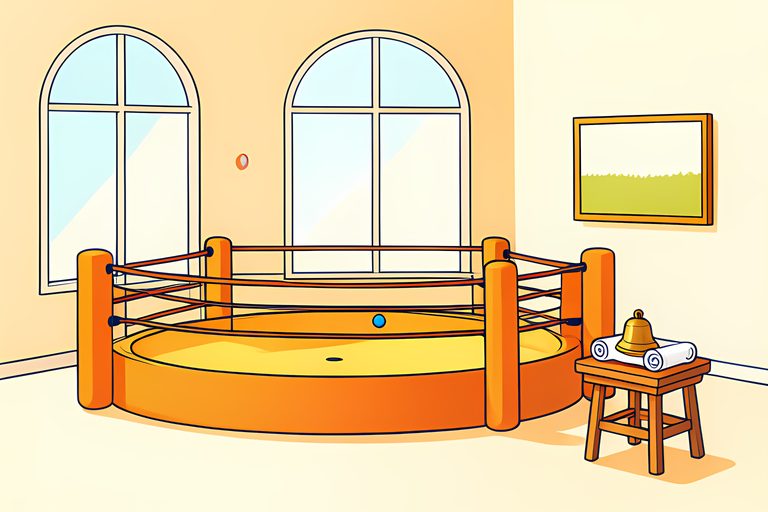
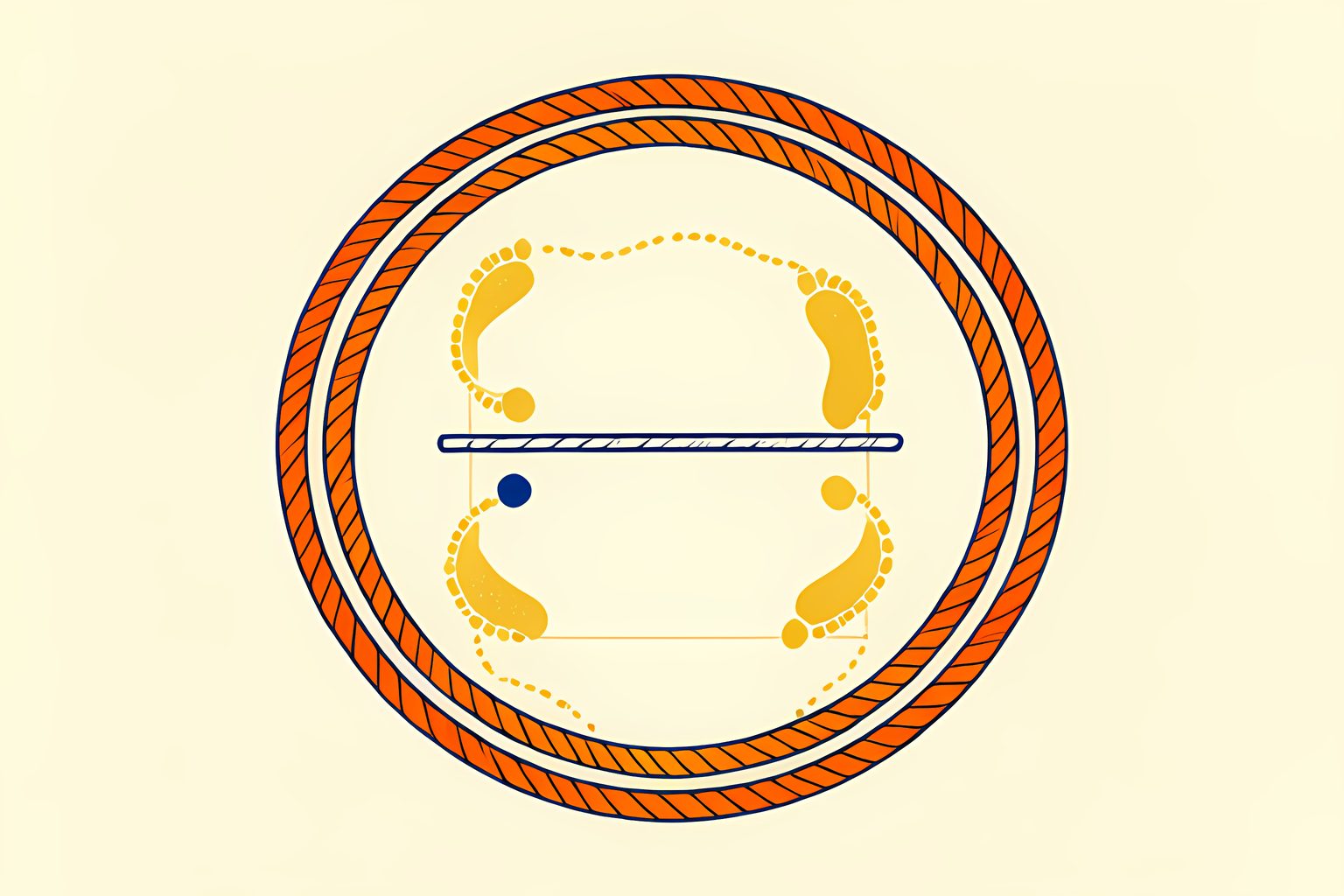
BKFC calls that circle the Squared Circle. It is round, with four ropes, and two scratch lines are marked on the canvas. Before every round each fighter sets a front foot on a line. The ritual has a name, Toe the Line, and BKFC says it traces to the Broughton Rules that governed bare knuckle fighting in the 19th century (BKFC). For the bigger picture of what the promotion is, start with our main BKFC explainer.
Where the scratch came from
Jack Broughton, a champion who had opened an amphitheatre in London, codified his rules on August 16, 1743. The first called for a one-yard square drawn in the middle of the fighting area. After a knockdown, a fighter's second had 30 seconds to bring him back to that square, and a man who could not be brought up was considered beaten (Wikipedia). There were no timed rounds. A round lasted until somebody went down.
The London Prize Ring Rules replaced Broughton's in 1838. The ring changed that year too: the Pugilistic Society introduced the first square ring, 24 feet on a side and bound by two ropes (Wikipedia). The word ring was left over from contests fought in a rough circle on the ground, which is how boxing came to call a square a circle. BKFC then built an actual circle and kept calling it squared. The joke has come all the way around.
How the lines work in a modern round
Wikipedia's summary puts BKFC's two scratch lines three feet apart, with each fighter's front foot on their own line at the start of the round (Wikipedia). BKFC's own description says fighters begin "face to face, and just inches apart." Both can be true, since lead feet a yard apart still leave two leaning upper bodies close together. I could not find an official BKFC diagram with measurements, so treat the three-foot figure as reported rather than confirmed.
The lines only matter for a second or two. After that, the ABC rules take over (ABC rules). Four things are worth watching:
- The bell. Both front feet sit on the lines, so every round begins at close range.
- The clinch. Holding an opponent by the back of the neck and punching is legal, so a clinch is rarely a rest.
- The count. A knockdown brings a mandatory eight count, there is no standing eight count, and the other fighter waits at that farthest neutral ring designation.
- The clock. Rounds run two or three minutes, and no bout may go past six rounds or 18 minutes of fighting.
The phrase nobody can pin on boxing
Plenty of pages will tell you that "toe the line" was born at the scratch. The printed record is murkier. Phrases.org.uk, which traces idioms through old sources, lists an 1813 use of "toe the mark," an 1831 account of a naval punishment that had a sailor stand with his toes at the edge of a plank, and an 1835 Gettysburg newspaper using "toe the scratch" in a prizefighting sense (The Phrase Finder).
The site's verdict is refreshingly blunt: "Which is the source? Well, no one knows." I like that better than a tidy myth. Prizefighting is a strong suspect, not a proven parent, and the one thing the site is sure of is the spelling. It is toe, not tow.
Next time a BKFC round starts, look down before you look up. Two feet on two lines is a 283-year-old instruction, still being obeyed on a round canvas.
Sources
Every factual claim above traces to one of these. Links open in a new tab.