Meet the Self-Service Invention Behind the Supermarket

A supermarket can feel like a familiar maze until you notice its original trick: it turned a clerk's errand into a trip you make yourself. The old idea is still doing most of the work.
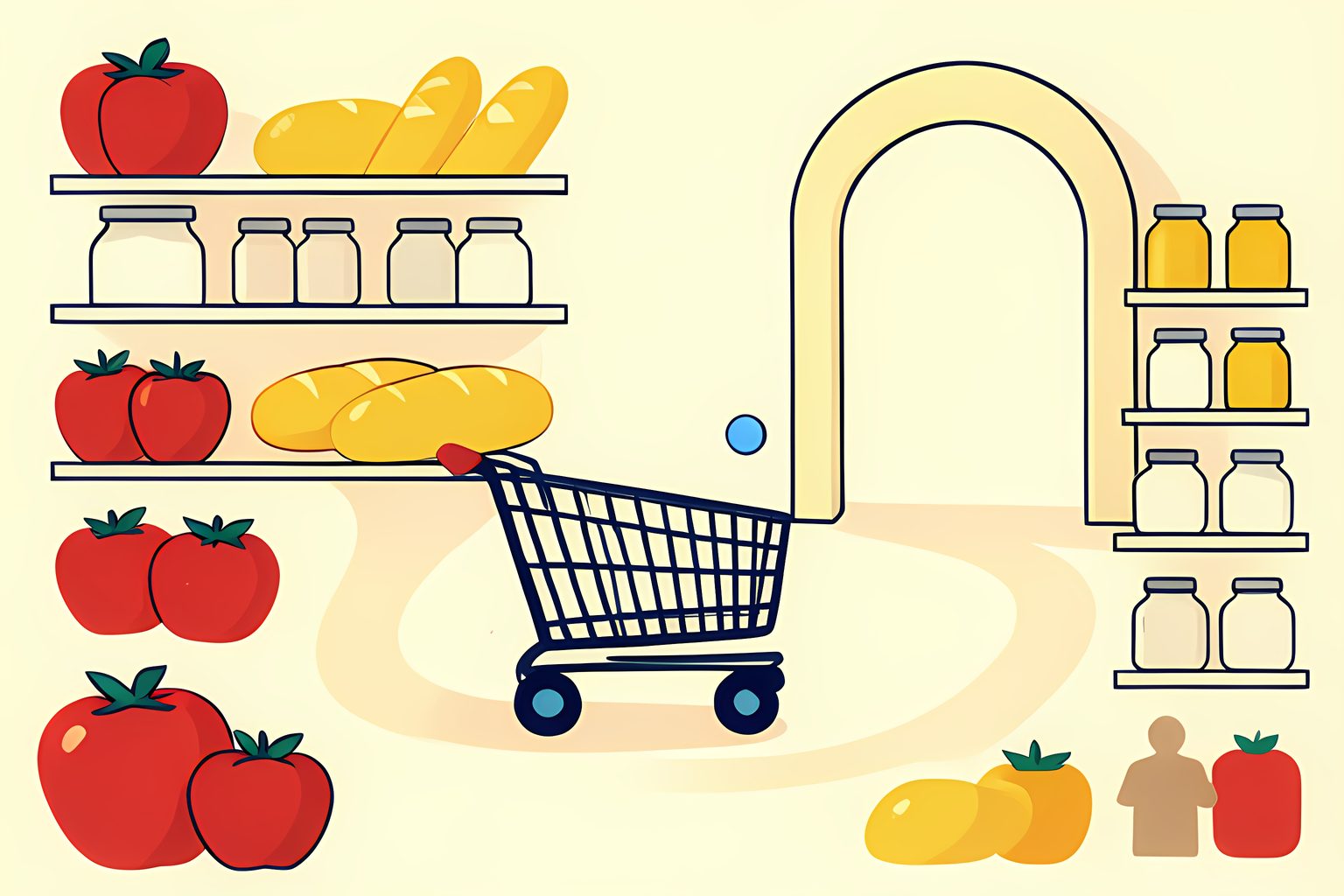
A cart has a particular kind of momentum. Once it starts rolling, the oranges, soap and suspiciously necessary crackers begin to feel like parts of one domestic expedition. I think that is why a supermarket can look so ordinary while being such an audacious arrangement. We take a building divided into produce, bakery, chilled cases, dry aisles and checkout lanes, then calmly expect it to supply dinner, detergent and a birthday candle in one pass.
The useful answer to the question behind a search for supermarket is not that it is simply a big grocery store. It is a self-service system built to let many people choose from a broad stock of food and household goods, then settle up at one exit. That sounds obvious now. It was once novel enough to patent.
The store that made shoppers do the choosing
Before self-service became familiar, a customer commonly gave a list to a clerk, who gathered the order from behind the counter. Smithsonian Magazine describes how Clarence Saunders opened the first Piggly Wiggly in Memphis in 1916 with customers selecting goods themselves. The surviving company history likewise calls it America's first self-service grocery store. The exact label first supermarket is disputed by historians and retailers, so I would not lean on it. The self-service break is the important part.
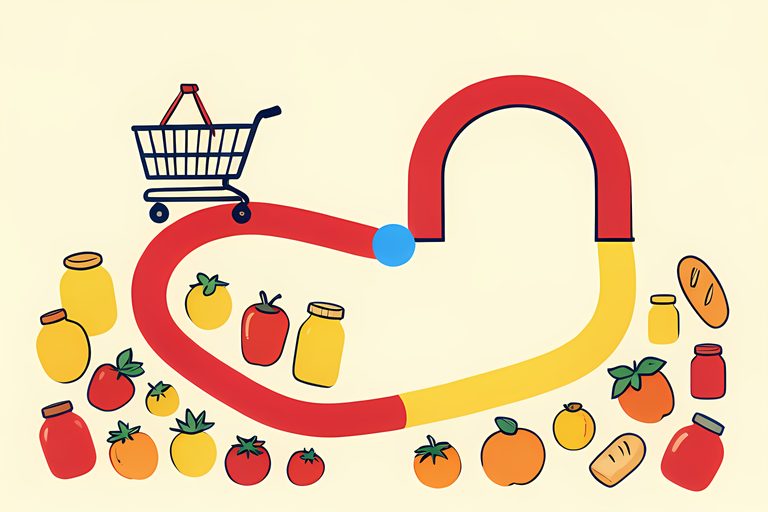
Saunders filed his Self-serving store patent on October 21, 1916. It was published on October 9, 1917. Its drawings and claims are wonderfully plain about the ambition: rows of display cabinets made aisles; alternate ends connected into a continuous, circuitous path; the customer reached a checking and settlement station at the exit. In other words, the patent treated browsing, a route through goods and payment as one machine.
That route was not merely an interior-design flourish. The patent places the checking station by the exit, after the shopper has passed through the paths between cabinet rows. The family resemblance to a modern checkout is easy to see, even if the document did not predict every later version of the cart, scanner or loyalty card. Its modestly radical promise was simpler: the customer could move, choose and pay without a clerk collecting each item.
When self-service became a supermarket
Self-service alone did not make every food shop a supermarket. The later format added range and departments. The International Council of Shopping Centers says Michael Cullen's first King Kullen, opened in a former Queens garage in 1930, combined self-service with separated food departments, volume discount selling and parking. That fuller model is why a supermarket feels less like a counter with shelves and more like a compact food town.
What the word usually points to
- Self-service
- Customers select goods rather than hand an order to a clerk.
- A full line
- Food categories such as fresh produce, meat, frozen food and packaged groceries appear together.
- Departments
- Different kinds of food and service are grouped as distinct working areas inside one store.
- One trip
- The point is a practical weekly shop, not a strict universal square-footage rule.
That last distinction matters. The U.S. Census Bureau's retail category puts supermarkets and other grocery retailers together when they sell a general line of food, including canned and frozen products, produce, and fresh or prepared meat, fish and poultry. It separately names limited-line convenience retailers. Government classifications are made for counting businesses, not for settling arguments in a parking lot, but they show why everyday labels blur.
Why the building feels like several rooms
The broad range is not just theatrical. A produce display, a service deli, a frozen case and a center aisle of shelf-stable goods do different jobs. In a 2014 competition filing, the Federal Trade Commission described supermarkets as traditional full-line stores offering fresh meat, dairy, frozen food, bakery goods, dry groceries, detergents and health and beauty products for one-stop shopping. The point is a basket that can hold the week, not an aisle that looks impressive in isolation.
That is also why one size description misleads. The USDA Economic Research Service has used several classifications in its food-access work: a supermarket in one data system has an extensive variety of grocery and other merchandise plus ten or more checkout lanes, while a large grocery store is identified by a wide selection of the four staple food categories. Those are research definitions, not a rule that tells you what to call the shop near home. They do make the scale visible.
The supermarket is still a useful idea
The format is no longer the only route to a week of food. Warehouse clubs, supercenters, delivery services, specialty shops and convenience stores each solve a different problem. The USDA says grocery stores remained the largest food-at-home outlet category in 2025, even as warehouse clubs and supercenters grew their share. So the old arrangement has competition, but it has not become a museum piece.
I find the original patent useful because it punctures a lazy story about supermarket layout. Yes, a store wants us to notice its wares. But the enduring innovation was also practical: many people could make their own choices from a very large selection, pay once and carry the lot home. When the cart wobbles toward the exit with one impulsive packet of cookies aboard, it is participating in a system designed more than a century ago. That is an oddly cheerful thing to know on a Tuesday.
Sources
Every factual claim above traces to one of these. Links open in a new tab.
- Self-serving store, US1242872A
- The History of Piggly Wiggly Corporation
- The Bizarre Story of Piggly Wiggly, the First Self-Service Grocery Store
- How Shopping Carts Were Invented and More From the Grocery Store-Evolution Timeline
- 445110: Supermarkets and Other Grocery Retailers (except Convenience Retailers)
- Decision and Order, Bi-Lo Holdings and Delhaize America
- Food Access Research Atlas - Large Retailer Access Map Data Sources and Technical Methods
- Retailing and Wholesaling - Retail Trends