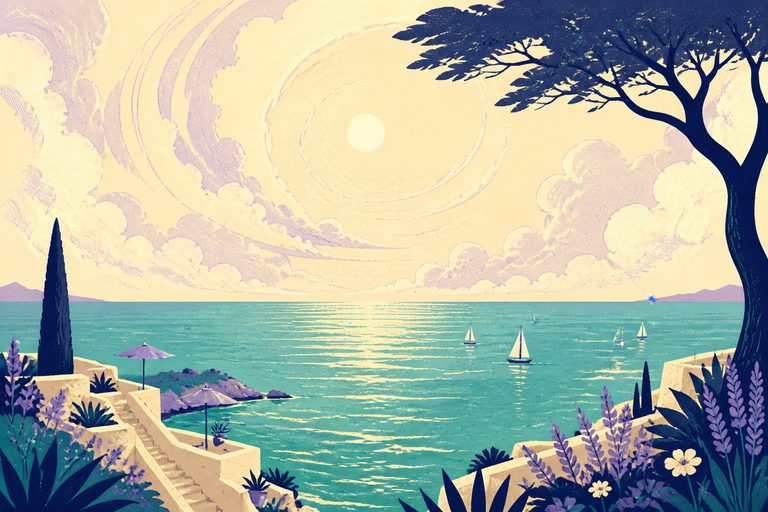
Before the Portal, 1990s Manila Grounds Forgotten Island
Forgotten Island's bright 1990s Manila opening is doing more than scene-setting. It gives two friends a tactile, ordinary world whose small details make their memories feel worth carrying.

Before Forgotten Island gets fantastical, it gives Jo and Raissa a place to be ordinary together. I think that is why the 1990s Manila setting matters so much. The period is not a layer of retro wallpaper pasted behind the plot. It makes room for hand-held keepsakes, family stories, sun-washed color and the clutter that gathers when a friendship has been growing for years.
DreamWorks places the film around two high-school graduates who have been friends since grade school and are facing separate paths. Its official description says their last night together leads them toward Nakali, the island of family stories. That structure makes the opening setting more than a departure lounge. It is the home texture against which every later memory is measured.
An era that lets objects keep their fingerprints
The directors chose the 1990s deliberately. Philstar.com's report says they wanted a vivid, anime-like style connected to the artists' own formative years, mixing hand-drawn animation with CG. That combination helps the past feel made rather than merely rendered. A pencil line, an imperfect camera effect or an object carried from scene to scene can feel like something a person once touched.
I do not read that as a claim that the 1990s were simpler or prettier in real life. The evidence supports a cinematic choice, not a history lesson. What the period supplies is an analog vocabulary for memory. Cartoon Brew's interview describes the directors looking at childhood photos and working toward an aged, tactile quality in the friendship montage. That is a more interesting use of nostalgia than a parade of references.
Manila is a story engine, not a postcard
The film's Philippine setting carries culture into the animation choices themselves. The directors told The Credits that the work draws on language, food, folklore, ordinary rhythms and visual references to the islands, with Philippine artists involved in key 2D sequences. That is why the setting can feel specific without requiring a viewer to arrive with a glossary in hand.
The camera design reinforces the same idea. Crawford told The Credits that the early real-world scenes use longer lenses and shallow depth of field, while the island opens into a much wider field of view. I checked that against Animation World Network's production interview, which reports that the crew took color cues from Filipino culture, a 1990s aesthetic and family photo albums. The effect is not simply 'real world dull, fantasy bright.' It is closer to intimate memories first, then a world that stretches beyond them.
A generous start to a bigger story
That opening generosity helps explain why a film full of imagined places can still feel grounded. AP's review points to the friendship bracelets as an accumulation of shared adventures, while the directors have said the early material needed to show why the two leads need each other. The viewer gets the little mundane details before being asked to care about their absence.
There is a craft lesson in that sequence for anyone who loves animation. A setting becomes memorable when its visual decisions pull in the same direction. The 1990s color, tactile images, specific homes and family references do not sit in separate display cases. They help make the friends' shared past legible at a glance. Philstar.com reports that the team wanted color and anime-influenced energy connected to their formative years, while The Credits describes a deliberately wider, bolder visual vocabulary after the story moves into Nakali.
I am fond of that order: first the ride home, the familiar colors and the accumulated clutter, then the impossible door. It is an old storytelling move, but Forgotten Island gives it a warm local texture. Three weeks from now, the release-week chatter will be quieter. The question of why the movie begins where it does should still have the same good answer: its memories need a real-feeling place to come from.
Sources
Every factual claim above traces to one of these. Links open in a new tab.
- Forgotten Island
- Directors break down Filipino-inspired animation in Forgotten Island
- Forgotten Island Directors Break Down Two Sequences That Bring Jo and Raissa's Friendship To Life
- How Directors Joel Crawford and Januel Mercado Brought Filipino Folklore to Forgotten Island
- Forgotten Island: If You're Here, You're Odd, and You're Family
- Forgotten Island review: A journey into Filipino folklore and friendship