Why Daily Horoscopes Can Disagree So Much

The sky is one thing. A public horoscope is an interpretation layered on top of it, and different writers make different choices along the way.
Two Taurus readers can open their phones before breakfast and receive opposite assignments. One is told to make the brave call. The other is urged to keep the peace and wait. Neither has found a clerical error in the heavens. They have met the strangely cheerful fact that a horoscope is not a weather report issued from one celestial office.
That is the useful question behind a burst of August 24 horoscope searches. People are usually not looking for a new article about the date itself. They are trying to work out what this little daily ritual is actually doing. The short answer is that public forecasts are compressed interpretations: a writer takes a huge symbolic system and makes a few lines for millions of people. Compression is handy. It also leaves room for different methods, different emphases, and very different prose.
The quick answer
- What a public horoscope usually is
- A broad reading organized by one sign, often the Sun sign, rather than a full individual chart.
- Why another site can say something else
- It may use a different zodiac, a different chart technique, a different set of current planetary relationships, or simply a different writer's interpretation.
- What stays physically shared
- The apparent paths of the Sun, Moon, and planets are real astronomical observations. The personal meaning assigned to them is interpretive.
- The sensible posture
- Use a horoscope as a reflective prompt or a bit of language for the day, not as a substitute for evidence or a decision-maker.
A Sun-sign forecast begins with a deliberate shortcut
The familiar twelve-sign format has a built-in limit. A general Sun-sign forecast uses a simplified chart arrangement rather than the reader's exact natal chart. Cafe Astrology explains that general Sun-sign horoscopes use a solar chart, while a personal transit reading compares the current sky with a particular birth chart. Astrology.com's own personal-horoscope description makes the contrast plain: its personalized version places a birth chart inside the chart of the day. A public column cannot do that for every person who scrolls past it on the train.
That shortcut is not a secret flaw. It is the format. The Sun sign is a useful hook because a reader can identify it from a birthday, while a fuller chart asks for date, time, and place. But the moment a writer narrows a sprawling chart tradition to one of twelve signs, choices have already been made. A Leo born before dawn in one city and a Leo born after sunset elsewhere are invited into the same paragraph even though astrological chart systems would not treat their charts as identical.
Then the writer decides which sky story matters
Some horoscopes emphasize a current transit, meaning a present planetary relationship as astrology describes it. Others foreground the Moon, houses, or a longer cycle. Even calculators give users choices: Cafe Astrology lists Placidus, Equal, Whole, and Koch house systems. On top of that, tropical and sidereal zodiacs choose different starting points for the same celestial circle. There is no neutral way to turn all of those ingredients into one sentence about whether to text an ex.
The final ingredient is voice. One writer may read a tense configuration as a reason to slow down; another may frame it as a nudge toward candor. That is an inference from the format, not a revelation about planetary fact. The two columns are often closer to two advice writers responding to the same theme than to two thermometers reporting a temperature. It is also why the best ones feel authored rather than dispensed.
The shared sky is still a lovely piece of reality
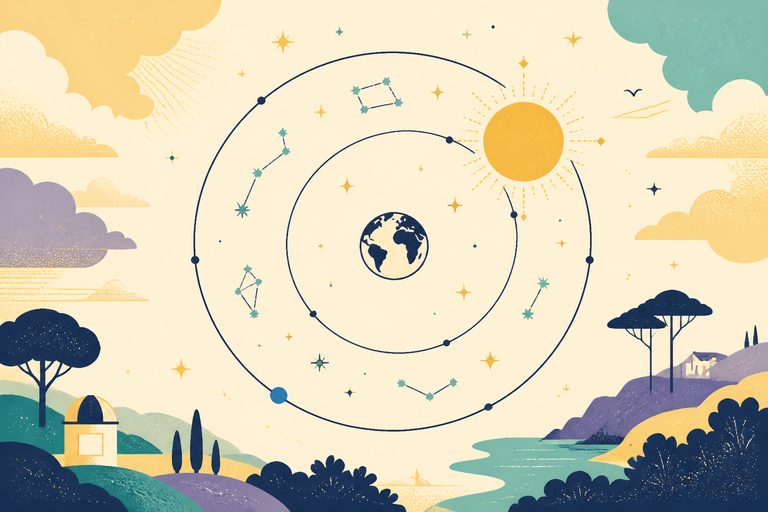
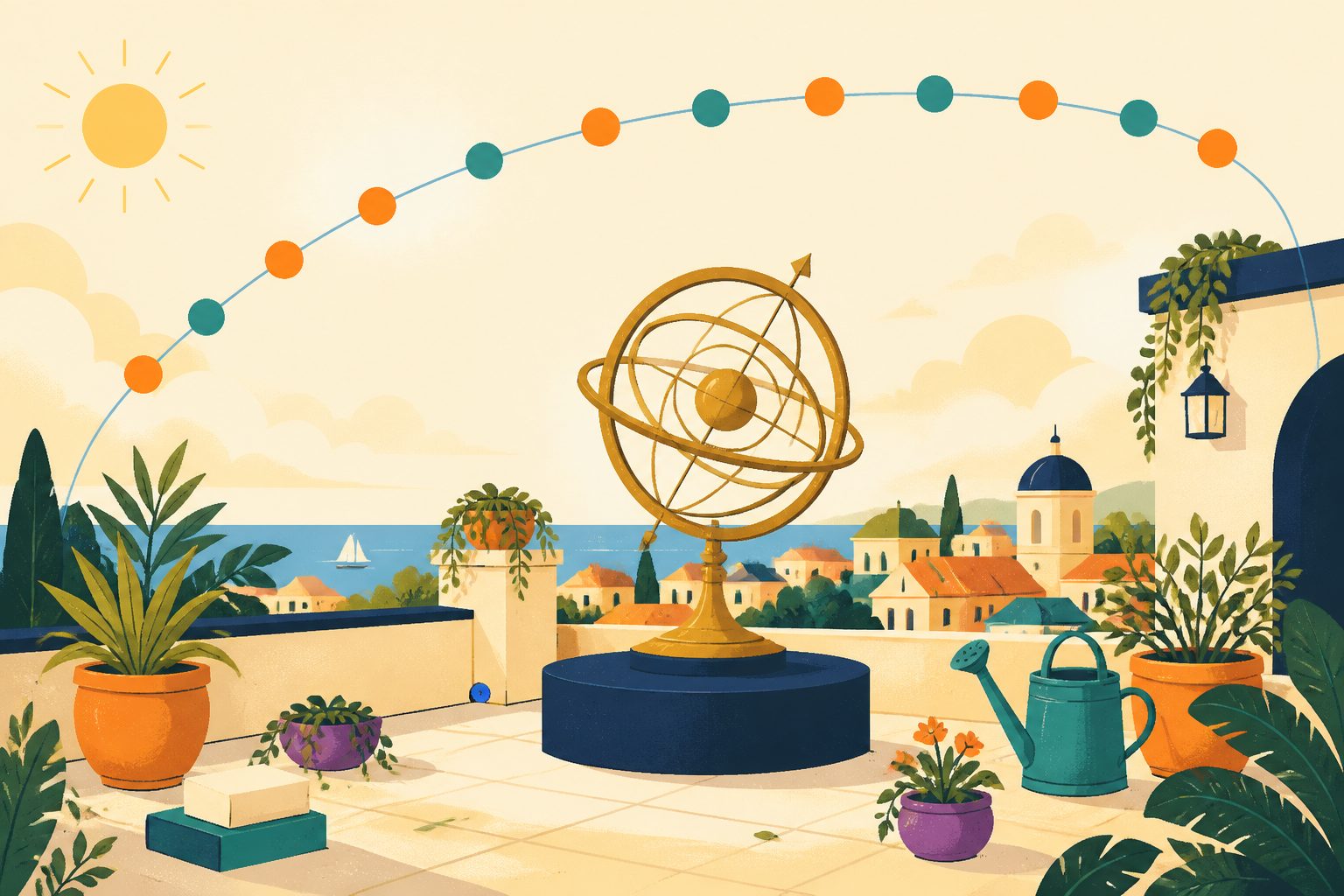
The material underneath the symbolism is marvelous on its own. NASA describes the ecliptic as the apparent path of the Sun across the celestial sphere and notes that the Moon and planets stay close to it. That narrow celestial road is why zodiac imagery has had such staying power. NASA's guide to the ecliptic is worth a look for this alone: the solar system is a fairly flat neighborhood, so its bright travelers keep using nearly the same lane.
Astronomy and astrology are doing different jobs with that lane. The International Astronomical Union notes that astronomical constellations have uneven, formal boundaries, while astrological signs are usually twelve equal divisions. The pleasing oddity is that Ophiuchus really is one of the constellations along the Sun's apparent route, yet it does not turn the popular zodiac into a 13-seat dinner party. The maps were made for different purposes.
Read the forecast at its honest size
- If a prediction sounds uncannily precise, check whether it was made from a full birth chart or a Sun-sign shortcut.
- When two sites conflict, look for their method before deciding one is wrong. A tropical reading and a sidereal reading may not even be labeling the same position the same way.
- Keep consequential choices about money, work, health, safety, or relationships anchored in evidence and conversations with the people involved.
- Borrow a useful sentence if it helps you notice a mood, make a plan, or laugh at the state of your inbox. Leave the claims of certainty behind.
Why the disagreement can be the interesting part
A generic horoscope cannot settle a life question, and it should not pretend to. Its better trick is smaller: it gives a reader a momentary metaphor. Maybe the useful line is the one about boundaries. Maybe it is the reminder to call a friend. Maybe it is nothing but a well-turned bit of cosmic theater with coffee. The disagreement is a clue that you are reading interpretation, not fate. Good daily astrology leaves the day a little more observed and still entirely yours.
Sources
Every factual claim above traces to one of these. Links open in a new tab.
- Daily Horoscopes
- Your Horoscope Just Got a Whole Lot More Personal Thanks to Astrology+
- Report Orders FAQ
- Birth Chart Calculator
- Who Moved My Stars? A Tale of Three Zodiacs
- The Path of the Sun, the Ecliptic
- Frequently Asked Questions
- A double-blind test of astrology
- Are Zodiac Signs Real? Here's the History Behind Horoscopes