Why the Minnesota State Fair Sits Between Two Cities

Falcon Heights was not a random pin. It was the 1885 answer to a moving fair, a two-city rivalry and a need for room to grow.
Part of the Places and public life collection.
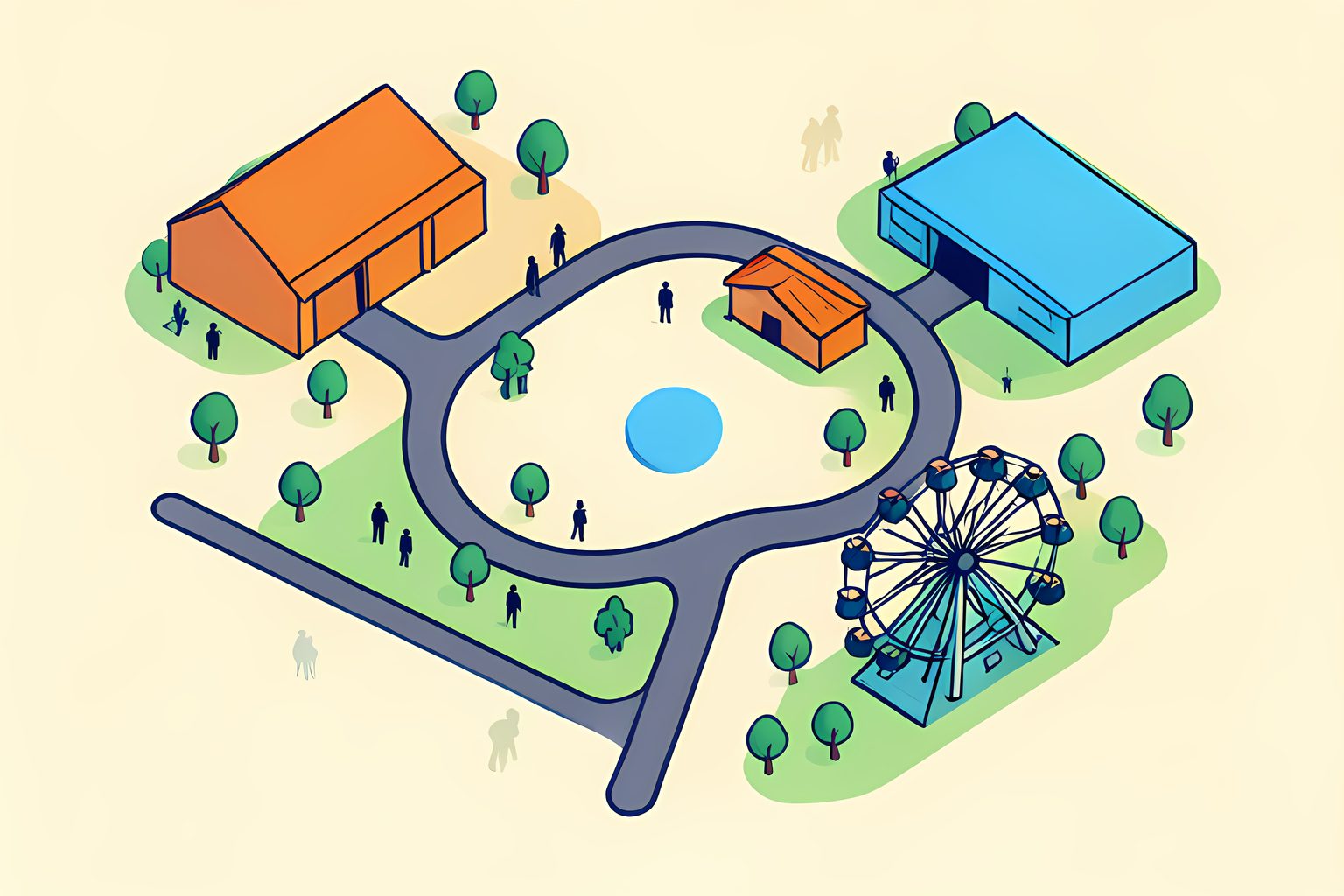
For much of its early life, the Minnesota State Fair packed up and moved. From 1860 through 1884, it appeared in Minneapolis, St. Paul, Rochester, Red Wing, Owatonna and Winona. That sounds adventurous until you imagine hauling animals, exhibits and an entire public event from town to town. MNopedia's history says the traveling fairs were difficult to organize and often poorly attended. The permanent location was not inevitable. It had to be solved.
The short answer is geography with a little civic drama. The present grounds sit between Minneapolis and St. Paul because that is where the State Agricultural Society found land large enough for a permanent fair after both cities had tried to secure it. The long answer is better, because it explains why the Fair feels rooted rather than portable.
The old roadshow had a structural problem
The Fair's own history records those changing host cities and says civic groups in Minneapolis and St. Paul worked for years to provide a permanent home but could not agree. A changing address made it harder to build the reliable barns, avenues, show spaces and public expectations that a large annual gathering needs. The Fair's history overview puts the disagreement politely. The result still feels clear: a state event needed a site that belonged to the whole state more than to one municipal victory lap.
The traveling years also explain why location was never mere scenery. Early fairs were meant to display crops, livestock and handiwork, and organizers hoped those displays would make Minnesota look productive and promising to prospective settlers. A movable event could reach different places. It could not easily accumulate the physical memory that makes a fairground feel like a familiar annual destination. The Minnesota Historical Society account traces both ambitions.
The permanent answer came from a county poor farm
In 1885, Ramsey County donated a 210-acre poor-farm site to the Agricultural Society for the Fair. The land had been a poor farm in what is now Falcon Heights, and the City of Maplewood's local history says Ramsey County had used that site from 1872 until the 1885 donation. Maplewood's account is a useful reminder that the ground did not begin as a blank carnival lot. It had a public history before it became a public gathering place.
That fact deserves plain handling. The former land use is not a cute footnote to wave around between rides. It is part of the record of how public land changes purpose. The cheerful part of the story is the compromise itself: a difficult traveling event finally got room to settle, and a site between the Twin Cities became a place where people from far beyond both cities could meet.
A permanent address made a durable landscape
The first Fair at the new site ran for six days in 1885. Today the Fair says its grounds cover 322 acres. That growth was not just acreage for acreage's sake. It made room for long-lived buildings, animal spaces, gardens, stages, exhibitions and the annual habit of returning to recognizable corners. The State Fair history names several landmark buildings, while the Minnesota DNR's history confirms that the Fair has stayed at its current site since 1885.
The DNR also notes that the Fair adopted its current 12-day, Labor Day-ending format in 1975. That later calendar change matters to the location story. A fixed place and a predictable stretch of days give families, exhibitors and organizations time to build rituals around the event. The grounds become a shared appointment, not a one-off stop on an itinerant route.
The old site stayed visible longer than most people realize
The Fair's 2026 anniversary notes say the original Administration Building, once the Ramsey County Poor Farm's alms house, was razed in 1951 after damaging windstorms. That is a small, sober detail, but it keeps the story honest. The Fair's anniversary page does not erase the old use of the land as the grounds grew around it. Places are usually layered this way, even when the later layer is full of banners and brass bands.
So why is the Fair there? Not because a map pin happened to land between two cities. It is there because the mobile version had reached its limits, the rival cities could not settle the question alone, and Ramsey County offered the land that made a permanent home possible. The delightful outcome is a fairground that still feels like neutral territory. On those late-summer days, the two cities are nearby, but the whole state gets the front porch.
Sources
Every factual claim above traces to one of these. Links open in a new tab.