Before 1840, No One Told Wedding Guests Not to Wear White

The rule that sends a guest back to the rack has a single, surprising origin: one queen who wanted better lighting on her lace.

The rule feels ancient, which is strange, because it is younger than the United States. A guest does not show up to a ceremony in white, the thinking goes, and it has always been this way. It has not. When I went looking for where the ban actually starts, it led to one morning in 1840 and a queen who wanted better lighting on her lace.
Before Victoria, Brides Wore Red
Before Queen Victoria married Prince Albert on February 10, 1840, a bride simply wore her best dress, whatever color it happened to be. Red was a favorite for royal brides, and green and blue were common too. White was not the obvious choice at all; in some circles it was associated with mourning. Guests, meanwhile, wore whatever they owned, and nobody policed the shade. Victoria was not even the first royal to marry in white. Mary, Queen of Scots, had done it back in 1558. But Victoria was the one everyone copied.
The Lace That Started It All
Victoria chose a white silk-satin gown trimmed with Honiton lace, and the reason she picked white was not the one most people assume. She was not signaling purity; she was showing off the lace, and she used orange blossoms to carry the purity symbolism instead. Then she did something even more pointed. She ordered her guests not to wear white, so nothing would pull eyes away from the dress, and she had the gown's pattern destroyed afterward so it could not be copied.
That single instruction is the seed of the modern rule. In the years after the wedding, popular ladies' magazines declared white 'the most fitting hue' for a bride, framing it as an emblem of purity and innocence. Brides across Europe and then America copied the look, and the idea hardened into the form we recognize now: white belongs to the bride, and a guest in white is at best careless and at worst insulting.
A Royal Choice Became a Guest Rule
What I find charming is how accidental the whole thing was. The rule you have probably stressed over while staring at a rack of dresses traces back to one woman trying to make sure her guests did not upstage the main event. Victoria was not inventing an etiquette rule meant to outlive her by nearly two centuries. She was doing exactly what a bride today does when she asks her friends to skip the cream dress.
It took decades for the white gown to become the norm for ordinary people. For most of the nineteenth century, a white dress was a luxury because it was difficult to keep clean, and plenty of women simply wore their nicest dress to the altar. The white gown became standard for middle-class brides only after World War II, when cheaper mass-produced clothing made the single-use white wedding dress affordable. The rule for guests, though, arrived earlier than the gown did for everyone else.
What the Rule Looks Like Now
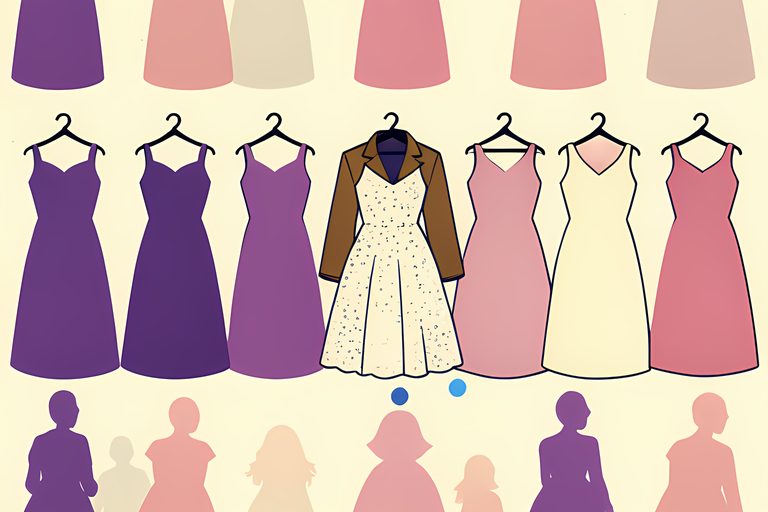
Today the etiquette has softened only at the edges. Guests are still told to avoid white, ivory, cream, and off-white, and to be careful with pale shades like champagne and blush that can photograph white. Exceptions do exist: a couple can ask for an all-white wedding, or a bride can tell a friend that the ivory dress is fine. Short of that, the advice stays the same, which is why Kristen Bell's off-white sequined gown in August 2026 read as a gentle provocation rather than a scandal.
None of this means the rule is going anywhere. It has survived because it is useful: it draws one bright, simple line so nobody has to negotiate a room full of near-white dresses. But knowing where the line came from makes it easier to hold, and a little easier to bend with confidence when the party calls for it. We like a rule that comes with a story, and this one has a queen, a piece of lace, and a room full of guests told to stand back.
Sources
Every factual claim above traces to one of these. Links open in a new tab.
- We Can Thank Queen Victoria For Popularizing White Wedding Dresses
- Everything You Ever Wanted to Know About the White Wedding Dress
- The Bride Wore White (or Blue, Green, or Black!)
- Can You Wear White to a Wedding? Our Experts Weigh In Once and for All
- Can Guests Wear White to a Wedding? Experts Weigh In