John Chapman's Frontier Nursery Enterprise: A Historical Guide

Behind the barefoot folklore was a shrewd 19th-century nurseryman who used land patent rules and cider mill seeds to build a 1,200-acre orchard enterprise.
When I first examined the 19th-century probate files and land deeds tied to John Chapman, the archival record looked nothing like the nursery rhyme. American classrooms often picture a whimsical eccentric wandering barefoot through unbroken forests, tossing handfuls of apple seeds into the breeze from a tin cooking pot perched on his head. That fairytale is charming, but the real historical record is far more impressive. Chapman was an enterprising nurseryman, an astute real estate strategist, and a logistical innovator who anticipated the settlement patterns of the Northwest Territory years before pioneer wagons arrived.
We at Joyful Take appreciate how practical economics often underpin the most enduring folklore. Born in Leominster, Massachusetts, on September 26, 1774, Chapman grew up during the dawn of the American republic. By his late twenties, he recognized that the western frontier was not simply an untamed wilderness. It was an emerging real estate market governed by strict legal benchmarks. To turn that landscape into a thriving livelihood, he built a distributed nursery enterprise that spanned hundreds of miles across Pennsylvania, Ohio, and Indiana.
John Chapman Enterprise Ledger
- Born
- September 26, 1774 (Leominster, Massachusetts)
- Died
- March 1845 (Fort Wayne, Indiana)
- Core Enterprise
- Commercial fruit tree nurseries and strategic land leasing
- Legal Benchmark
- Ohio Company rule requiring 50 apple trees and 20 peach trees within 3 years
- Raw Material Source
- Free pomace and discarded seeds collected from Western Pennsylvania cider mills
- Sapling Price
- Roughly 6.5 cents per young tree (or bartered for meal, clothing, and notes)
- Estate Holdings
- Over 1,200 acres of titled and leased orchard parcels across Ohio and Indiana
The 1792 Land Mandate That Created a Market
The foundation of Chapman's commercial success rested on a specific clause in early frontier property law. In 1792, the Ohio Company of Associates established rules to encourage permanent family settlement and discourage land speculation. Under their land-grant covenants, any settler claiming a 100-acre homestead in the territory was legally required to prove permanent improvement. That meant building a cabin, clearing acreage, and planting at least 50 apple trees and 20 peach trees within three years.
Fruit trees were chosen by authorities because they demonstrated a multi-year commitment to the soil. An apple tree grown from seed required several years of tending before bearing a crop, so a flourishing grove proved that the claimant intended to stay. For incoming pioneers exhausted by clearing dense hardwood timber, raising dozens of saplings from scratch was a difficult race against time. Chapman saw this legal hurdle not as an obstacle, but as a guaranteed market for mature planting stock.
Cider Mill Pomace and Riverway Logistics
Chapman's supply chain was remarkably cost-effective. Instead of purchasing expensive grafted scions from East Coast commercial nurseries, he traveled to the cider presses of Western Pennsylvania along the Monongahela and Allegheny rivers. In autumn, mill operators pressed thousands of bushels of apples into cider, leaving behind heaps of wet pulp, skins, and cores known as pomace. Cider mill owners viewed pomace as industrial waste. Chapman sorted through these discard mounds for free, washing and drying bushels of viable seeds.
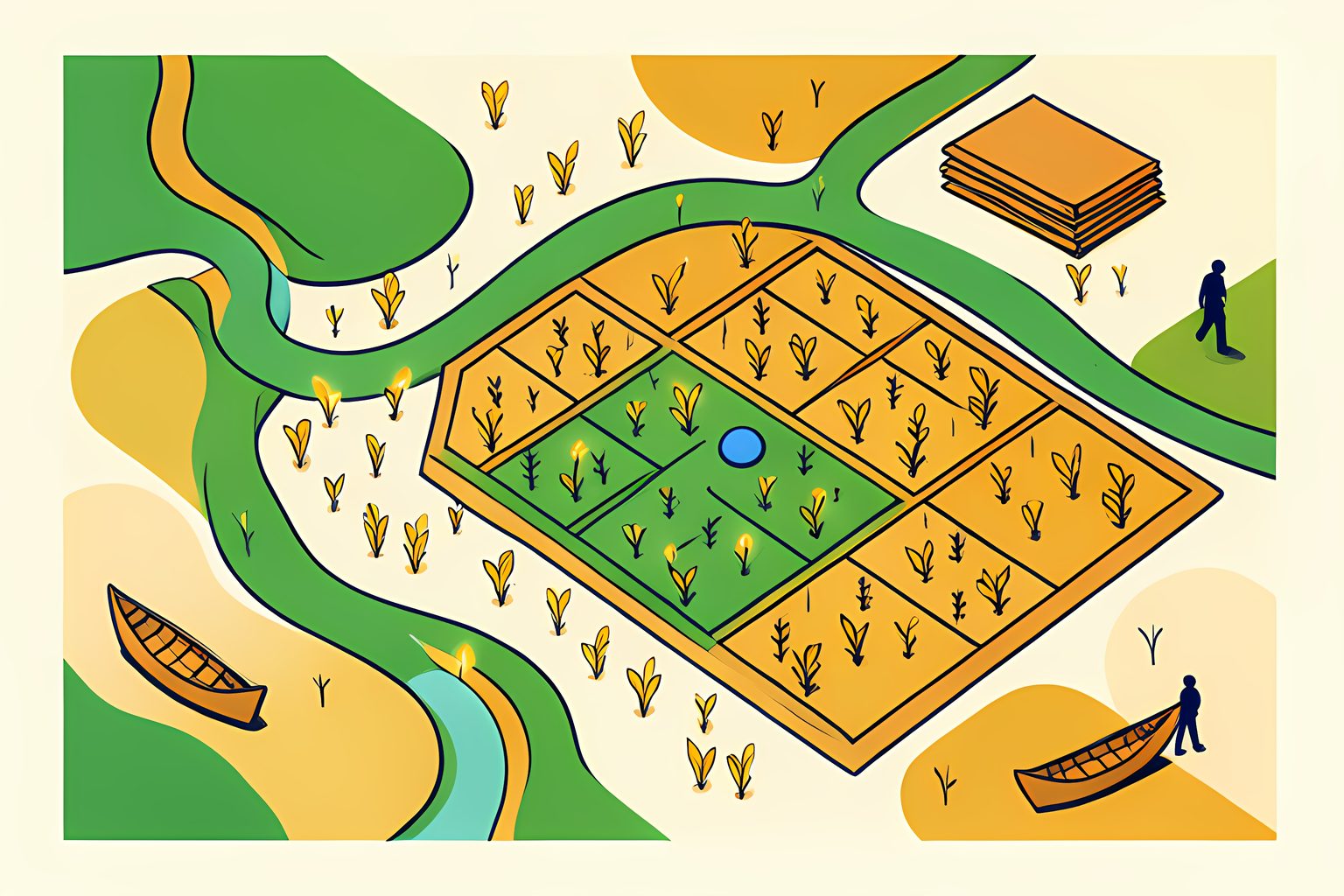
With hundreds of thousands of seeds packed into heavy deerskin sacks, Chapman loaded his cargo into canoes or lashed dugout logs and navigated the Ohio River watershed. When I trace his travel routes along the Muskingum, Mohican, Black Fork, and Maumee rivers, his geographic foresight becomes unmistakable. Traveling ahead of the main settlement routes, he selected fertile, well-drained bottomland near navigable waterways where future towns were most likely to spring up.
The Fenced Nursery System
Folklore suggests that Chapman scattered seeds randomly through the forest undergrowth, but any horticulturist knows that wild seedlings would quickly be choked by weeds or eaten by wildlife. Historical records show that Chapman operated orderly, fenced nursery beds. He cleared small clearings of half an acre to two acres, cultivated the topsoil, sowed seeds in tidy parallel furrows, and built sturdy enclosures out of fallen brush, logs, or split rails to protect the tender shoots from deer, bears, and foraging hogs.
Because he could not remain at every nursery simultaneously, he developed a network of local partnerships. Chapman often entrusted the daily maintenance of a nursery plot to a neighboring settler, offering a share of future tree sales in exchange for weeding and fence repairs. When pioneer families arrived with land claims in hand, Chapman had two-to-three-year-old saplings ready for immediate transplanting.
Liquid Gold on the American Frontier
Modern consumers might wonder why frontier families were eager to buy seedling trees that produced sour, knobby apples instead of crisp dessert fruit. The answer lies in the role of hard cider. In the early 19th century, water sources near pioneer settlements were frequently contaminated with waterborne pathogens. Boiling water for tea required labor and fuel, and fresh milk spoiled rapidly without refrigeration.
Hard apple cider was safe, nutritious, stable, and lightly alcoholic. Every farmstead pressed its harvest into wooden barrels that fermented naturally within weeks. Settlers of all ages drank cider with meals throughout the long winter months. Beyond daily hydration, cider could be boiled down into thick apple butter, distilled into potent applejack, or fermented into vinegar for food preservation. In a cash-strapped frontier economy, barrels of cider functioned as a reliable form of currency.
A Generous Businessman with a Lasting Estate
Chapman generally charged about six and a half cents per sapling, an affordable price for an arriving family. Yet his business philosophy was defined by extraordinary flexibility and compassion. If a struggling family had no specie, he accepted cornmeal, flour, secondhand clothing, or simple promissory notes. When settlers had nothing at all to trade, he gave them saplings on credit or as gifts, trusting them to repay him in future years. Many of his uncollected notes were found quietly stored in his papers after his passing.
Despite his modest personal habits and simple homespun attire, Chapman was far from impoverished. By continually acquiring land patents and nursery leases ahead of expansion, he amassed an estate of more than 1,200 acres across Ohio and Indiana by the time of his death in March 1845. In our view, his true genius was proving that environmental stewardship, commercial success, and radical generosity could thrive together in one extraordinary human life.
As I reflect on the full arc of Chapman's career, what endures is not a cartoonish myth, but a masterclass in reading frontier geography and human need. He aligned legal mandates, agricultural biology, and frontier infrastructure into a durable business that shaped the North American orchard landscape for over two centuries.
Sources
Every factual claim above traces to one of these. Links open in a new tab.
- The Real Johnny Appleseed Brought Apples - and Booze - to the American Frontier
- Johnny Appleseed: American Pioneer and Folk Hero
- The Real Story Behind 'Johnny Appleseed'
- Today in History: September 26 - Johnny Appleseed
- The Legacy of Johnny Appleseed
- John Chapman 'Johnny Appleseed' Historical Marker
- Bud Grafting Apple Trees and Rootstock Propagation
- Growing Apples in the Home Orchard (HYG-1401)