Seedling Planting vs. Grafting in Johnny Appleseed Orchards

Guided by Swedenborgian theology and frontier logistics, John Chapman refused to graft scions, unintentionally driving North America's greatest explosion of apple genetic diversity.
When I study modern commercial apple orchards, I see thousands of identical trees standing in laser-straight rows. They are genetic clones. Every tree in a commercial block is typically grafted onto uniform dwarfing rootstocks to guarantee identical size, color, and harvest timing. In Chapman's era, grafting was already a standard horticultural practice across the Atlantic world. European orchardists had sliced scions and bound them to root systems for centuries to replicate prized dessert varieties with exact fidelity. Yet John Chapman refused to carry grafting knives or propagate clones across his vast frontier nursery network.
We at Joyful Take find Chapman's principled refusal fascinating because it merged theological conviction with unintended evolutionary brilliance. Chapman was a devout missionary of the Church of the New Jerusalem, founded on the theological writings of Emanuel Swedenborg. Swedenborgian doctrine taught that the natural world was a living reflection of spiritual order. Chapman believed that cutting, slicing, and binding tree branches caused plants genuine suffering, viewing grafting as an arrogant human attempt to improve upon divine creation. He reportedly told contemporaries that God alone had the wisdom to improve the apple.
The Unpredictable Lottery of Extreme Heterozygosity
Botanically, the domesticated apple (Malus domestica) is what geneticists classify as an extreme heterozygote. Apples do not breed true. Unlike wheat, corn, or garden peas that replicate parental traits reliably from seed, the genome of an apple seed is an unpredictable genetic roll of the dice. Every seed produced inside an apple combines distinct alleles from the mother tree and the pollen-bearing father blossom. If you plant one hundred seeds harvested from a single sweet Honeycrisp or Newtown Pippin, you will not receive one hundred copies of that fruit. You will grow one hundred completely unique apple trees, each with its own size, flavor, color, acidity, and ripening timetable.
Most wild seedling apples produce fruit that is harsh, sour, astringent, or woody. Frontier settlers bluntly called these unpalatable fruits 'spitters' because taking a fresh bite provoked an immediate grimace. For East Coast commercial fruit growers seeking sweet dessert apples for urban dining tables, extreme heterozygosity was seen as a frustrating defect to be suppressed through grafting. But for Chapman's frontier customers who needed cider fruit, genetic unpredictability was an immense practical asset. High tannin levels and sharp acidity were ideal for fermenting stable, flavorful hard cider that resisted bacterial spoilage during warm autumn storage.
Evolutionary Adaptation at Continental Scale
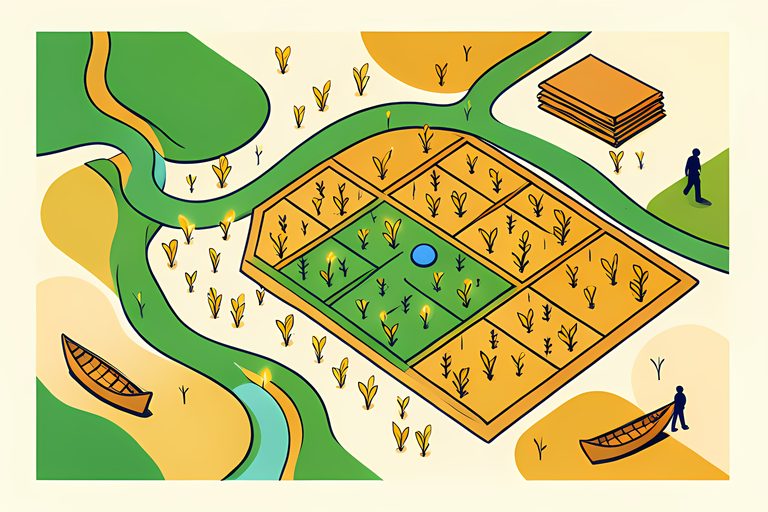
Chapman's distributed nursery system functioned as an accidental evolutionary laboratory. By planting hundreds of thousands of diverse seedlings across differing topographies and microclimates from the Allegheny foothills to the Wabash River basin, he operated one of the largest plant-breeding experiments in human history. Cloned European varieties, refined over centuries in gentle maritime climates, frequently succumbed to brutal Midwestern blights, unexpected spring frosts, and humid summer fungi. Seedling orchards, by contrast, underwent rigorous natural selection. Natural selection did the rest.
The weak seedlings perished quickly in frosty river bottoms, while the hardiest specimens survived and flourished. Out of millions of seed-grown trees planted across the frontier, a rare few struck the genetic jackpot, yielding extraordinary new varieties specifically adapted to North American conditions. Celebrated 19th-century American heritage cultivars, including varieties that later gave rise to modern commercial staples, traced their lineage directly back to chance seedlings nurtured in pioneer fence rows. That genetic lottery worked.
Biological Diversity Versus Industrial Uniformity
Today, modern grocery retail relies almost exclusively on a tiny handful of heavily patented, cloned varieties. Monoculture brings fragility. That industrial uniformity delivers cosmetic predictability, but it leaves commercial orchards vulnerable to emerging pests and climate shifts. When we contrast that uniform modern landscape with Chapman's sprawling frontier nurseries, the historical difference is striking. Chapman's refusal to graft scions created a resilient, genetically varied canopy that protected frontier homesteads from widespread crop failures.
In our editorial estimation, Chapman's stubborn refusal to graft trees was an enduring gift to American biodiversity. His spiritual devotion created an expansive living genetic reservoir that helped a foreign Eurasian fruit adapt, thrive, and claim a permanent home across North America.
Sources
Every factual claim above traces to one of these. Links open in a new tab.
- The Real Johnny Appleseed Brought Apples - and Booze - to the American Frontier
- Bud Grafting Apple Trees and Rootstock Propagation
- The Real Story Behind 'Johnny Appleseed'
- Plant Genetic Resources Unit (PGRU) Apple Collection
- Growing Apples in the Home Orchard (HYG-1401)
- Johnny Appleseed: American Pioneer and Folk Hero