The Two Numbers in Every AFL Score, and What They Mean

Fremantle produced more scoring shots than Brisbane in the 2026 grand final and lost by seven points. The scoreboard that allows it is the fastest way into the whole sport.
Fremantle kicked 12 goals and 17 behinds at the Melbourne Cricket Ground on Saturday 26 September 2026. Brisbane kicked 14 goals and 12 behinds. Add that up and Fremantle took 29 shots at the big sticks to Brisbane's 26, and lost by seven points. I have been reading beginner explainers of Australian football all week, and most of them start with history. The confusion starts somewhere else: on a scoreboard that refuses to round a near miss down to nothing.
A goal is six points. A behind is one. That ratio is the whole sport in miniature, and once you can read it, a match that looks like a hundred-minute traffic accident turns into something closer to chess played at a sprint.
Four posts, two values, one very strange scoreline
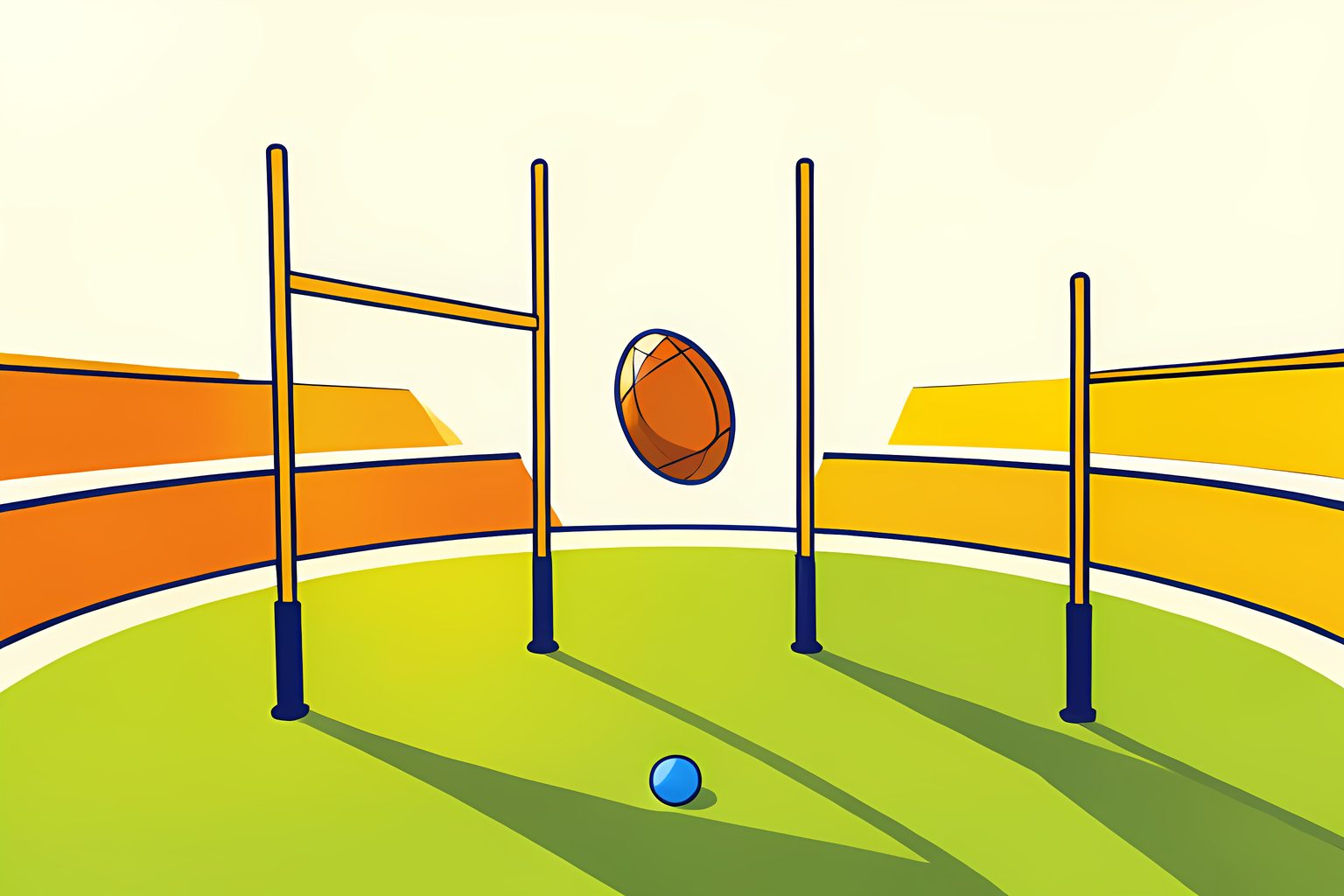
Each end of the ground has four posts in a line. The two tall ones in the middle are the goalposts. The shorter ones outside them are behind posts. Kick the ball between the two tall posts, off your boot, untouched, and that is six points.
Almost everything else that crosses the line is worth one. The ball passing between a goal post and a behind post scores a behind. So does a ball that hits the goalpost, a ball touched by anyone after the kick, and a ball carried or handballed over the line rather than kicked. The version that took me longest to accept is the rushed behind, where a defender concedes the point on purpose because surrendering one is cheaper than surrendering possession.
That is why the scoreline carries two numbers and then a total in brackets. Goals first, behinds second, points in the parentheses. Brisbane's 14.12 (96) is fourteen sixes plus twelve ones.
| Stage | Fremantle | Brisbane |
|---|---|---|
| Quarter time | 3.4 (22) | 3.5 (23) |
| Half time | 6.7 (43) | 6.7 (43) |
| Three-quarter time | 10.12 (72) | 9.8 (62) |
| Final | 12.17 (89) | 14.12 (96) |
The ball moves two legal ways, and throwing is not one of them
You may kick it. You may handball it, which means holding the ball in one hand and punching it away with the clenched fist of the other. Throwing is illegal, and the umpires call it often. Run with the ball and you must bounce it, or at least touch it to the ground, every 15 metres.
Get tackled while holding it and the clock in your head starts immediately: dispose of it legally or concede a free kick. That single law is why the game has so much noise in it. Eighteen players on each side are all trying to arrive at the ball carrier before the ball leaves.
The mark is the pause button
Catch a kick cleanly, on the full, after it has travelled at least 15 metres untouched, and play stops for you. That is a mark, and it buys unimpeded possession plus a free kick: roughly 10 seconds to use it, or 30 if you are lining up for goal. You can also wave it away and run, at which point everyone is allowed to tackle you again.
The 15-metre minimum has only applied since 2002. Before that the threshold sat at 10 metres for more than a century, which tells me plenty about how slowly this code edits itself. A tipped ball cannot be marked. Neither can one that has touched the ground.
Eighteen a side, no offside, and a ground with no fixed size
Each team has 18 players on the field at once. There is no offside law of any kind, which is the single fact that explains why the game looks the way it does: players may stand anywhere, so the shape of a contest is decided by running, not by a line.
The playing surface has no standard dimensions either. The laws describe grounds generally running 135 to 185 metres long and 110 to 155 metres wide, and clubs simply play on whatever oval their city built for cricket. The MCG's football surface is about 160 by 141 metres. A forward pocket in Melbourne is a different job from a forward pocket somewhere narrower, and teams recruit for it.
What the 2026 season quietly rewrote
If you watched this grand final and noticed the umpire throwing the ball straight up rather than slamming it into the turf, you were watching a tradition that ended this year. The AFL Commission scrapped the centre bounce from round one on 5 March 2026, closing out a practice that dated to 1887.
The league's stated reasons were practical rather than romantic: umpire health and safety, consistency with other competitions, wider recruitment for elite umpiring, shorter matches and cleaner ruck contests. Greg Swann, the AFL's executive general manager of football performance, put it in terms of attention, arguing that removing the bouncing skill lets umpires spend their energy on decisions instead.
Two other 2026 changes matter for anyone reading a team sheet. The substitute is gone, replaced by a fifth interchange player, so clubs name 23 and rotate from a bench of five. And the finals grew from eight clubs to ten through a new wildcard round, stretching September into a five-week series.
Why the field is an oval at all
On 10 July 1858, Tom Wills, then captain of the Victorian cricket team, published a letter proposing a football club with its own code of laws to keep cricketers fit through winter. He also made an argument no modern sport would dare, and it is my favourite line in the code's paperwork: that cricket turf benefits from being trampled by footballers through the off season.
The Melbourne Football Club formed on 14 May 1859, and three days later Wills sat down with W.J. Hammersley, J.B. Thompson and Thomas H. Smith at a hotel near the MCG to draft ten rules. They deliberately left out offside. The grounds they played on were cricket ovals, and they still are. Australian football is the only major code whose field shape is a hand-me-down from another sport.
Reading a match the way the scoreboard does
Go back to Fremantle's 12.17. Seventeen behinds is seventeen moments that were nearly something, and the scoreboard credits every one of them without pretending any was a goal. I think that is the most honest unit of measurement in world sport. Soccer throws your near miss away. Basketball would have given Fremantle the game.
One more number, because it is the kind of thing only this scoring system can produce. At half time the two sides were level at 6.7 (43) each. Not merely equal on points: identical, goal for goal and behind for behind, in a grand final that finished seven points apart. Learn to read those two little numbers and you get that gift roughly once a lifetime.
Sources
Every factual claim above traces to one of these. Links open in a new tab.
- Laws of Australian rules football
- Laws of the Game
- League scraps sub rule and centre bounce in major shake-up
- 2026 AFL rule changes: Centre bounce and 'sub rule' gone for next season
- 2026 AFL season
- 2026 AFL Grand Final
- Match report: Brisbane Lions beat Fremantle Dockers in epic Grand Final
- Lions stage epic comeback to beat Dockers by seven points in AFL grand final
- Australian rules football
- Mark (Australian rules football)
- Melbourne Cricket Ground