Spanish dollar vs. U.S. dollar: the coin America copied, then retired

For 65 years, Spanish and Mexican silver dollars were legal money in the United States alongside the coin modeled on them. Here is how the two compared, and the habits the older coin left behind.
Until Friday, January 26, 2001, a share on the New York Stock Exchange could cost $16 3/8. The following Monday, January 29, the exchange finished moving every listed stock to decimals, and $16 3/8 became $16.38. An Associated Press report that day said fractions had been used to trade stocks for more than 200 years, "a legacy of Spanish traders, whose currency was in increments of eighths." I love that a coin the United States officially stopped accepting in 1857 was still setting prices on Wall Street at the turn of this century.
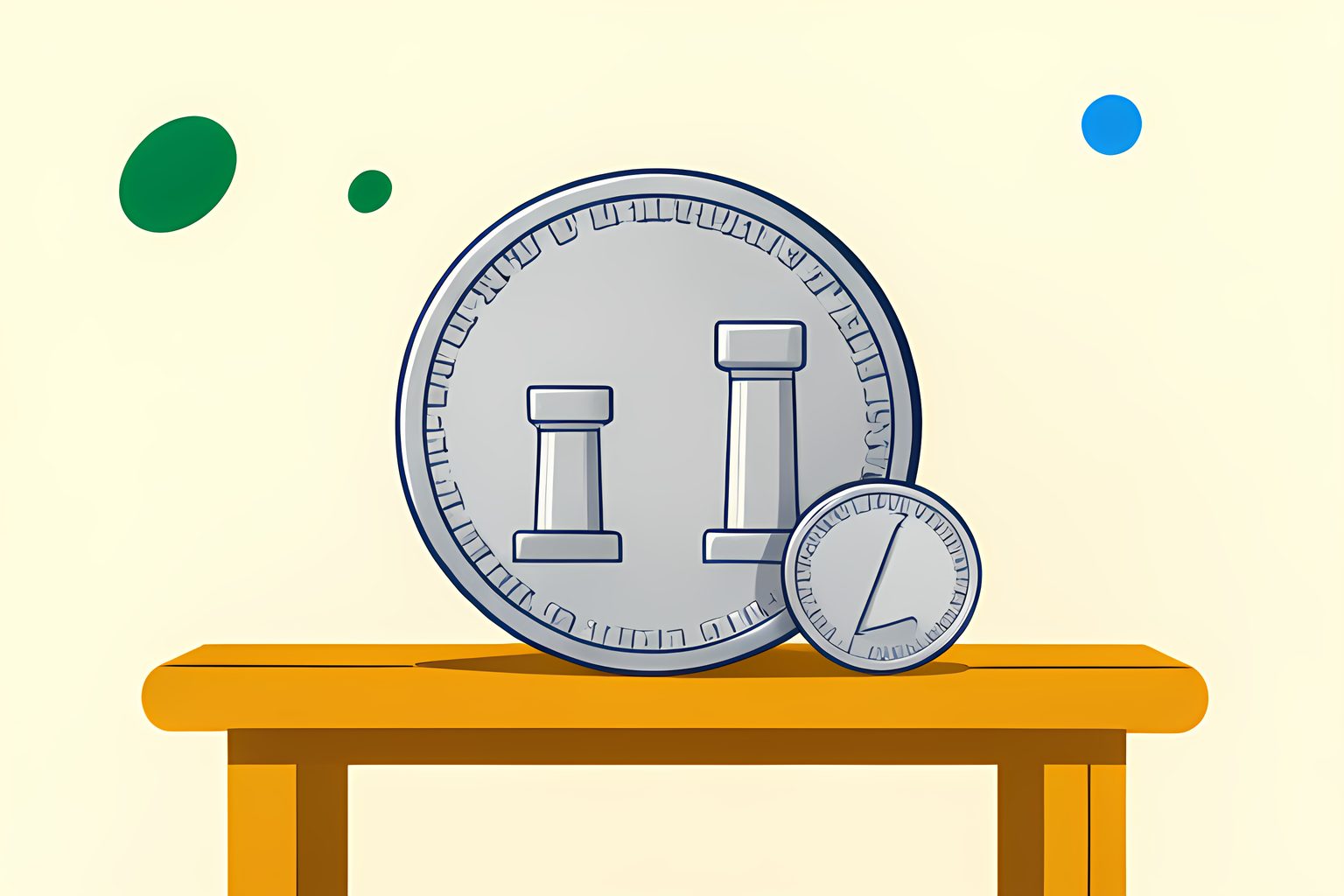
That coin is the Spanish dollar, the peso de ocho reales, better known in English as the piece of eight. The U.S. dollar was built on it, lived beside it, and finally pushed it out. Here is how the two compare.
| Spanish dollar | U.S. dollar (1792) | |
|---|---|---|
| Also called | Piece of eight, peso de ocho reales | Dollar or unit |
| Divided into | Eight reales | 100 cents, a decimal system |
| Silver content | Set by Spanish mints | 371 4/16 grains pure, 416 grains standard |
| Where it was struck | Spanish imperial mints, with silver from Mexico and Bolivia | The new U.S. Mint in Philadelphia |
| Legal tender in the U.S. | Allowed under the Act of April 10, 1806, until February 21, 1857 | From 1792 onward |
One valley gave both coins their English name
The word dollar starts in Bohemia. Silver mined at Joachimsthal, now Jáchymov in the Czech Republic, was struck into a large coin, and Count Hieronymus Schlick of Bohemia is credited with naming it the Joachimsthaler. Thal means valley, so the name roughly means "a thing from the valley." Everyday speech trimmed it to taler, and English speakers turned that into dollar. The Czech Center Museum Houston notes that the original coin carried the lion from the Bohemian coat of arms.
Spanish pesos arrived in the English colonies later and got called dollars because they looked like talers, Dictionary.com explains. So the Spanish dollar was never Spanish in name. It borrowed a German nickname from a Czech valley and then lent it to the United States.
How the colonies made change with a knife
England did not supply its American colonies with enough coin and barred them from making their own, according to the Federal Reserve Bank of Philadelphia. The Spanish dollar filled the gap and became the colonies' unofficial national currency for much of the 17th and 18th centuries, trusted for its consistent silver. To make change, people cut it into eight pieces, or bits.
That is why a quarter is still "two bits." The knife is long gone. The eighths stayed in the language.
1792: copy the value, change the math
Congress wrote the Spanish coin straight into the law that created American money. The Coinage Act of April 2, 1792, defined each dollar as "of the value of a Spanish milled dollar as the same is now current," with 371 4/16 grains of pure silver. What changed was the arithmetic. The Philadelphia Fed notes that the act adopted a decimal system, following Thomas Jefferson's proposal to make the dollar the standard unit, with dimes, cents and half cents in place of eighths.
The new mint could not keep up at first, so foreign silver kept circulating legally. The Act of April 10, 1806, set legal-tender values for foreign coins, including those of Spain and its dominions. We found one widely repeated estimate that about a quarter of circulating coins around 1830 were Spanish in origin; treat that figure as approximate, since it comes from secondary accounts rather than a mint count.
1857: the polite retirement
The Coinage Act of February 21, 1857, ended the legal-tender status of foreign coins. It did not just ban the old silver. It set rates at which fractions "of the Spanish pillar dollar, and of the Mexican dollar" would be received at the Treasury, post offices and land offices, and then sent them to the mint to be recoined. The same act dropped the half cent and shrank the cent into the small Flying Eagle design.
My verdict on the comparison: the U.S. dollar won the law, and the Spanish dollar won the habits. The eighths stayed on the stock ticker until January 29, 2001, on the NYSE and April 9, 2001, on Nasdaq. The bits stayed in the language. And under the recoining clause, old Spanish and Mexican silver handed in at the Treasury was bound for the U.S. Mint to come back out as American coins. As handovers go, that is a graceful one.
Sources
Every factual claim above traces to one of these. Links open in a new tab.
- Act of April 2, 1792 establishing a Mint (text)
- The Coinage Act of 1857
- Money in Colonial Times
- NYSE goes totally decimal - finally
- Securities Markets: Decimal Pricing has Contributed to Lower Trading Costs (GAO-05-535)
- Origin of the word "dollar"
- How The Word "Dollar" Derives From "Joachimsthaler"
- Historical Echoes: Aye, That Piece of Eight You Be Thinkin' of Were a Precursor to Today's Dollar
- Coinage Act of 1857