The U.S. dollar's reserve share slips, yet it is in 89% of FX trades

Central banks hold a smaller slice of their savings in dollars than they did in 2001. Traders use it as much as ever. Here is why both numbers are true, and what actually moves the dollar from week to week.
In April 2025, the world's currency markets traded about $9.6 trillion a day, and the U.S. dollar sat on one side of 89% of those trades. Over the same stretch, the dollar's share of the savings that central banks hold kept drifting down from its 2001 peak. I think that gap is the most honest way to answer the searches for "dólar estadounidense" that jumped this week. The exchange rate you see on a bank screen changes by the hour. The job the dollar does in the world changes much more slowly, and it is stranger and more interesting than the daily quote.
The dollar in four numbers
- Share of world FX reserves, first quarter of 2026
- 57.13% (IMF, published July 1, 2026)
- Peak reserve share
- 72% in 2001 (Federal Reserve)
- Share of currency trades that involve the dollar
- 89% in April 2025, up from 88% in 2022 (BIS)
- Fed policy rate after September 16, 2026
- 3.75% to 4%, after a quarter-point increase
Two numbers that look like they disagree
Start with savings. The International Monetary Fund's COFER survey, released on July 1, 2026, put the dollar at 57.13% of disclosed official foreign exchange reserves in the first quarter of 2026, up from 56.42% at the end of 2025. The euro held 20.03%, the yen 5.44% and the Chinese renminbi 1.99%. Total reserves came to about $13.10 trillion. The IMF noted that about half of that quarter's increase came from valuation: the dollar rose a little against other currencies, which by itself makes dollar holdings look bigger.
The long trend points the other way. A Federal Reserve research note from July 2025 says the dollar's reserve share has declined from 72% in 2001 and has only returned to roughly where it stood in 1995. Reserve managers did not run to one rival. They spread out into smaller currencies, including the Australian and Canadian dollars.
Now trading. The Bank for International Settlements surveys the whole foreign exchange market every three years. Its 2025 survey, published September 30, 2025, found the dollar on one side of 89% of all trades. The euro was at 28.9%, the yen 16.8% and the pound 10.2%. Those shares add up to 200%, not 100%, because every currency trade has two sides, a detail the Fed note spells out.
So the numbers measure different jobs. Reserves are a store of value, money a country keeps for a rainy decade. Trading is money in motion. My reading is that a central bank can quietly diversify its savings while the plumbing of daily commerce still runs through dollars, because that is where the buyers, sellers and cheap hedges already are.
Why so much of the world still settles in dollars
The Fed's explanation is plain. The dollar's role rests on the size and strength of the U.S. economy, its openness to trade and capital, and strong property rights and rule of law. That produces financial markets with unmatched depth and a large supply of very safe dollar assets, mainly Treasury securities. In the first quarter of 2025, foreign investors held about $9 trillion of them, roughly 32% of marketable Treasuries outstanding.
The paper money tells its own story. Fed staff estimate that more than $1 trillion in U.S. banknotes were held outside the country in early 2025, roughly half of all dollar notes in existence. Half. By value, a huge share of America's paper money lives somewhere else.
| Where it shows up | Dollar share | Period |
|---|---|---|
| Export invoicing in the Americas | 96% | 1999 to 2019 average |
| Export invoicing in Asia-Pacific | 74% | 1999 to 2019 average |
| Export invoicing, rest of world outside Europe | 79% | 1999 to 2019 average |
| International payments on SWIFT | About 50% | Recent years |
For anyone in Mexico, Colombia or Chile, that first row is the one that matters. When nearly every export contract in the hemisphere is written in dollars, the dollar becomes the ruler that other prices are measured against, whatever currency ends up in your wallet.
The dollar learned this trick from a Spanish coin
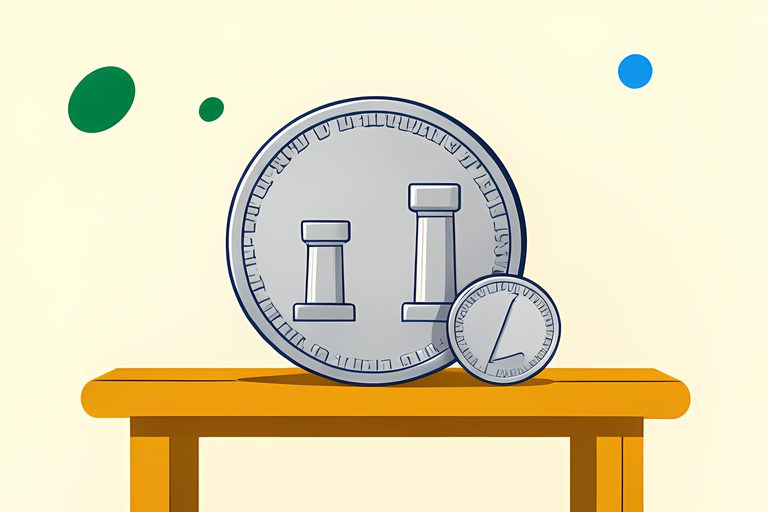
Here is the part I enjoyed most in the reading. The dollar is not the first American silver to run the world's trade. Pieces of eight, the Spanish peso de ocho reales, did it first. A New York Fed history post, quoting a BBC series on the coin, calls it the first real global currency, dominant from the 1570s until the French Revolution and carried around the planet from the great silver mines of Mexico and Bolivia. In Qing dynasty China, one name for these coins meant "double pillar," after the two columns stamped on them.
When Congress created the U.S. dollar in the Coinage Act of April 2, 1792, it did not invent a value. It borrowed one. Each dollar was to be "of the value of a Spanish milled dollar as the same is now current." For a Spanish-speaking reader typing "dólar estadounidense," there is a small, lovely irony in that. The currency on the screen is, in a real sense, the peso's grandchild. Our companion piece compares the Spanish dollar and the U.S. dollar side by side, and a separate guide explains how to read a $ sign in Mexico.
What moves the dollar from week to week
Reserve shares shift over years. The price moves daily, mostly on interest rates and on confidence. Higher U.S. rates tend to make dollar deposits and Treasuries more attractive than the alternatives, which usually supports the currency. Worries about U.S. politics, deficits or the independence of the Fed can pull the other way.
Both forces are visible this month. At his Jackson Hole speech on August 28, 2026, Fed Chair Kevin Warsh listed "the foreign exchange value of the dollar" among the gauges he watches when judging financial conditions. On September 16, 2026, the Fed raised its target range by a quarter point, to 3.75% to 4%. At the press conference that day, Warsh said:
The plain fact is that inflation is too high and has been for too long.
The forecasters did not line up. On September 1, TD Securities told clients it kept a bearish view on the dollar and expected the Fed to hold in September, with midterm election scenarios weighing into year-end. The Fed hiked instead. An OANDA analysis published September 16 described the dollar index as stuck in a sideways range in the weeks after Jackson Hole. I would treat any single bank's call with humility. The people paid to predict this disagree with each other in public, and that is useful information too.
Could something replace it
Not quickly, on the evidence. The Fed note finds the dollar's overall international role broadly stable over two decades, and it finds the dollar's reserve share basically unchanged from 2022 to 2024. What has grown is a new kind of dollar extension: stablecoins pegged to it, worth about $220 billion by April 2025, which the Fed says some people in developing countries use in place of paper notes. The note also acknowledges renewed questions about the U.S. fiscal outlook after Moody's downgraded U.S. government debt. We could not find any serious source predicting a sudden handover.
The Spanish coins that the dollar copied carried two pillars wrapped in ribbon, the Pillars of Hercules, tied to Spain's motto Plus Ultra: further beyond. The pillars marked the Strait of Gibraltar, the old edge of the known world, and the motto shrugged at it. More than two centuries after Congress borrowed the coin's value, its successor still travels further from home than almost anything else a government prints.
Sources
Every factual claim above traces to one of these. Links open in a new tab.
- IMF Data Brief: Currency Composition of Official Foreign Exchange Reserves
- 2025 Triennial FX and Interest Rate Derivatives Survey (press release)
- The International Role of the U.S. Dollar - 2025 Edition
- Transcript of Chairman Warsh's Press Conference
- In Our Time: Keynote remarks by Chairman Warsh at the 2026 Jackson Hole Economic Policy Symposium
- US Dollar: Fed risks and election scenarios - TD Securities
- 5 currency pairs to watch in September as the US Dollar stalls after Jackson Hole
- Historical Echoes: Aye, That Piece of Eight You Be Thinkin' of Were a Precursor to Today's Dollar
- Act of April 2, 1792 establishing a Mint (text)
- Dollar sign