Before October, Why $500 ACA Refunds Stop at 30 States

The announced payment is not a universal ACA rebate. Its unusual map follows the federal Marketplace, and its full-price rule is the key to understanding who is left outside it.
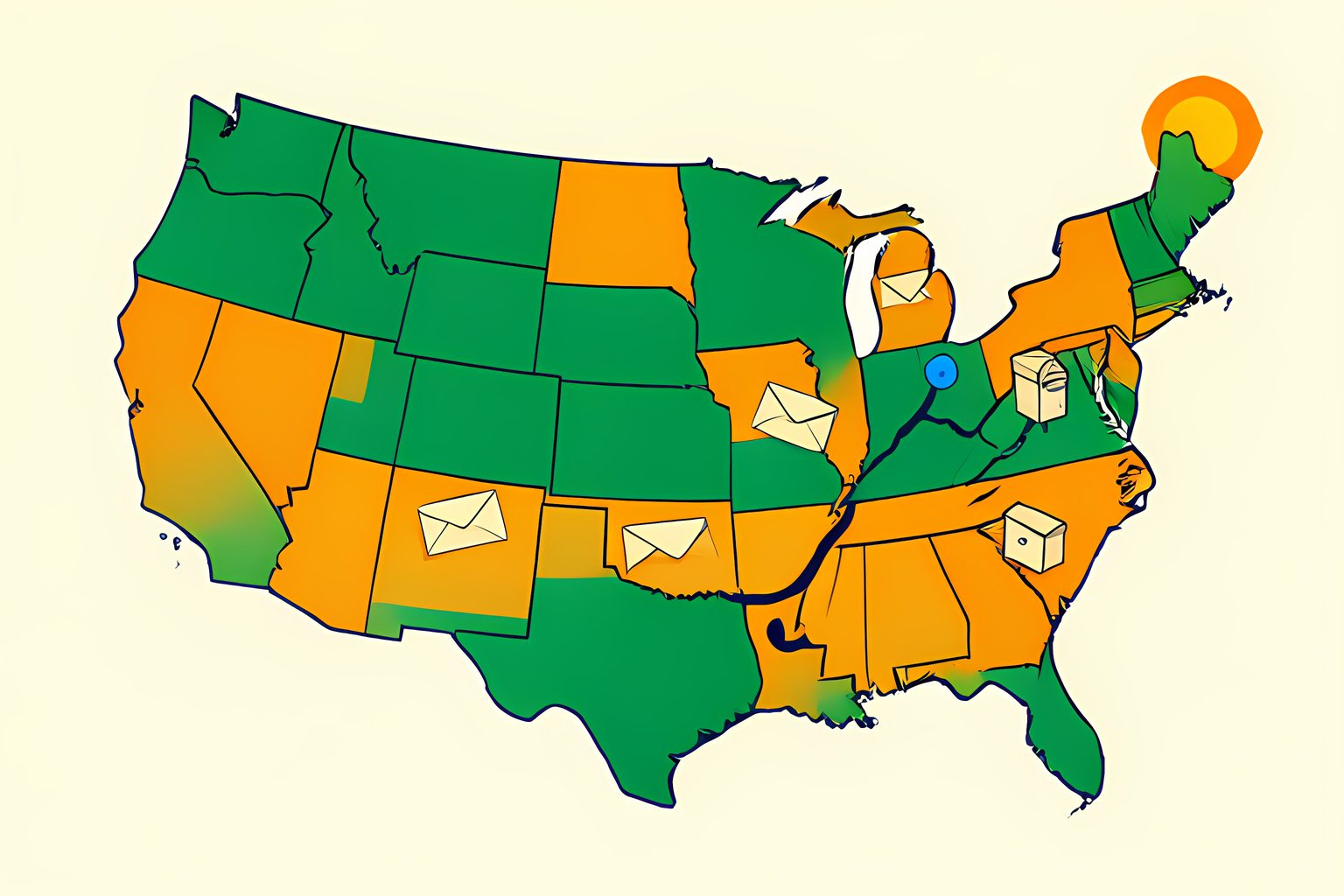
A $500 check has a way of making a map feel personal. I like a public-policy story best when its border lines can be explained without fog, and this one has a very particular border: the announced ACA payment reaches people in 30 states, not everyone who buys Marketplace coverage. The small relief in that is clarity. Once the map is visible, the headline stops looking like a mystery benefit and starts looking like a narrow, one-time program.
On September 10, 2026, the White House said eligible people would receive $500 per person, with checks beginning in October 2026. The administration describes the money as a return of excess federal Marketplace user fees. That is the administration's account of the payment. Independent reporting has also noted that the precise source of the money, whether $500 reflects an individual's overpayment, and the authority for disbursement were not fully explained in the announcement. I would treat the check as an announced payment with published eligibility signals, not as a personalized calculation of anyone's premiums.
Four pieces have to line up
| Published signal | Why it matters | What it does not prove by itself |
|---|---|---|
| A 2026 Marketplace plan | The announcement concerns ACA Marketplace coverage, not every kind of health insurance. | Having employer coverage, Medicare, Medicaid, or an off-Marketplace plan is not the same thing. |
| A state on the 30-state list | The payment is tied to the federal Marketplace system and its associated user fees. | A nearby state can use a different Marketplace arrangement. |
| No premium assistance | The White House says the refunds target people who paid the full cost of 2026 coverage. | A low premium is not enough to identify whether advance tax credits were used. |
| Federal identification of the enrollee | The published guidance says eligible people have already been identified. | It does not supply a public application or a do-it-yourself approval process. |
The map follows the platform, not a simple red-state-blue-state story
The 30 named states are Alabama, Alaska, Arizona, Arkansas, Delaware, Florida, Hawaii, Indiana, Iowa, Kansas, Louisiana, Michigan, Mississippi, Missouri, Montana, Nebraska, New Hampshire, North Carolina, North Dakota, Ohio, Oklahoma, Oregon, South Carolina, South Dakota, Tennessee, Texas, Utah, West Virginia, Wisconsin, and Wyoming. That list is the payment's practical map. It is not a list of every place where the ACA exists, because Marketplace enrollment is run through different state and federal arrangements.
The useful distinction is the enrollment platform. Some states run their own Marketplace websites and operations. Others use HealthCare.gov, either as a federally run Marketplace or as a state-based Marketplace on the federal platform. The announced refund is aimed at the people connected to the federal side of that system. Oregon is the oddly charming administrative detail: it is moving to a fully state-run platform for 2027 coverage, but its 2026 coverage still belongs to the federal-platform world. Bureaucracy rarely offers a plot twist, yet there it is.
Why paying full price is the hinge
The announcement says the checks go to people who did not receive premium assistance. In regular Marketplace language, that assistance is usually an advance payment of the premium tax credit. It is money paid to the insurer during the year to lower the consumer's monthly bill, based on an income and household estimate. The IRS says people who use that assistance reconcile it later on Form 8962 against the credit they actually qualify for.
That makes the full-price rule more than a paperwork detail. The White House frames the payment as a return of user fees built into premiums. People whose premiums were reduced by advance assistance were not paying the same out-of-pocket amount as people who received no assistance. We can understand the policy's targeting without pretending that the announcement establishes a premium-by-premium refund ledger. It does not.
The timing also sits inside a harder 2026 premium year
The payment arrived after the enhanced federal premium tax credits expired at the end of 2025. KFF says many Marketplace enrollees who remained eligible for credits saw less assistance in 2026, while some lost eligibility altogether. That context helps explain why a one-time $500 figure caught so much attention. A tidy check is easy to picture. A year's premium structure is not.
It also explains why the payment should not be used as a stand-in for a plan comparison or a tax decision. CMS set 2026 federal Marketplace user fees at 2.5% of monthly premiums for the federally facilitated Marketplace and 2.0% for state-based Marketplaces on the federal platform. Those are system rates paid by issuers, not a receipt saying that any one enrollee overpaid exactly $500. I think that distinction is the fairest way to read a number designed to travel quickly.
What to do with the clear part
If the four published signals fit, the independent eligibility guide says there is no application because the administration has already identified people it considers eligible. That means an unexpected request for a fee, a password, or banking information deserves suspicion. A mailed check or letter may be welcome. A surprise form asking you to unlock it is a different creature entirely.
The best answer, then, is narrower than the loudest version of the headline. The $500 ACA payment is announced for certain full-price 2026 Marketplace enrollees connected to the federal platform in 30 states, with checks beginning in October 2026. The map is real, and the full-price rule is real. The still-unexplained mechanics are real too. Holding both ideas at once is less flashy, but it is a much better way to read the mail.
Sources
Every factual claim above traces to one of these. Links open in a new tab.
- Fact Sheet: President Donald J. Trump Announces the Working Families Obamacare Refunds
- Trump promises $500 Obamacare rebate checks
- Am I eligible for the $500 Obamacare refund?
- HHS Notice of Benefit and Payment Parameters for 2026 Final Rule
- I heard that there have been changes to Marketplace premium tax credits and other Marketplace rules. How could these changes affect me?
- Questions and answers on the Premium Tax Credit
- How to reconcile your premium tax credit
- Affordable Care Act tax provisions