The HealthCare.gov Switch Behind the ACA Refund Map

The surprising line around the $500 payment is drawn by an enrollment platform, not by whether a state has ACA coverage. Here is how the three Marketplace models work.

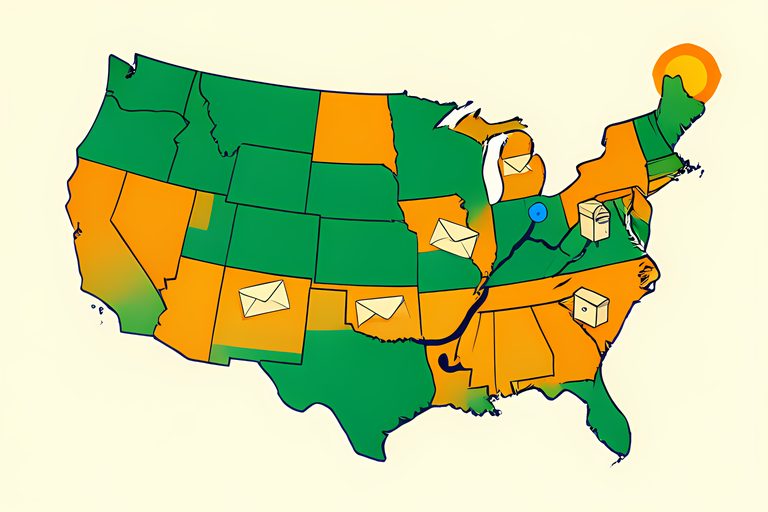
The curious thing about the new ACA refund map is that it can change at a state line without the Affordable Care Act changing at all. I find that mildly delightful, in the way a transit map is delightful once you finally notice which line owns the station. The announced $500 payment follows the federal enrollment platform, HealthCare.gov, rather than a broad category called Obamacare. That is why a state can have Marketplace coverage and still sit outside the payment map.
The White House lists 30 states for the payment and says it is for certain people who paid full price for 2026 coverage without premium assistance. The map is therefore not a shortcut to eligibility. It is one gate among several. But it does answer the question that makes the announcement seem uneven: which enrollment system handled the coverage at issue?
Three ways a Marketplace can be run
| Marketplace model | Who runs the enrollment platform | Why the difference matters here |
|---|---|---|
| Federally facilitated Marketplace, or FFM | The federal government runs HealthCare.gov and the Marketplace operation. | The administration's payment map includes these states. |
| State-based Marketplace on the federal platform, or SBM-FP | A state administers parts of its exchange but uses HealthCare.gov for enrollment and the call center. | The federal platform still creates the connection that matters to the announced refund. |
| Fully state-run Marketplace, or SBM | The state operates its own enrollment website and exchange structure. | A state-run Marketplace is outside the federal-platform map, even though ACA coverage remains available. |
That middle category is the part worth keeping. An SBM-FP is not a typo and not a half-ACA arrangement. It is a state Marketplace that uses the federal technology and call-center framework. HealthInsurance.org's state guide describes Arkansas and Oklahoma that way for 2027, while Oregon's transition timeline shows why the 2026 payment list catches an extra bit of administrative history.
Oregon's last federal-platform season
Oregon appears on the announced 30-state list even though it is scheduled to operate a fully state-run Marketplace for 2027 coverage. For 2026, its enrollment still runs on the federal platform. I checked the transition dates because this is exactly the sort of small calendar detail that makes a map look arbitrary when it is not. Oregon is, in effect, taking one last trip through the HealthCare.gov station before changing lines.
That is useful beyond this payment. Marketplace structures can change over time, and a state website or local branding does not always reveal which platform ultimately handles enrollment. The durable habit is to look at the coverage year and the Marketplace named in the enrollment materials, not to infer the answer from geography alone.
Why a platform can affect the money
CMS set different 2026 user-fee rates for the federally facilitated Marketplace and state-based Marketplaces on the federal platform. Those charges support Marketplace operations and are paid by insurers, not presented to a shopper as a separate line at checkout. The White House says excess fees passed through premiums are the source of the announced refunds. That stated rationale is why the administration drew the boundary around the federal-platform states.
The map does not say that residents of every included state receive a check. The published guidance also limits the payment to people who did not receive premium assistance. HealthInsurance.org notes that most Marketplace enrollees receive a subsidy, which makes the group much smaller than the map first suggests. We should keep those two questions separate: platform explains whether the program can reach a state; premium assistance helps determine whether it reaches a person.
A boundary that will not stay still
This is also why the 30-state list should be read as a 2026 fact, not as a permanent ACA atlas. States move between Marketplace models. Oregon's pending transition is the friendly proof. A state can gain more control over enrollment, special-enrollment periods, or state-funded assistance, and in doing so change the federal platform relationship that matters to an announcement like this one.
For the announced payment, there is no published application path: the eligibility guide says the administration has already identified recipients. The worthwhile takeaway is not a hunt for the cleverest form. It is a cleaner mental picture. The ACA refund map is a platform map first, a personal eligibility answer second, and a moving piece of public infrastructure all the way through.
Sources
Every factual claim above traces to one of these. Links open in a new tab.
- Fact Sheet: President Donald J. Trump Announces the Working Families Obamacare Refunds
- What type of health insurance exchange does my state have?
- Am I eligible for the $500 Obamacare refund?
- HHS Notice of Benefit and Payment Parameters for 2026 Final Rule
- I heard that there have been changes to Marketplace premium tax credits and other Marketplace rules. How could these changes affect me?
- Questions and answers on the Premium Tax Credit