How football tifos are made, from a sketch to the stand

The recipe involves projection, paint, sewing and an astonishing amount of floor. Sometimes it also involves a very useful Mini Cooper.
Suzi Clow's sewing machine was running on power from her Mini Cooper. The banner had outgrown its warehouse, kickoff was approaching, and the stadium parking lot had become the only workroom large enough. She reinforced its grommets with pieces of old jeans, kept sewing after dark by the car's headlights and finished around 9 p.m. That 2013 build, reported by Major League Soccer, is the perfect answer to how football tifos are made: carefully, collectively and with whatever solves the next problem.
First, a drawing small enough to hold
The crew begins with an idea that can survive enlargement. A supporter sketches it, other volunteers refine the image, and the group decides whether the design can actually be built in its section. In an MLS interview, San Jose's 1906 Ultras described a leader making the first sketch, computer-savvy members cleaning it up and participants voting when the choice was uncertain. The pixels are not the hard part. Stairs, rails, aisles and sight lines are.
Then the tiny picture meets the floor
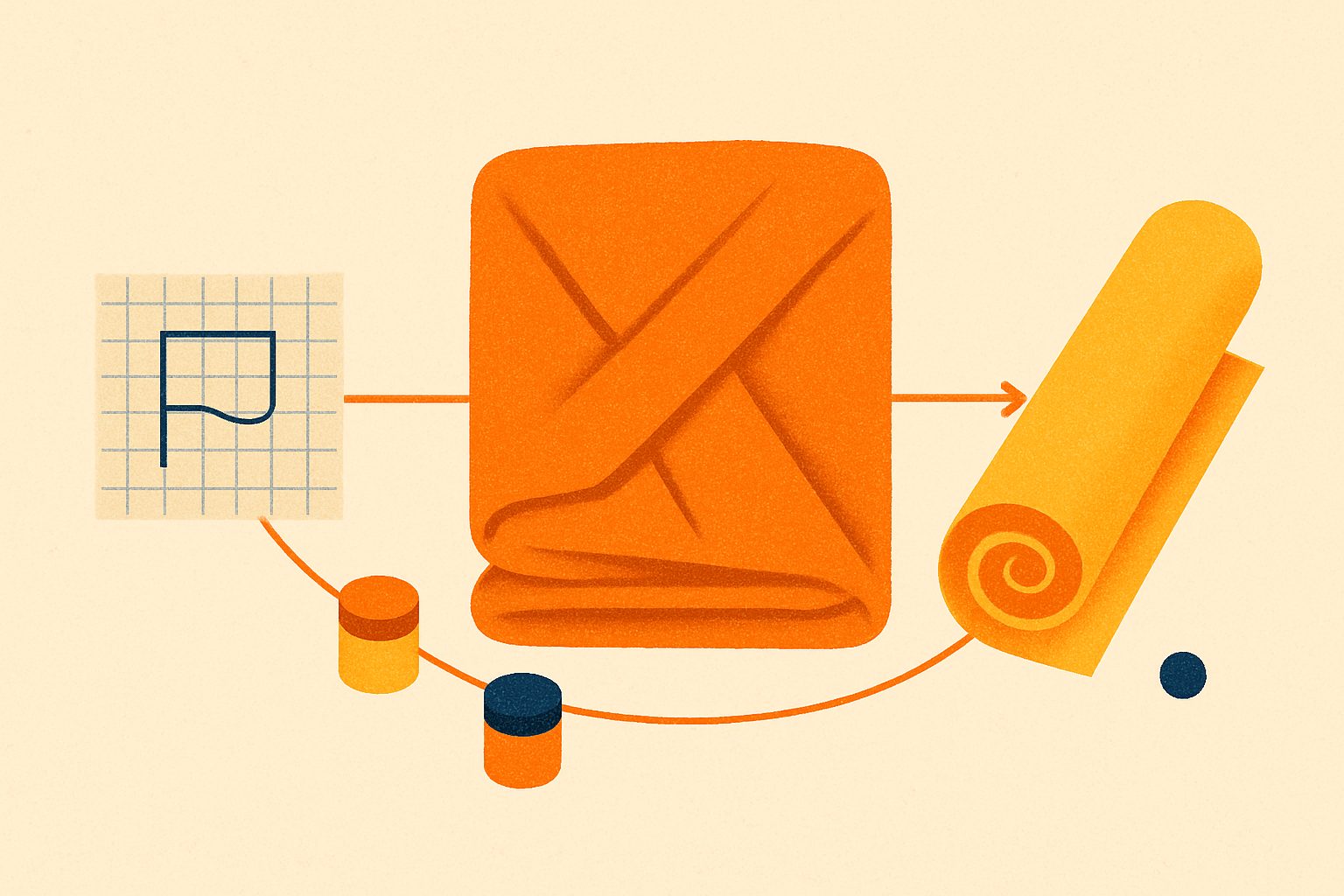
- Scale it: A projector can cast outlines onto joined fabric so volunteers can trace a design far larger than any printer at home.
- Join it: Sheets or fabric panels may need cutting and sewing before the picture can become one surface.
- Paint it: Crews fill the outlined areas, often in sessions where many people can take a section without seeing the finished image upright.
- Rig it: The result may need rope, pulleys, a supporting net, reinforced grommets or simply a careful plan for passing cloth over a crowd.
- Rehearse the reveal: Leaders decide who moves what, in which direction and on which cue. A beautiful banner can still bunch at the crucial moment.
Orlando supporter group Ruckus lays out its own process as design, projected tracing, painting and rigging. Emerald City Supporters adds the less glamorous ingredients: money for materials, people willing to sew or paint, and enough volunteers to place cards in the stadium. There is no single universal method, because a card mosaic and an overhead sheet are different engineering jobs.
The room is part of the story
Large fabric is greedy. It wants a community center, warehouse, gym floor or parking lot, plus time when that place is free. For a 2017 U.S. supporters' display inspired by Hamilton, 14 adults and one six-year-old helper spent more than 30 hours sewing and painting a sheet measuring 67.5 by 45 feet. Six of the participants were first-timers. For its first two weeks, the project lived in organizer Crystal Cuadra-Cutler's car trunk.
That MLS account contains the humane detail glossy reveal photos leave out: art must wait somewhere between work sessions. It gets folded, transported, guarded from weather and hauled through a stadium elevator. Rain changed that crew's deployment direction on match day. The backup plan became the plan.
The last craft is cooperation
On match day, the crew sets up early and turns instructions into a crowd-scale choreography. Cards must stay on their assigned seats. An overhead travels row by row and lies flatter when people resist the urge to punch or wave it. Flags stay out of the way until their cue. Emerald City Supporters' handling guide is practical because the final medium is not paint or cloth. It is attention.
The best builds make their ingenuity invisible for a moment. Viewers see one confident picture, not the car trunk, the denim patches, the borrowed projector or the child holding a brush. That hidden clutter is not a footnote. It is where the joy lives.
Sources
Every factual claim above traces to one of these. Links open in a new tab.