A tifo is the stadium artwork fans build for one enormous moment

It can be a banner, a card mosaic or a whole stand moving in concert. The loveliest part is not its size, but the many hands hidden behind it.
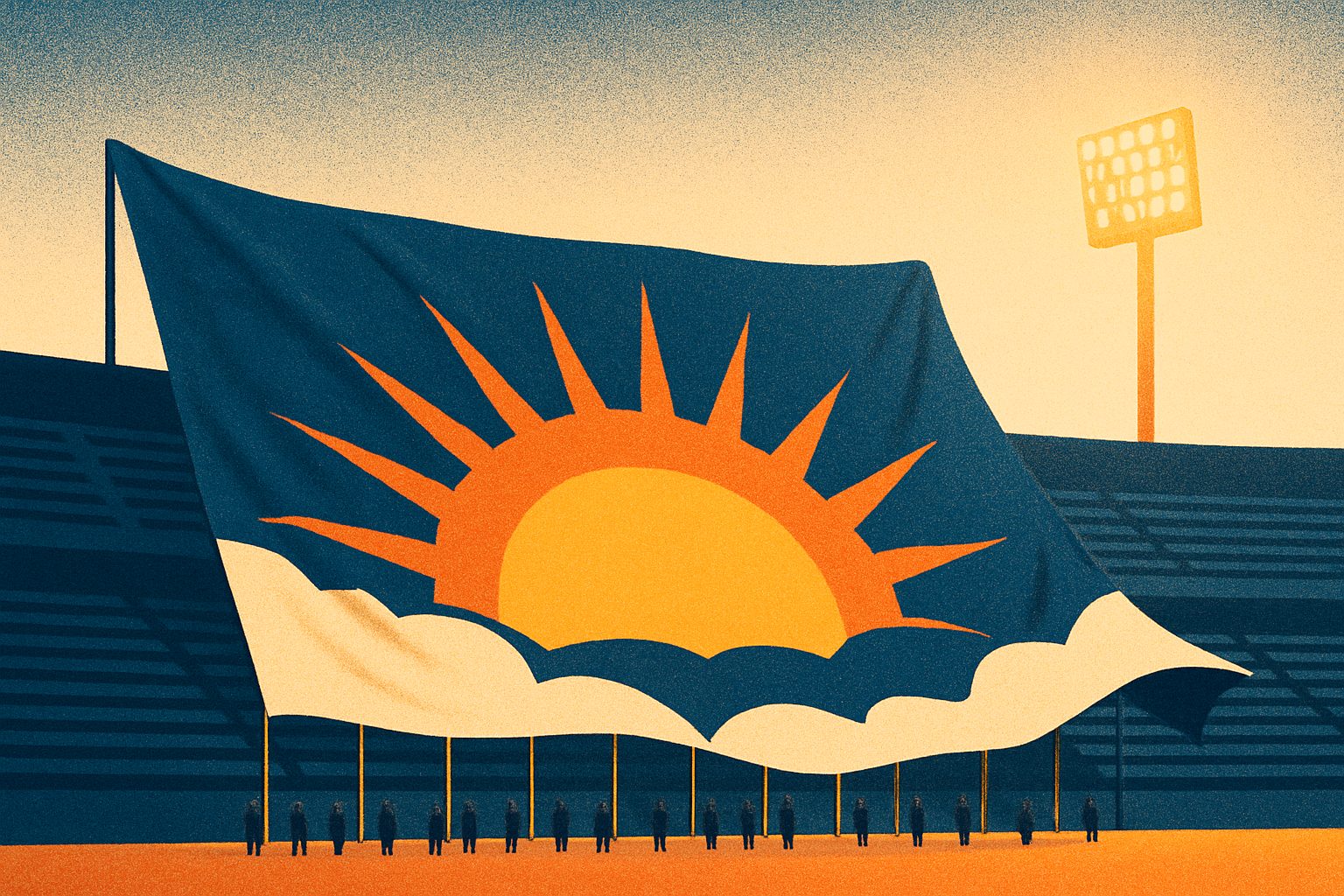
A card waits on every seat. Nobody in the upper rows can see the picture yet, because each person has been handed only one square of it. Then the signal comes, thousands of arms rise, and the stand stops looking like a crowd. For a brief, improbable spell, it becomes one image. That is tifo at its most magical: many small acts of cooperation turning into stadium-scale art.
The short answer
In soccer, a tifo is a planned visual display made for the stands, usually presented before kickoff. It might be a giant painted sheet passed overhead, a mosaic assembled from colored cards, a coordinated field of flags or several of those forms working together. BBC Sport's explanation emphasizes the banner and mosaic forms. Supporter groups use the related word choreo for a display that depends on coordinated action across a section.
The familiar language note is that tifo is connected to tifosi, the Italian word used for sports supporters. The history is a little knottier than a one-line translation. In their 2022 academic book *The Art of Tifo*, Jeffrey W. Kassing and Lindsey J. Meân trace the term through old Italian comparisons between feverish fandom and typhus. In modern stadium use, there is no such medical meaning. It simply names the display and, by extension, the act of visibly supporting a team.
Tifo, at a glance
- What it is
- A planned visual display by supporters in a stadium
- Common forms
- Overhead cloth, card mosaics, flags, two-pole banners and combined choreographies
- Usual moment
- Before kickoff, when the whole design can be revealed together
- What makes it work
- Design, volunteer labor, secrecy, setup and a crowd willing to follow directions
A tradition with a fuzzy first page
Tifo grew from Western European supporter culture in the 1960s and 1970s, according to Kassing and Meân, but they also warn that the early record is incomplete. That uncertainty matters. These works were meant to vanish before the match began, not to enter a museum catalog. A display could be painted in secret, appear for seconds and be rolled away before anyone thought to document its dimensions or makers. Claims about one definitive first tifo should therefore be treated cautiously.
The custom traveled. BBC Sport describes roots in Italy and southern Europe, while Major League Soccer's history of supporter culture shows how ambitious displays became part of North American soccer too. The materials changed with the venue and budget, but the central idea held: supporters were not merely watching the spectacle. They were making one.
Why make something so large and so temporary?
Because a stadium is one of the rare places where a homemade picture can be both intimate and enormous. The message may express affection for a club, pride in a city, encouragement for the players or playful ambition before a big match. MLS spoke with supporter organizers who described the purpose as inspiring the team and showing community pride. That sounds grand. The actual work is wonderfully ordinary: somebody buys paint, somebody finds floor space, somebody remembers the extension cord.
Kassing and Meân offer a small story that explains more than a definition can. For a youth soccer club in Arizona, families stitched white sheets, outlined a design and held a painting party in a park. A larger panel later returned at championship matches on a frame made from plastic pipe, hoisted by what the authors call a small army of parents. Years afterward, an assistant referee still remembered the club by its giant sign. No television audience was required. The delight was in being recognized.
The crowd is part of the mechanism
Enlarging an illustration is only the beginning. A tifo is a little machine built from people. Emerald City Supporters explains that an overhead banner must be passed backward and kept flat, while a card display depends on cards staying in their assigned seats and rising together. Its match-day guide reads almost like stage directions because that is what they are. A beautiful design can blur if one section shakes the fabric or starts early.
That dependence is part of the charm. Most spectators never met the designer. Many did not attend a paint night. Yet for a few seconds they become the last production crew, each holding one blue rectangle, one corner of cloth or one flag at precisely the useful angle. The artwork belongs to no single pair of hands once it rises.
Handmade is not a decorative adjective
Supporter groups often care deeply about making displays themselves. Orlando's Ruckus describes a sequence of hand and digital design, projected tracing, painting, and finally rigging by rope, pulley or hand. The group says its work is supporter-funded. Emerald City Supporters makes the cultural case even more plainly: creating together builds pride, teamwork and belonging. The uneven brush edge is not necessarily a flaw. It is evidence that the stand made its own gift.
Then the picture gets another life
The reveal is brief; the material need not be. MLS's account of old tifo found groups repainting the same canvas, cutting used fabric into smaller banners and collecting cards that survived the match without too much mustard or spilled drink. One Columbus group had put as many as 15 layers of paint on a canvas. Portland supporters once turned display fabric into hundreds of bags. This is folk art with a laundry problem and a practical streak.
A Columbus organizer told MLS that industrial bins of old displays would be a problem for the next generation. That is a pretty good legacy: not a marble archive, but a heavy bin of possibility. Somewhere beneath the newest coat of paint, an older match is still there.
What to notice at the next reveal
- Look at the edges. If a huge image stays crisp across aisles and railings, the crew solved a difficult geometry problem.
- Watch the timing. A mosaic only becomes legible when strangers lift their pieces together.
- Notice the material. Cards, stitched cloth, painted sheets and flags all ask different things of the crowd.
- Remember the unseen room. The display probably spent far longer on a floor than it will spend above the seats.
That last imbalance is the point. Tifo turns weeks of private patience into one public gasp, then folds the whole thing back into fabric, cardboard and memory. A mural you can carry away. A crowd that discovers, all at once, it knows how to draw.
Sources
Every factual claim above traces to one of these. Links open in a new tab.