How Storm Outages Happen, and How the Grid Comes Back

A fallen limb is only the first domino. Restoration follows the grid's branching map, which is why a substation may come first and one dark house may come last.
An outage map can display a precise-looking count and still leave the most maddening question blank. The lights across town are back. Yours are not. A utility truck just rolled past without stopping. From a front window, restoration can look random.
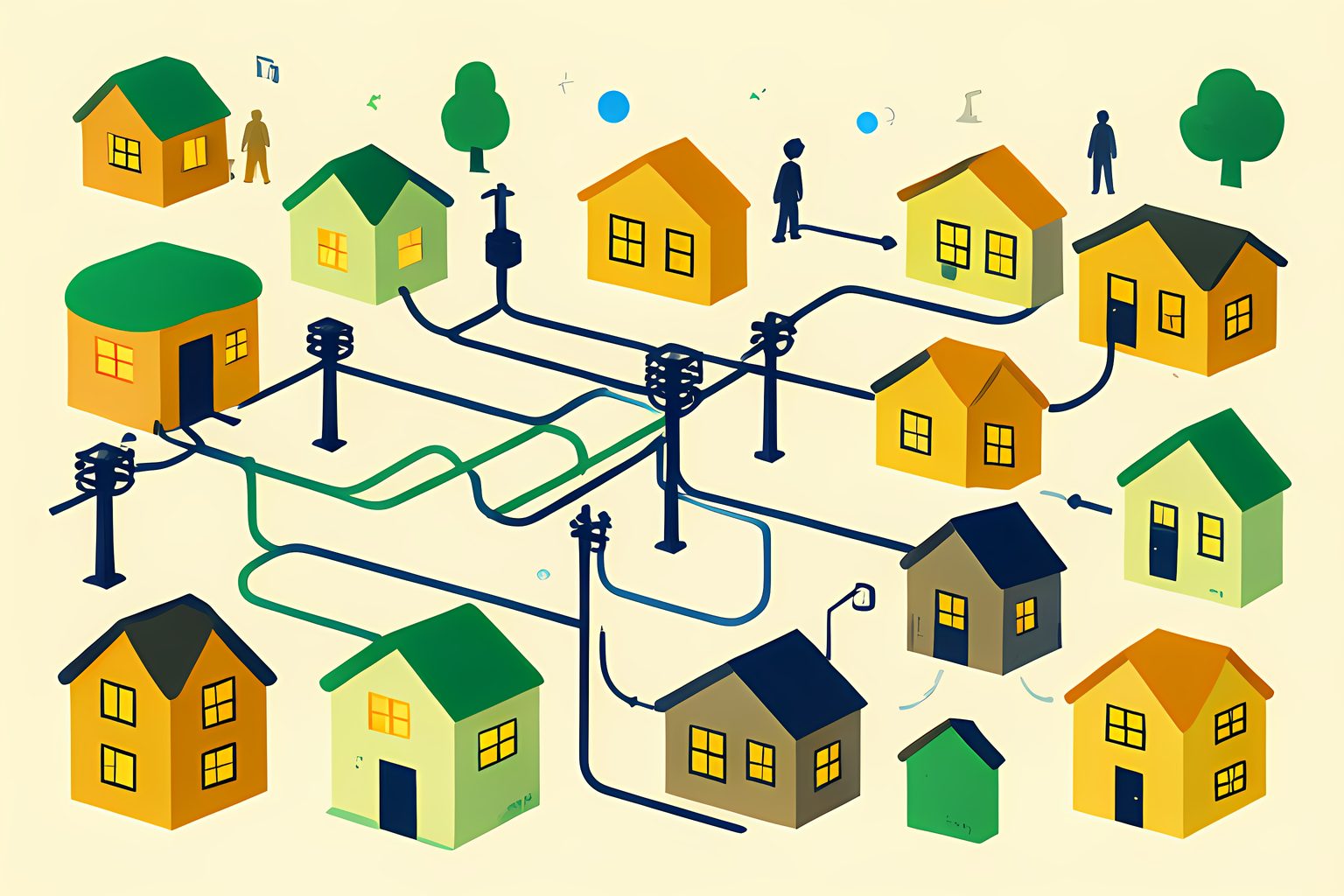
The pattern is not random. The grid is a branching delivery system, and crews have to reopen a safe path from the large upstream equipment to the smallest wire serving a home. That explains both the speed of the first big jump on an outage map and the stubborn final dots.
Indiana coverage after storms on August 9, 2026 caught the public-facing sequence in miniature. Indiana Michigan Power told WNDU that crews were making downed lines and poles safe, assessing damage, and restoring service where the weather had passed. Three verbs, in that order, explain a great deal.
The restoration logic at a glance
- What can fail
- A transmission line, substation, feeder, neighborhood lateral, transformer, or one home's service connection
- First job
- Make hazards safe and learn what is actually damaged
- Repair direction
- Large upstream paths before smaller downstream branches
- Why estimates move
- Field inspection can reveal extra faults, blocked access, or different equipment needs
- Quiet teamwork
- Utilities can borrow trained workers and specialized equipment through mutual assistance
The last mile has a lot of links
Electricity reaches a wall outlet by stages. The U.S. Energy Information Administration describes high-voltage transmission lines carrying power over long distances, substations and transformers changing its voltage, and lower-voltage distribution lines delivering it locally. Near the end are neighborhood branches, transformers, meters, and service lines. A house depends on every upstream link that feeds it.
A storm does not have to disable a power plant to darken a street. Wind can move a branch into a line, a tree can bring down a conductor, lightning can create an electrical fault, or equipment can fail. Wisconsin Public Service's own cause breakdown separates weather, trees, animals, equipment, human accidents, and miscellaneous causes, a useful reminder that the visible storm is often only the matchmaker between a line and the thing that touches it.
Sometimes darkness is the protective move
When electrical protection senses a short circuit or another fault, it opens the circuit. That interruption keeps current from continuing through damaged equipment or a downed line. A Department of Energy distribution report compares one common device, a recloser, to a household breaker that can test the line again. If the trouble clears, service may return after a blink. If it persists, the device stays open until the fault is isolated or repaired.
So an outage can mean two different things at once: something went wrong, and something else worked correctly enough to stop the wrongness from spreading. That distinction matters. It is why a wire that looks quiet must still be treated as energized and left entirely to utility crews.
Crews mend the trunk before the twigs
The standard restoration order is built around safety and reach, not the time each household called. The Department of Energy's step-by-step guide and utility plans from DTE Energy describe nearly the same ladder.
| Stage | Why it comes here |
|---|---|
| Hazards | Downed lines and unsafe sites have to be secured before ordinary repairs |
| Transmission and substations | These upstream links can feed wide areas and whole communities |
| Essential services | Water, public safety, communications, and care facilities support everyone around them |
| Main distribution circuits | One sound repair can return service to a large group |
| Small branches and individual homes | Localized faults become reachable after the shared path is sound |
This can feel brutally impersonal to the last dark cul-de-sac. The same repair order returns the most shared infrastructure to useful service fastest. A crew cannot energize a neighborhood branch if the substation feeding it is still unavailable, just as replacing a porch bulb cannot help when the lamp cord is unplugged.
Why the estimated time wobbles
Early restoration estimates are made with incomplete eyes. Puget Sound Energy says its damage assessors identify hazards, judge severity, and report the crew and equipment needed. Only after that field view improves can an outage map carry a more useful estimate. Access may be blocked. Tree crews may need to clear vegetation. A damage assessor or tree crew can arrive before the electrical crew that will finish the repair.
There is another wrinkle. Repairing a main fault can expose a smaller one underneath it. The utility may restore most of a circuit and only then learn that a transformer, service line, or customer-owned connection also needs attention. That is why a restoration notice is not the moment to assume the system knows your particular house is still dark. Report it again through the utility's own channel.
The road trip hiding inside a porch light
The loveliest machinery in storm restoration is human. The Edison Electric Institute describes mutual assistance as a voluntary partnership in which an affected utility requests trained workers and specialized equipment from companies in unaffected areas. A January 2026 EEI explainer says its member companies work through six regional groups. In plain English, the bucket truck in town may have crossed several state lines because another utility answered the call.
That is not a sentimental extra. Planned logistics make it useful: qualified people and specialized equipment arrive where the local workforce has too much ground to cover, under a structure built before the storm. Still, there is something cheering about an industry that has formalized the neighborly loan of a crew.
Useful clues belong in the report
- Report your own outage through the local utility's official channel, even if the outage map already shows a larger event.
- If the utility marks the area restored and your home is still out, report that smaller outage again.
- Describe visible damage and its location only from a safe place. A passed truck may be assessing, clearing vegetation, or working on another link that feeds you.
- Keep well away from any downed wire or damaged electrical equipment. Do not test, move, or drive over it.
When the lights return, the visible moment is wonderfully small: a refrigerator hum, a router's little constellation, the clock on the stove asking for attention. Behind it sits a repair path that may begin miles away and a crew that may have traveled farther. The grid comes back branch by branch, but never entirely alone.
Sources
Every factual claim above traces to one of these. Links open in a new tab.
- Indiana Michigan Power reports thousands without power after storms
- Delivery to consumers
- Restoring Power After a Storm: A Step-by-Step Process
- Electricity Distribution System Baseline Report
- Reliability and Emergency Response
- Mutual Assistance: 5 Things to Know
- How Power Gets Restored
- Outages and Power Restoration
- Why Power Outages Occur
- Outage FAQs