Why Your Neighbor Has Power and You Do Not

Electricity travels by circuits, phases, transformers, and service lines, not by curb appeal. Here is the invisible map behind the maddening one-lit-house puzzle.
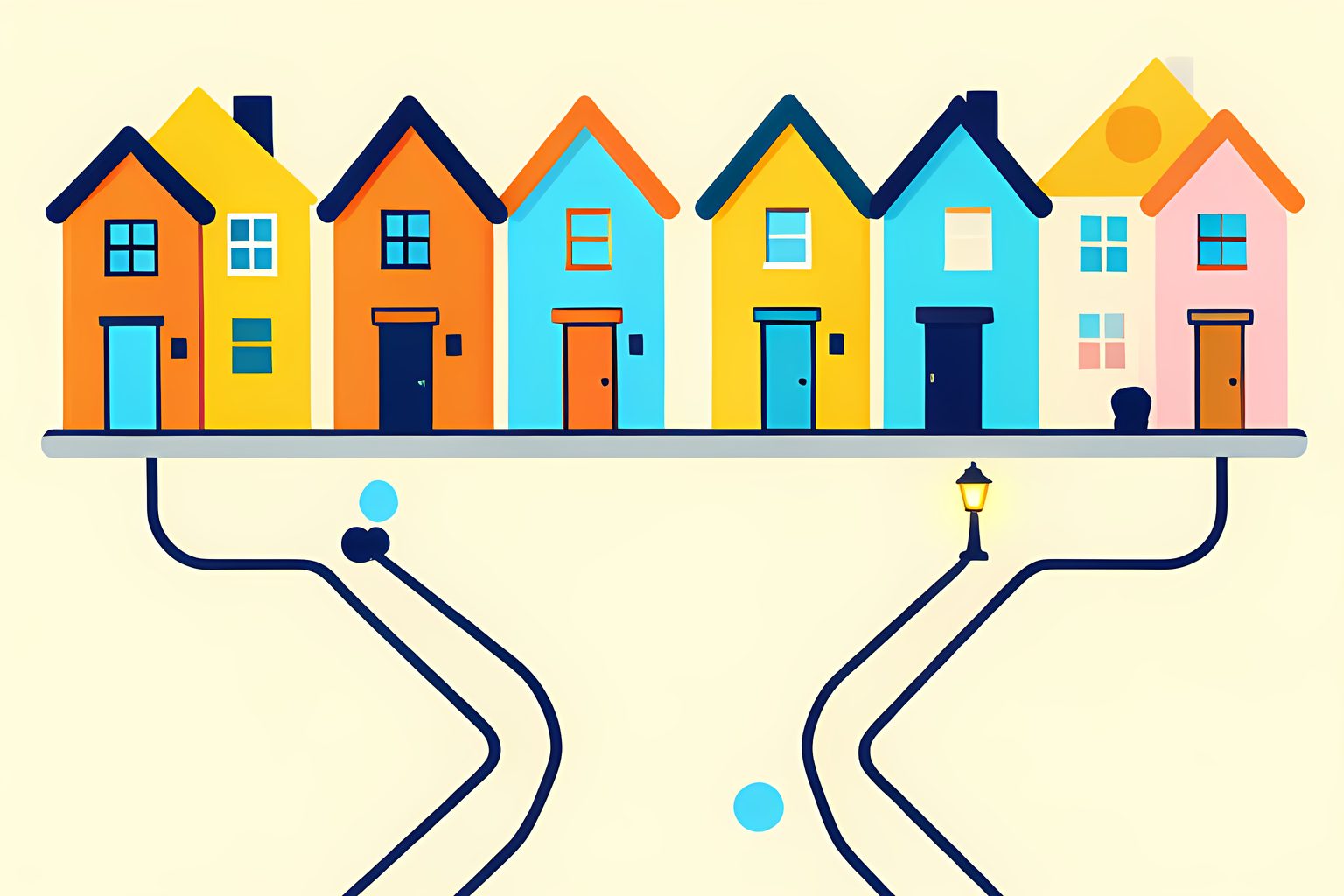
Two porches, one hedge, barely a driveway between them, and only one lamp is on. Geography says neighbors. The distribution grid may say strangers.
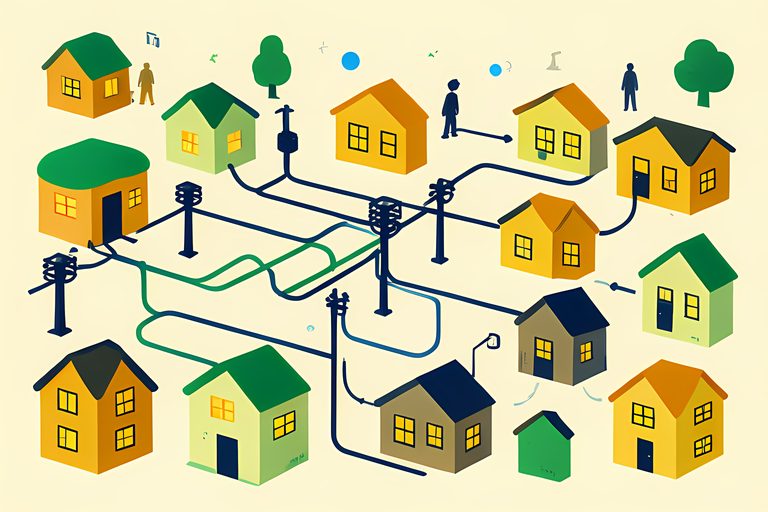
That bright window is usually not evidence that the utility skipped you or that somebody owns a magical extension cord. Nearby homes can sit on different circuits, different branches of one circuit, different phases, or different transformers. One house may also have backup power. The curb is a poor guide to any of it.
The street is not the circuit
A Department of Energy distribution report lays out the hidden anatomy. A substation feeds main distribution circuits. Smaller laterals branch from them, often using one of three electrical phases. Transformers step the voltage down near customers, and a service drop makes the final connection to an address. Several homes may share a transformer, but not every home visible from the same porch does.
Utilities can also isolate a damaged section and feed an undamaged section another way. Puget Sound Energy says its crews may reroute power around damage, leaving some customers on a circuit energized while the isolated portion waits for repair. The wiring map follows engineering and load balance, not the social logic of a block party.
Read the pattern, but do not diagnose from it
| What you can see | One plausible explanation | Sensible next move |
|---|---|---|
| Power across the street | That side may use another main line, phase, or substation | Report your address as out; do not assume the map already includes it |
| Most homes returned except yours | A smaller nested fault, transformer issue, or service-line problem may remain | Report the continuing outage again after checking official utility guidance |
| Only part of your home works | A breaker, fuse, wiring fault, or damaged service lead may be involved | Treat dimming or partial service as a distinct problem and contact the utility or a licensed electrician |
| One house stays fully lit during a broad outage | It may have a generator, battery, or properly configured islanding system | No conclusion about your own restoration time follows from that light |
| Only your apartment is dark | The issue may be inside the unit or building rather than on the street | Contact building maintenance and follow the utility's troubleshooting steps |
The outage underneath the outage
There is a useful utility term for the especially annoying version: a nested outage. Duquesne Light uses it for a smaller, localized problem discovered after a main issue is fixed. The large repair restores most customers. A damaged line or piece of equipment tied to one home or small group stays out.
This is why a restoration notification can be true for the original event and wrong for your kitchen. The big fault closed in the outage system. The smaller one now needs its own report. Florida Power and Light likewise tells customers that main lines and individual lines can both be damaged, and that a home may also need electrical repair before it can receive service.
A sunny roof can still go dark
Rooftop solar does not automatically explain the bright house. The Department of Energy says residential panels generally switch off when grid power disappears for safety. To run independently, a home typically needs a properly configured inverter and storage. Solar plus a battery can enter an islanded mode, disconnected from the failed grid, but panels alone usually cannot keep ordinary household circuits alive.
That makes the cheerful exception genuinely interesting. A lamp glowing through a widespread outage may be backed by stored sunshine in a battery, not a privileged wire from the utility. It may also be a generator. From the sidewalk, the technologies look identical: one warm square in a row of quiet windows.
Use the bright porch as a clue
- Check whether the pattern is one home, one side of the street, or a wider area, then include that observation in your outage report.
- If your utility says service is restored and you are still out, submit a fresh report. A smaller fault may not be visible until the larger one clears.
- Follow your utility's breaker guidance only if there is no visible damage and you can do so safely. Florida Power and Light's troubleshooting page routes apartment-specific problems to building maintenance and unresolved home wiring problems to a qualified electrician.
- Never touch a damaged meter box, service line, outdoor cabinet, or fallen wire. Looking is enough.
The neighbor's lamp is good news in one modest sense: at least one nearby source and electrical path are working, whether they belong to the grid or the home. That lamp cannot predict your time. It can, however, sharpen the report and explain the apparent unfairness. Your houses remain next-door neighbors on the street and distant cousins on the wiring map.
Sources
Every factual claim above traces to one of these. Links open in a new tab.