What Robert Irwin Does at Australia Zoo

The public sees cameras and crocodiles. The fuller answer includes a daily arena, protected habitat, a wildlife hospital, and a camera that keeps the message moving.
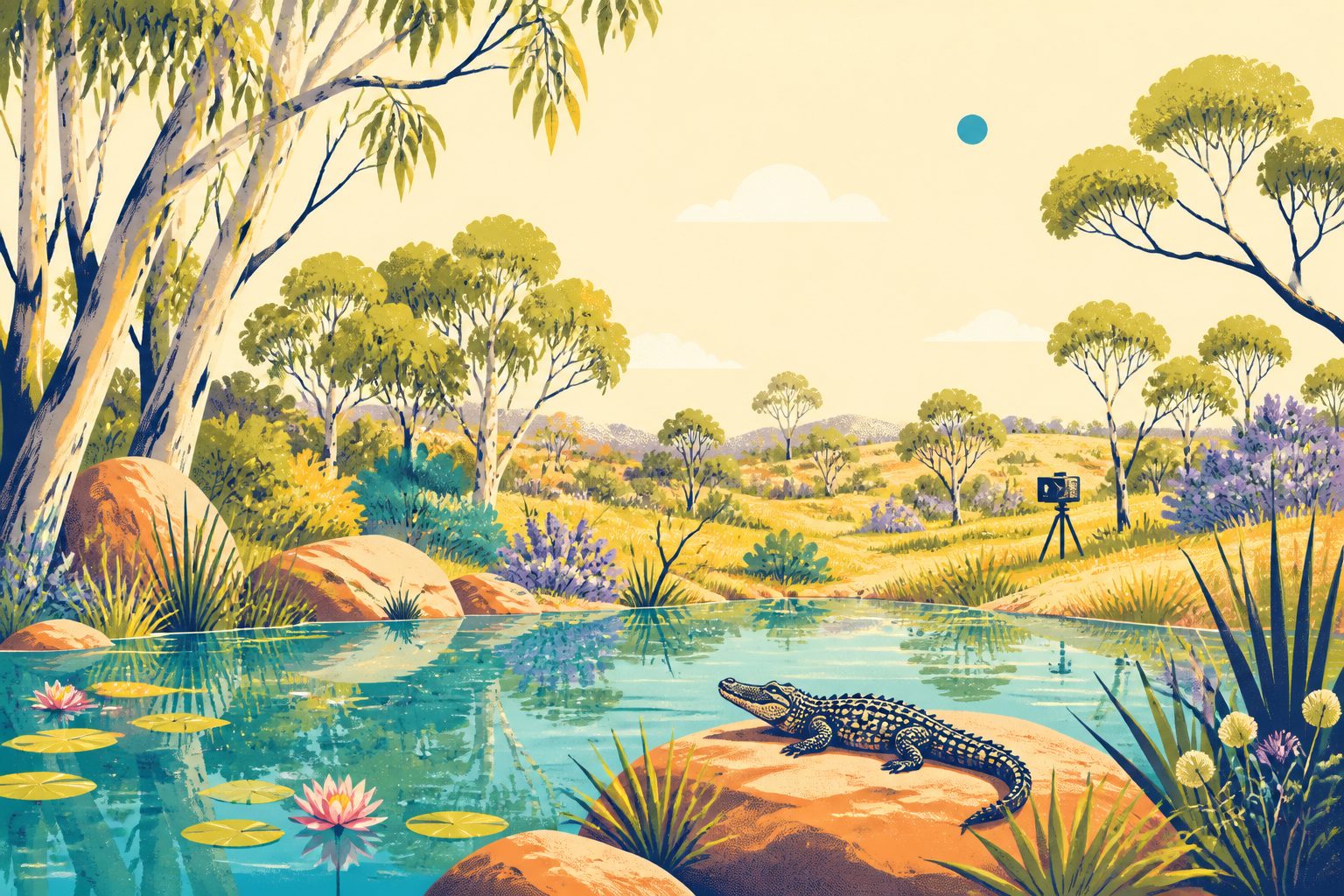
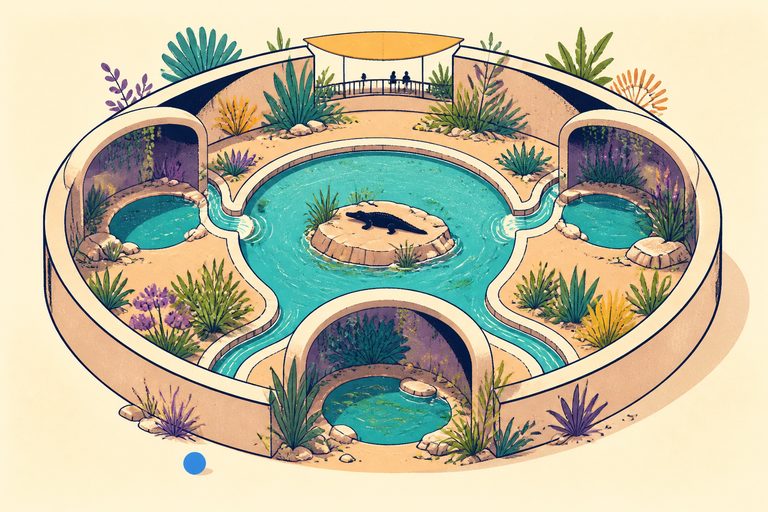
A clear pool is an unusual thing to place in the middle of a wildlife park. It says: look, rather than imagine. Australia Zoo says its Crocoseum was designed so visitors can see crocodiles in clear water and observe behavior that murkier water conceals. That design choice is a good entrance to Robert Irwin's work, because the visible part of it is only the doorway. The Crocoseum's own description is frank about the mix of animals, spectacle and conservation messaging.
The zoo's current profile describes Irwin as a wildlife conservationist, nature photographer and television presenter. It says he takes part in daily crocodile demonstrations, travels to see projects supported by Wildlife Warriors, and uses photography and television to broaden the message. The clean answer, then, is not one job title. He is a public communicator within a family conservation organization: part presenter, part photographer, part advocate, and a familiar face who can persuade a large audience to pay attention. Australia Zoo's profile is the best source for that day-to-day public role.
There is a useful guardrail here. Being the recognizable person at a conservation organization is not the same as being its veterinarian, field scientist, or hospital clinician. Those jobs are real, specialized work, done by other people. The most trustworthy version of the Robert Irwin story keeps that distinction in view instead of turning one well-known surname into a one-man department.
The short, accurate version
- At Australia Zoo
- His profile says he participates in daily crocodile demonstrations and works as a conservation communicator, photographer and television presenter.
- Beyond the arena
- The organization links its public work to Wildlife Warriors projects, protected habitat, wildlife care and research partnerships.
- What he is not presented as
- Australia Zoo's materials do not identify him as the hospital's treating clinician or the lead scientist on its crocodile studies.
- Why the distinction matters
- A public figure can help people care about a project while expert teams carry out its clinical and research work.
A public face, not a one-person conservation department
Start with the arena. Irwin's profile says he enjoys joining the daily croc demonstrations and uses them to share his knowledge of crocodiles. This is public education in the old-fashioned sense: a person on a stage tries to make an animal feel less like a stock movie monster and more like a creature with a particular life. The Crocoseum itself is built around that idea of visibility. Its clear water pool is meant to make an animal's movement easier to see. Why the Crocoseum exists is a better question than whether a famous person might appear there on a given day.
Then there is the work that should never be folded into a celebrity biography. The organization says its wildlife hospital opened in 2004 and has treated and released tens of thousands of native animals. Its volunteer page gives a more human-scale picture of how that system runs: people help with husbandry, cleaning, food preparation and koala care, while clinical treatment remains with experienced staff. The zoo also says volunteers have no direct clinical interaction with patients. The hospital tour page and its volunteer information make the division of labor visible. That is reassuring, not less glamorous.
The work reaches well beyond the gates
In Queensland, the zoo and Wildlife Warriors say they protect more than 450,000 acres of habitat, including the 330,000-acre Steve Irwin Wildlife Reserve on Cape York Peninsula. The zoo describes the reserve as a place for ecological research as well as conservation and education groups. Those are the quiet nouns behind the louder ones: acreage, habitat, researchers, monitoring. Its conservation-properties page gives the current organization account.
Crocodile research is a good example of why the distinction between a spokesperson and a specialist matters. For its conservation program, the zoo says it partners with the University of Queensland and Wildlife Warriors to track crocodiles, monitor movements and collect samples. Separately, the University of Queensland describes a decade-long study in the reserve that used implanted tracking devices and produced more than five million crocodile detections for analysis. Australia Zoo's project overview describes the partnership, while UQ's account names the research process. The stage can introduce the question. The data has to answer it.
Why the camera keeps showing up
Photography is Irwin's clearest separate lane. In a 2017 interview with Australian Geographic, he described waiting days for a single wildlife image and linked the practice to conservation communication. That patience is the part of wildlife photography a tidy biography tends to skip. A camera is not merely a souvenir machine. Used well, it asks someone to wait for an animal's own schedule, which is a fairly good corrective to human impatience. Australian Geographic's interview preserves that earlier account.
His photography book supplies a concrete version of the idea. Australia Zoo's shop says Robert Irwin's Australia was made, printed and bound in Australia and that its profits go toward wildlife conservation. That is a commercial claim from the organization selling it, so it should be read as such. Still, it shows the intended chain: an image catches the eye, a story gives it context, and money or attention is directed toward a conservation effort. The book description is unusually explicit about that link.
The useful answer is the slightly less flashy one
So, what does Robert Irwin do at Australia Zoo? He helps make the organization's conservation work legible to people who may arrive because they know a name, a television appearance, or a crocodile show. He appears in public demonstrations, photographs wildlife, visits projects supported by the family charity, and carries that material into larger media spaces. He does not replace the researchers analyzing tracking data or the clinicians treating animal patients.
That division is the satisfying part. The best public-facing conservation work does not pretend that a famous person alone saves anything. It makes room for the scientists, keepers, hospital staff and volunteers whose names most visitors will not know. If a child leaves the Crocoseum curious enough to notice an animal more carefully, and an adult follows that curiosity toward the people doing the long work, the clear pool has done rather more than sparkle.
Sources
Every factual claim above traces to one of these. Links open in a new tab.