The Surprising Reason Washington's Biggest Snowstorms Land in El Niño Years

D.C.'s snowiest winters keep arriving during the warm phase of the Pacific. The numbers are lopsided, and the reason is a storm track that aims moisture straight at the city.

Washington, D.C. is a city famous for panicking over a forecast that calls for one inch of snow. Yet the same city's biggest, most dramatic storms keep showing up in the phase of the Pacific cycle most people associate with warmth. When I pulled the list of D.C.'s snowiest winters, the pattern was so lopsided that I checked it twice.
The numbers, from a Capital Weather Gang analysis, run like this. Of the 22 snowiest winters Washington has recorded since 1950, thirteen were El Niño winters, eight were neutral, and exactly one was a La Niña winter. El Niño, in other words, is the closest thing the city has to a snow machine, and it is the phase we usually bill as the warm one.
Why the warm phase makes snow
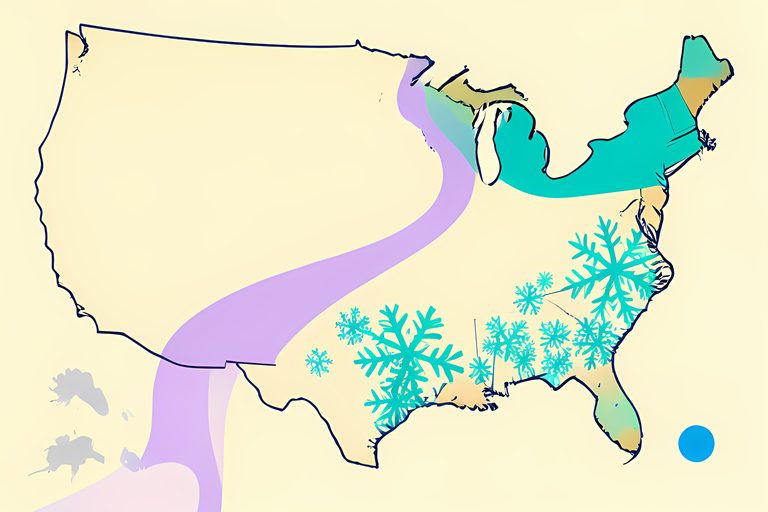
The reason is a storm-track argument, not a cold argument. El Niño strengthens the subtropical jet and pushes it south, which sends moisture-rich storms rolling up the East Coast. Washington sits far enough north to still get cold air when a storm arrives, and far enough south to catch the heavy moisture. Capital Weather Gang describes the effect as snow that 'packs an extra punch on fewer than normal snow days.'
The examples make the point better than the averages. The winter of 2009-10, which Washington remembers as Snowmageddon, dropped 56.1 inches on the city and arrived during an El Niño. Snowzilla in January 2016, another El Niño winter, piled 17.8 inches on the District in one storm. Those are the seasons people tell stories about.
The comparison with neutral winters makes the El Niño signal stand out even more. In neutral years Washington actually averages the most snow events, about 7.8 per season, and the biggest single storm since 1950 - a Presidents Day storm in February 1979 - landed in a neutral winter with 18.7 inches. What El Niño does differently is not deliver more snow days. It delivers the rare, enormous one, the storm that shuts the city down for days.
The twist that keeps it honest
Here is the catch that saves the whole thing from being a fortune cookie. Very strong El Niños have been just as likely to short-change Washington as to bury it. The strong El Niño winters of 1972-73 and 1997-98 each produced a measly 0.1 inch in D.C., because the storms that should have carried snow arrived warm and fell as rain. The city's sweet spot is a moderate El Niño, strong enough to aim moisture at the coast but not so strong that it erases the cold.
That tension is exactly what makes the 2026-27 outlook interesting. This winter's El Niño has a real chance to be historic, and for Washington that is a genuinely ambiguous forecast: the moisture signal points one way, the warmth signal points the other. Some seasonal outlooks already favor below-normal snow for the western Mid-Atlantic. I find that uncertainty more fun than a clean answer, honestly, because it means the city gets to keep its favorite winter ritual: watching a storm approach and arguing, for two solid days, about whether it will be rain or history. We never seem to settle it until the first flakes land.
So the next time someone tells you El Niño means a warm winter, you can offer the correction Washington has been living with for decades. The warm phase is also the snow phase here. It is the reason the snowiest winters in the record book keep wearing the same label, and the reason a flurry forecast can still empty a grocery store by noon.
Sources
Every factual claim above traces to one of these. Links open in a new tab.