Chuseok vs. Seollal in Korean Holiday Traditions

Compare Korea's two premier national holidays, from winter renewal and tteokguk to autumn gratitude and crescent-shaped songpyeon.
South Korea's national calendar pivots around two monumental family holidays: Seollal in the crisp beginnings of winter and Chuseok in the golden peak of autumn. When I talk with readers preparing for their first visit or learning about Korean culture, the two occasions often sound remarkably similar at first glance. Both span three official public holiday days, both prompt massive nationwide travel, and both center on ancestral memorial tables.
Look a layer deeper, however, and you find that each holiday carries a completely distinct emotional pulse, culinary centerpiece, and cultural symbolism. We can think of Seollal as an introspective celebration of fresh starts and growing older, while Chuseok is an outward-facing festival of harvest fulfillment and shared abundance.
Seasonal Milestones: Winter Renewal vs. Autumn Fullness
The fundamental difference between the two holidays begins with the lunar agricultural calendar. Seollal marks the first day of the first lunar month, typically arriving in late January or February. It celebrates the Lunar New Year, renewal, and the quiet promise of the upcoming spring planting season. Families focus on cleaning the home, wishing elders longevity, and taking stock of the year ahead.
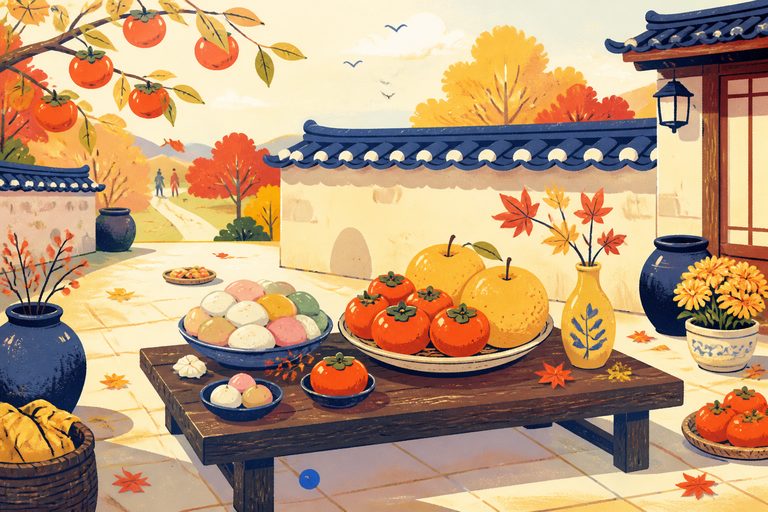
Chuseok, by contrast, takes place on the fifteenth day of the eighth lunar month under the autumn harvest full moon. Coming at the conclusion of months of intense farm labor, it represents fruition. The grain has ripened, the orchards are full, and the community pauses to give thanks for the earth's bounty before the cold winter frost sets in.
The Signature Bowl: Tteokguk vs. Songpyeon
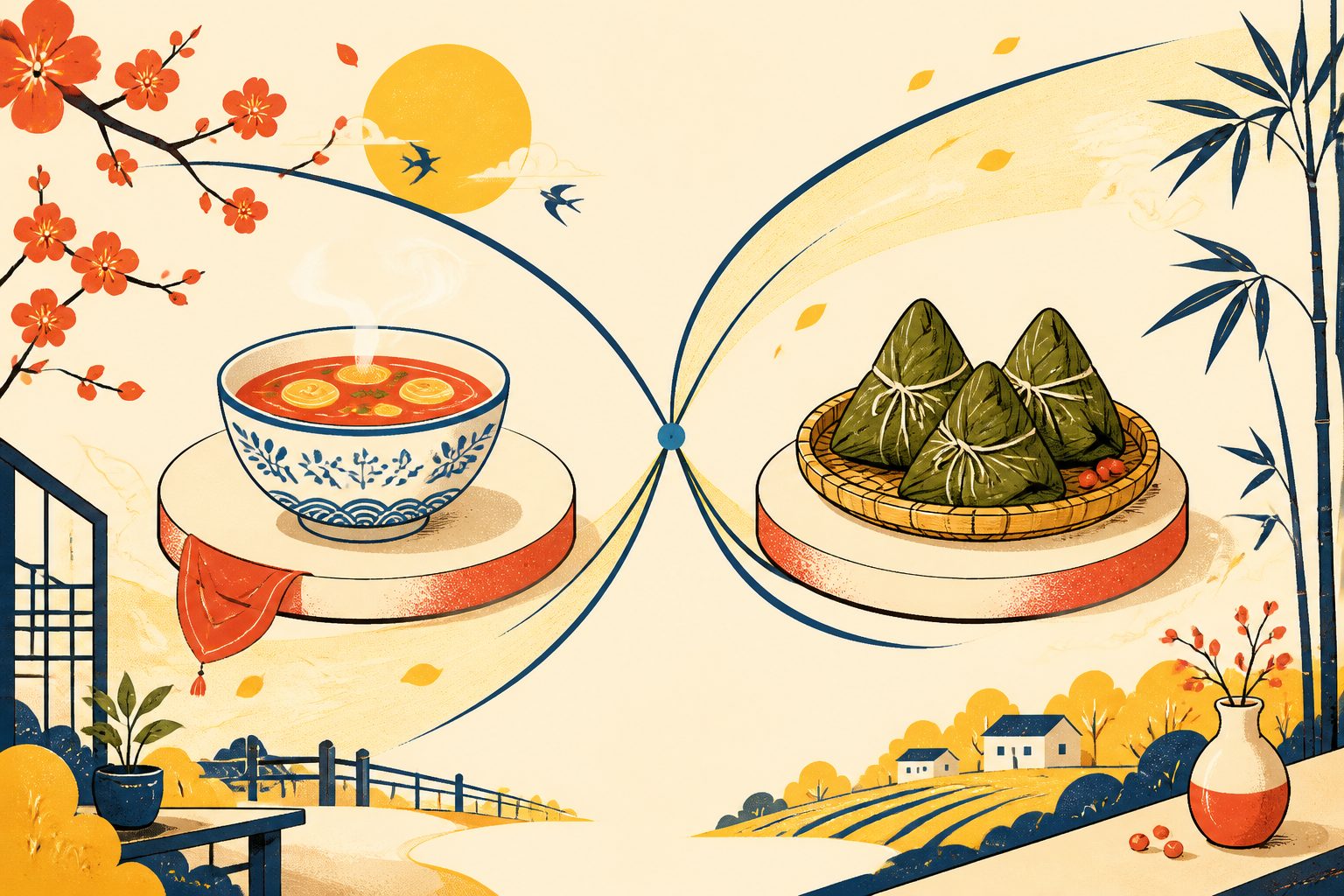
Nothing illustrates the contrast between the two holidays more deliciously than their defining dishes. On Seollal morning, every household gathers to eat tteokguk, a steaming bowl of clear beef or anchovy broth filled with thinly sliced oval rice cake coins. In our look at seasonal Korean dining, this contrast reveals how food shapes holiday memory.
- Tteokguk on Seollal: Sliced from long, white cylinders of rice dough (garaetteok), the white discs resemble ancient brass coins. Eating a bowl symbolizes wiping away the previous year's misfortunes, welcoming financial prosperity, and turning one year older in traditional Korean age reckoning.
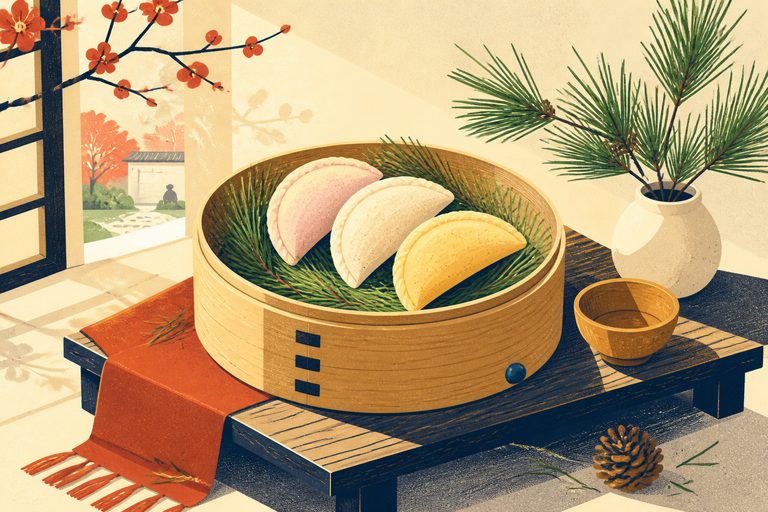
- Songpyeon on Chuseok: Crescent-shaped rice cakes stuffed with toasted sesame seeds, honey, crushed chestnuts, or sweet beans, steamed on a fragrant bed of pine needles. The half-moon shape represents growing future potential, while the freshly harvested grains honor the season's agricultural yield.
| Comparison Dimension | Seollal (Lunar New Year) | Chuseok (Autumn Harvest) |
|---|---|---|
| Lunar Timing | 1st day of 1st lunar month (Jan/Feb) | 15th day of 8th lunar month (Sept/Oct) |
| Core Theme | New beginnings, longevity, renewal | Harvest gratitude, abundance, completion |
| Signature Dish | Tteokguk (coin-shaped rice cake soup) | Songpyeon (pine-steamed half-moon cakes) |
| Primary Custom | Sebae (formal bows to elders for blessings) | Seongmyo & Beolcho (tending ancestral graves) |
| Traditional Clothing | Seolbim (bright new year hanbok) | Chuseokbim (autumn seasonal hanbok) |
| Community Play | Yunnori stick tossing, kite flying | Ganggangsullae circle dance, Ssireum wrestling |
Ancestral Rituals: Sebae Bows vs. Seongmyo Hillsides
While both holidays feature the morning ancestral table ritual (Charye), their accompanying customs branch in different directions. On Seollal, the domestic highlight is Sebae, the deep ceremonial bow performed by younger family members to their living parents and grandparents. Dressed in vibrant traditional hanbok, children wish their elders good health and fortune. In return, elders bestow words of wisdom (deokdam) and envelopes of New Year's pocket money (sebaetdon).
During Chuseok, family attention turns outward to the natural landscape through Seongmyo. Families hike up hillside family burial grounds to visit the resting places of their ancestors. In the weeks leading up to the holiday, relatives participate in Beolcho, carefully trimming wild late-summer grasses around the earthen mounds. This outdoor pilgrimage honors lineage directly against the backdrop of changing autumn leaves.
Two Halves of the Same Cultural Heart
Whether through the indoor games of wooden stick tossing (Yunnori) on a chilly New Year's afternoon or the swirling moonlit circle dances of Ganggangsullae in September, Seollal and Chuseok complement each other perfectly. One welcomes the future with clear eyes and warm soup; the other gives thanks for the present with sweet rice cakes and full hearts. As I reflect on these dual traditions, they show how a society can honor both beginnings and endings with equal reverence.
Sources
Every factual claim above traces to one of these. Links open in a new tab.