The Humming Parcel Route That Turns Drone Delivery Into a Neighborhood Question

A drone trip is not simply a box with propellers. Here is the layered answer to who controls the sky, the hub, the landing spot and the public conversation around them.
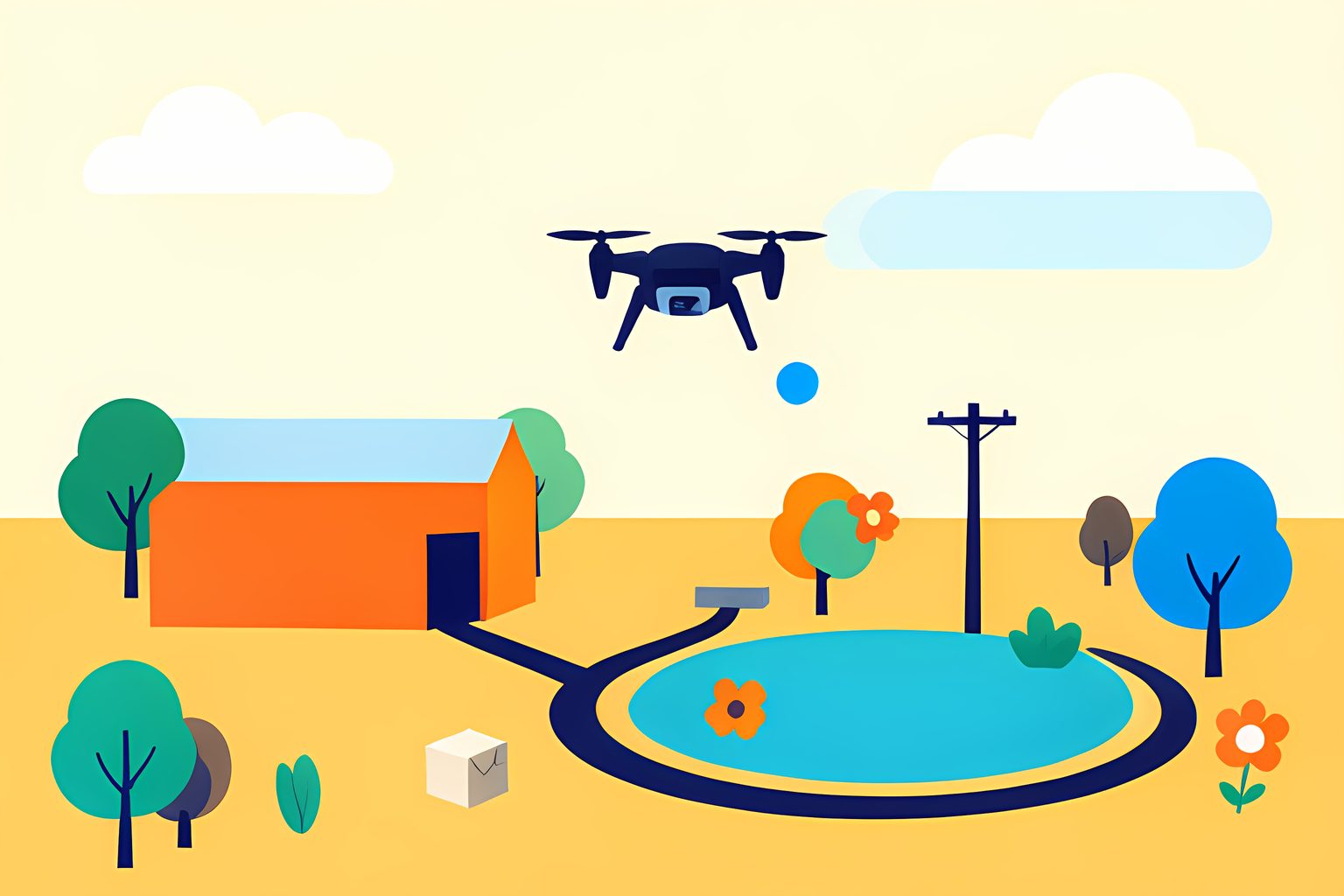
A package that rises from a warehouse roof and hums toward a backyard can make an ordinary delivery feel suddenly public. I think that is why drone-delivery proposals prompt a bigger reaction than their tiny cargo suggests. The intriguing thing is not just the aircraft. It is the stack of decisions underneath it: an aviation regulator governs the flight, an operator chooses a hub, local rules govern the ground, and a household still needs a place clear enough to receive the box.
That division of labor is the useful answer to a question now surfacing around new Prime Air proposals. In Westborough, Massachusetts, a September 23, 2026 community meeting covered a proposed operation from Amazon's Otis Street facility. Spectrum News reported that the company described two distinct checks: airspace clearance and enough usable space at a customer's property. In North Haven, Connecticut, a September 16 state notice described a separate coastal-consistency review requested by the FAA. Neither example makes a nationwide rule, but together they show why a delivery drone is both an aircraft and a neighborhood project.
The sky and the ground are different jurisdictions
Commercial drone delivery is not treated like a hobbyist sending a small camera drone around a park. The FAA says package-delivery operators need the relevant air-carrier certification, airspace authorization, infrastructure and environmental compliance. Its Part 135 delivery page also says these flights operate below 400 feet and describes a future traffic-management system in which operators receive real-time airspace constraints while managing flights safely within them.
That federal role has a sharp boundary. The FAA and U.S. Department of Transportation's state-and-local fact sheet says the federal government has exclusive authority over aviation safety and efficient use of airspace. A city cannot simply draw its own low-altitude highways, set flight-path rules or enact a broad airspace ban because it dislikes a service. Those are aviation decisions, even when the aircraft is small. I would be wary of any neat claim that a town either controls every drone or controls none. Both versions flatten the actual map.
The same fact sheet says local rules may still address subjects outside that federal field, provided they do not conflict with FAA requirements or improperly burden commercial service. Its examples include land use, zoning, privacy rules, trespass and the location of takeoff and landing areas. The FAA's own community-engagement page puts it plainly: a delivery hub and related infrastructure must meet applicable local land-use and zoning rules, and operators may need local approvals alongside FAA authorization.
The short version
- Flight operations
- FAA certification, airspace authorization and aviation-safety oversight.
- Hub on the ground
- Operator site choice plus applicable state and local zoning or land-use approval.
- Environmental review
- FAA review can include public comment and may require project-specific analysis.
- Your delivery point
- A service must decide that the address and chosen drop-off zone are eligible and clear.
Public input is real, even when it is not an air-traffic vote
The Federal Aviation Administration describes public involvement as part of its environmental-review process for drone proposals. It specifically calls noise the public's primary interest when aviation activity changes, while noting that operators and local governments should also engage the community. That does not mean every concern produces a veto. It does mean a serious proposal should be legible enough for people to ask concrete questions about a hub's location, operating pattern, noise assumptions and the places most affected.
A January 2026 FAA environmental assessment for proposed Prime Air operations in Texas gives a useful caution about the phrase no significant impact. The report says whether sound is noticeable depends on its level, how often it occurs, background sound and pitch. In other words, a regulatory finding is not a promise that no one will hear anything. The FAA's package-delivery guidance similarly says operators should respond to public concerns even where noise does not meet the threshold for a significant environmental impact. That is a more grown-up standard than pretending a decibel chart settles every lived question.
Why an address is not automatically a drone address
A service area on a map is only the first circle. Amazon's current Prime Air page says that ZIP-code coverage can change and not every location inside a listed ZIP code qualifies. Customers confirm a delivery point, and the drone checks for people, pets and vehicles before delivery. In the company's account of its safety testing, a mission-planning system creates flight paths around known features such as buildings, bridges and power lines, while the aircraft must also recognize that a clear-looking patch of ground may acquire a toy, car or clothesline.
That last bit is the quietly delightful detail. A drone does not merely know a street address. It needs a route through a shared low sky and a small piece of ordinary ground that remains usefully boring for a few seconds. A driveway without a parked car can be more valuable to the system than a dramatic view. We often imagine the future arriving with a grand gesture; this one may arrive by asking a map to notice the difference between a lawn and a swimming pool.
I came away less interested in the slogan of instant delivery than in this small accountability lesson. A delivery drone does not erase the public realm. It threads through it, which is why the answer is neither a simple federal yes nor a simple local no. The public deserves a clear view of the thread before the parcel starts moving along it.
Sources
Every factual claim above traces to one of these. Links open in a new tab.
- Package Delivery by Drone (Part 135)
- Public Involvement and Environmental Review for Drone Operations
- State and Local Regulation of Unmanned Aircraft Systems Fact Sheet
- Amazon Proposed Electric Drone Package Delivery Operations, North Haven
- Finding of No Significant Impact and Record of Decision for Drone Package Delivery in Texas
- Amazon Prime Air drone delivery is expanding to nearly 500 US cities and towns this year
- How Amazon safety tested its new MK30 delivery drone
- In front of overflow crowd Amazon detailed proposed drone delivery program for Westborough